 Librería Samer Atenea
 Kálamo Books
 Librería Elías (Asturias)
 Librería Kolima (Madrid)
 Librería Proteo (Málaga)
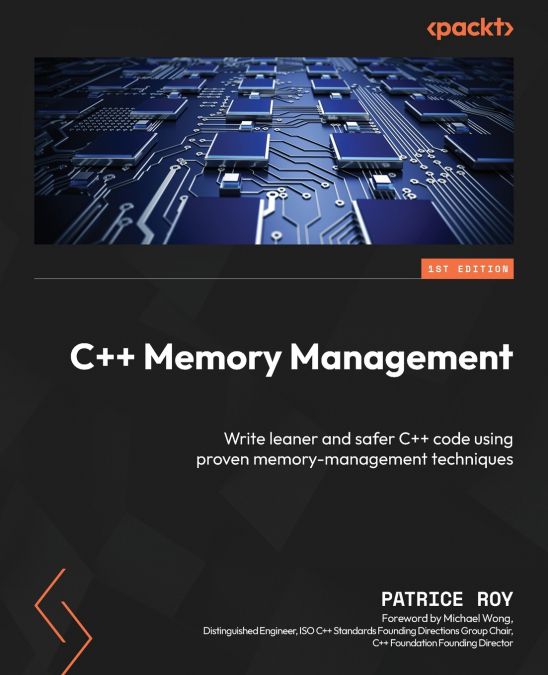
Harness the power of C++ to build smaller, faster, safer, and more predictable programs using the latest techniques and best practices to optimize performance and ensure reliability in your software development projectsKey Features:- Use contemporary C++ features to enhance code safety and reliability- Develop a deeper understanding of memory management mechanisms in C++- Write programs that adapt to the constraints of your chosen architecture or platform- Purchase of the print or Kindle book includes a free PDF eBookBook Description:C++ programmers often face challenges in allocating and managing memory efficiently, especially given the diverse needs of real-time systems, embedded systems, games, and conventional desktop applications. This book offers a targeted approach to address the unique memory constraints of each domain.Written by an ISO C++ Standards Committee member, Patrice Roy, this guide covers fundamental concepts of object lifetime and memory organization to help you write simpler and safer programs. You’ll learn how to control memory allocation mechanisms, create custom containers and allocators, and adapt allocation operators to suit your specific requirements, making your programs smaller, faster, safer, and more predictable.Starting with core principles of memory management, this book introduces modern facilities that simplify your work and then dives into memory management mechanics, building solutions for specific application needs, and measuring their impact on your program’s behavior.By the end of this book, you’ll be able to write secure programs that handle memory optimally for your application domain. You will also have a strong grasp of both high-level abstractions for safer programs and low-level abstractions that allow detailed customization.What You Will Learn:- Master the C++ object model to write more efficient and maintainable code- Automate resource management to reduce manual errors and improve safety- Customize memory allocation operators to optimize performance for specific applications- Develop your own smart pointers to manage dynamic memory with greater control- Adapt allocation behavior to meet the unique needs of different data types- Create safe and fast containers to ensure optimal data handling in your programs- Utilize standard allocators to streamline memory management in your containersWho this book is for:This book is for programmers who find C++ memory management challenging yet want to master it. It’s ideal for those seeking greater control over memory allocation to make their programs smaller, faster, and safer. Whether you’re a seasoned C++ developer or transitioning from other languages, you’ll gain insights into how C++ can enhance your programming. It’s especially valuable if you’re working in constrained environments, like embedded systems or game development. Prior experience with programming concepts, such as generic and concurrent programming, is helpful.Table of Contents- Objects, Pointers, and References- Things to Be Careful With- Casts and cv-qualifications- Using Destructors- Using Standard Smart Pointers- Writing Smart Pointers- Overloading Memory Allocation Operators- Writing a Naïve Leak Detector- Atypical Allocation Mechanisms- Arena-Based Memory Management and Other Optimizations- Deferred Reclamation- Writing Generic Containers with Explicit Memory Management- Writing Generic Containers with Implicit Memory Management- Writing Generic Containers with Allocator Support- Contemporary Issues- Annexure: Things You Should Know