 Librería Samer Atenea
 Kálamo Books
 Librería Elías (Asturias)
 Librería Kolima (Madrid)
 Librería Proteo (Málaga)
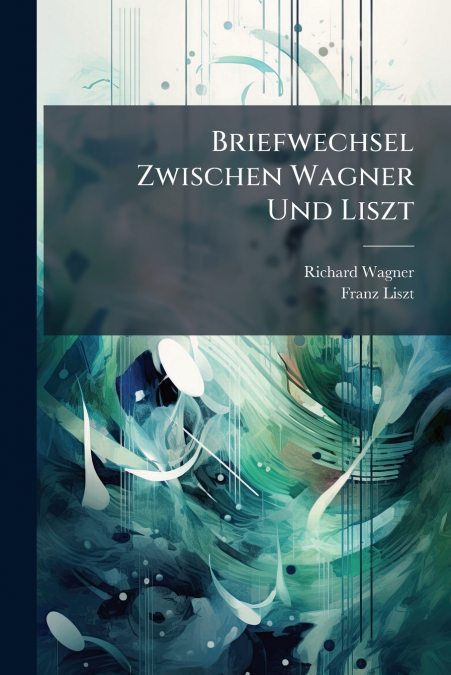
Die Korrespondenz zwischen Richard Wagner und Franz Liszt ist ein faszinierendes Zeugnis einer der wichtigsten und einflussreichsten Freundschaften in der Musikgeschichte des 19. Jahrhunderts. Dieser Band umfasst die Briefe aus den Jahren 1854 bis 1861, einer entscheidenden Periode im Leben beider Komponisten.Der Briefwechsel gibt tiefe Einblicke in Wagners Schaffen, insbesondere in die Entstehung des 'Ring des Nibelungen', und beleuchtet Liszts Unterstützung und seinen Einfluss auf Wagners musikalische Entwicklung. Die Briefe dokumentieren ihre künstlerischen Überzeugungen, persönlichen Kämpfe und gegenseitige Wertschätzung. Sie bieten wertvolle Informationen für Musikwissenschaftler, Historiker und alle, die sich für die Welt der klassischen Musik interessieren.Diese Sammlung ist eine unschätzbare Quelle für das Verständnis der komplexen Beziehung zwischen zwei der größten musikalischen Köpfe ihrer Zeit und bietet einen lebendigen Einblick in die kulturelle und intellektuelle Atmosphäre des 19. Jahrhunderts.This work has been selected by scholars as being culturally important, and is part of the knowledge base of civilization as we know it. This work was reproduced from the original artifact, and remains as true to the original work as possible. Therefore, you will see the original copyright references, library stamps (as most of these works have been housed in our most important libraries around the world), and other notations in the work.This work is in the public domain in the United States of America, and possibly other nations. Within the United States, you may freely copy and distribute this work, as no entity (individual or corporate) has a copyright on the body of the work.As a reproduction of a historical artifact, this work may contain missing or blurred pages, poor pictures, errant marks, etc. Scholars believe, and we concur, that this work is important enough to be preserved, reproduced, and made generally available to the public. We appreciate your support of the preservation process, and thank you for being an important part of keeping this knowledge alive and relevant.