 Librería Samer Atenea
 Kálamo Books
 Librería Elías (Asturias)
 Librería Kolima (Madrid)
 Librería Proteo (Málaga)
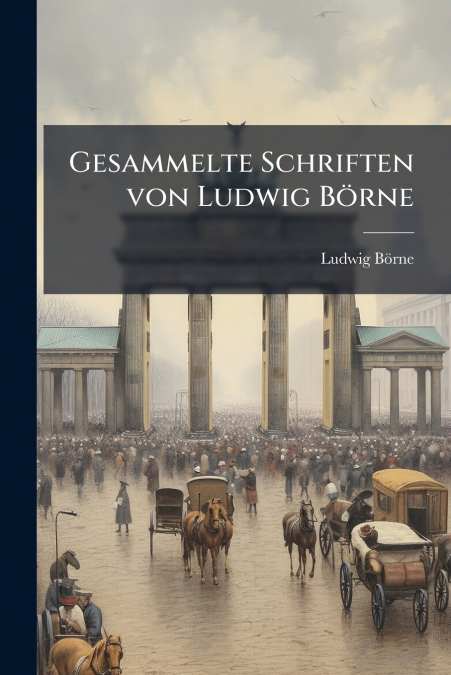
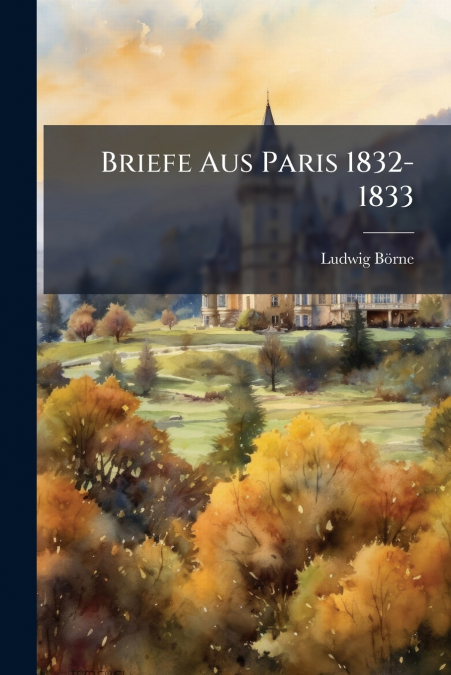
Briefe aus Paris 1832-1833 by Ludwig Börne offers a fascinating glimpse into the vibrant and politically charged atmosphere of Paris in the early 1830s. Through a series of letters, Börne, a prominent German writer and political commentator, vividly captures the social, cultural, and political landscape of the city following the July Revolution. His observations on French society, politics, and culture provide valuable insights into the era’s intellectual currents and the evolving relationship between France and Germany. Börne’s letters are not merely descriptive; they are imbued with his sharp wit, critical analysis, and passionate commitment to democratic ideals. He offers a unique perspective on the personalities and events shaping Europe during this pivotal period. This collection provides invaluable context for understanding the complex interplay of politics, culture, and society in 19th-century Europe, and remains a significant contribution to both German literature and historical scholarship.This work has been selected by scholars as being culturally important, and is part of the knowledge base of civilization as we know it. This work was reproduced from the original artifact, and remains as true to the original work as possible. Therefore, you will see the original copyright references, library stamps (as most of these works have been housed in our most important libraries around the world), and other notations in the work.This work is in the public domain in the United States of America, and possibly other nations. Within the United States, you may freely copy and distribute this work, as no entity (individual or corporate) has a copyright on the body of the work.As a reproduction of a historical artifact, this work may contain missing or blurred pages, poor pictures, errant marks, etc. Scholars believe, and we concur, that this work is important enough to be preserved, reproduced, and made generally available to the public. We appreciate your support of the preservation process, and thank you for being an important part of keeping this knowledge alive and relevant.