
Brain Imaging

Brain Imaging

Paul C. Lebby

264,16 €
IVA incluido
Disponible
Editorial:
Oxford University Press
Año de edición:
2015
Materia
Neurología y neurofisiología clínicas
ISBN:
9780190239060
264,16 €
IVA incluido
Disponible

Selecciona una librería:

  • Librería Samer Atenea
  • Librería Aciertas (Toledo)
  • Kálamo Books
  • Librería Perelló (Valencia)
  • Librería Elías (Asturias)
  • Donde los libros
  • Librería Kolima (Madrid)
  • Librería Proteo (Málaga)

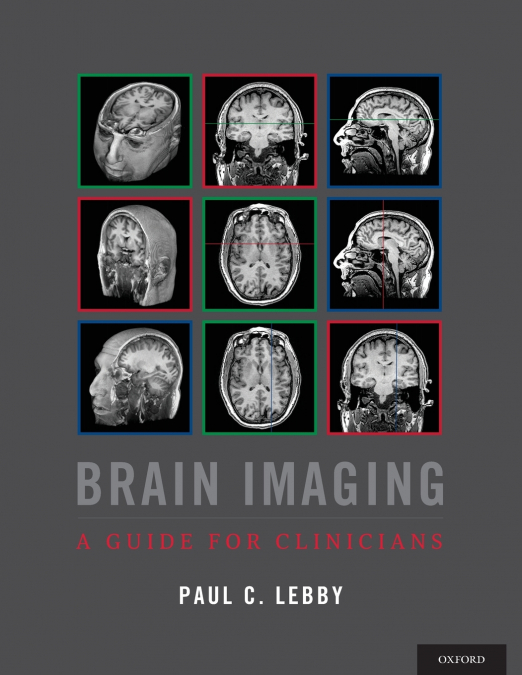
Brain Imaging: A Guide for Clinicians is designed to provide a foundation of information necessary for those wishing to integrate brain imaging into their practice, or to those who currently review brain scans but have minimal formal training in neuroimaging. The guide covers a range of topics important to those using brain imaging, such as the strengths and weaknesses of the many different techniques currently available, the factors that may influence the use of imaging data, common pitfalls or artifacts that may be misleading to the clinician, the most appropriate techniques to use given a specific clinical question or condition, how to interpret information presented on a brain image, and also how many pathological conditions appear on a variety of brain scanning techniques or sequences. This guide also provides detailed information regarding the identification of primary brain regions, anatomical structures, systems or pathways using both two-dimensional and three-dimensional imaging techniques. A brain atlas is included using both CT and MRI sequences to facilitate the reader’s ability to identify most primary brain structures. A novel color-coded system is used throughout this guide to assist the reader in identifying slice locations and orientations. Images with green borders are displayed in the axial plane, with the slice location being shown on other orthogonal image planes by a green line. Similarly, images with a red border are displayed in the coronal plane and those with a blue border are displayed using a sagittal plane; red and blue reference lines are displayed on orthogonal slices to identify the slice location. The crosshairs formed by the color-coded reference lines optimize the reader’s ability to identify primary anatomical structures or pathological markers and processes. Chapters in this book progress from a general description of the clinical use of brain images and the interpretation of scans, to more complex material involving neuroanatomy and imaging technology. Real-life examples of clinical cases are integrated into all chapters of this guide. Brain Imaging: A Guide for Clinicians features hundreds of images derived from traumatic and non-traumatic pathologies to provide the reader with examples of conditions most often seen in the clinic. PEARL-PERIL sections outline critical information for the clinician, along with many tables and charts designed to provide general information required when interpreting brain images.
Artículos relacionados

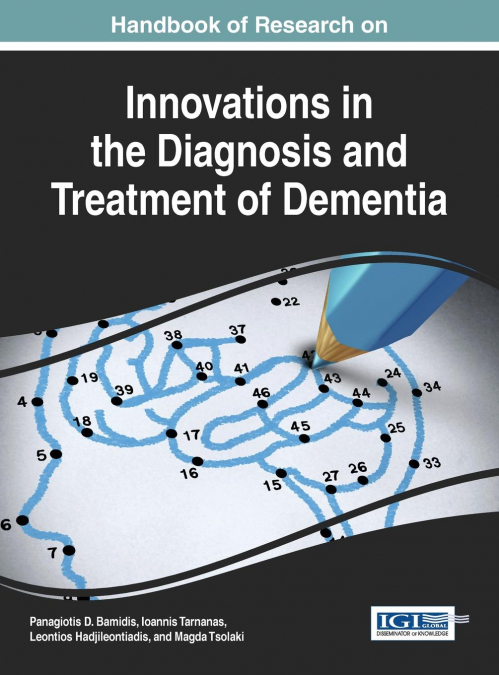
  • Handbook of Research on Innovations in the Diagnosis and Treatment of Dementia
    Ionnis Tarnanas / Leontios Hadjileontiadis / Panagiotis D Bamidis
    Technology is playing an increasing role in the lives of the elderly. One of the most prevalent developments for the aging population is the use of technological innovations for intervention and treatment of individuals with mental impairments. The Handbook of Research on Innovations in the Diagnosis and Treatment of Dementia offers empirical research and theoretical analyses o...
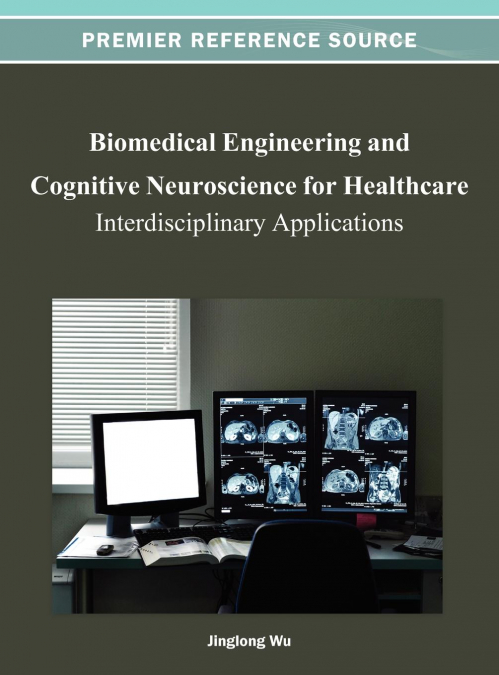
  • Biomedical Engineering and Cognitive Neuroscience for Healthcare
    Jinglong Wu
    New developments in medical technology have paved the way for the ongoing studies of cognitive neuroscience and biomedical engineering for healthcare. Their different but interconnected aspects of science and technology seek to provide new solutions for difficult healthcare problems and impact the future of the quality of life. Biomedical Engineering and Cognitive Neuroscience ...
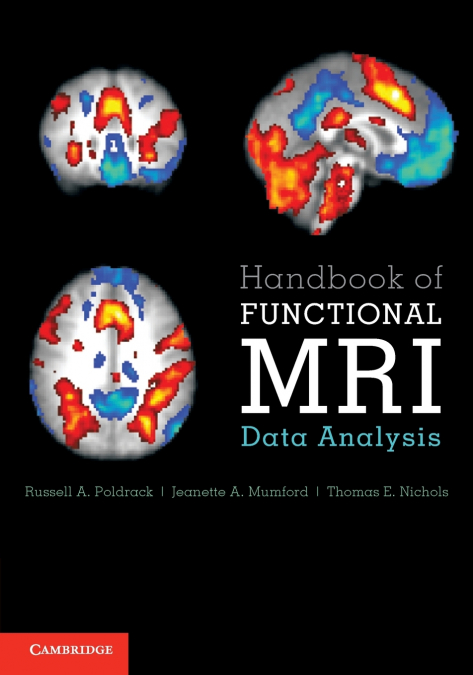
  • Handbook of Functional MRI Data Analysis
    Jeanette A. Mumford / Russell A. Poldrack / Thomas E. Nichols
    ...
    Disponible

    63,88 €

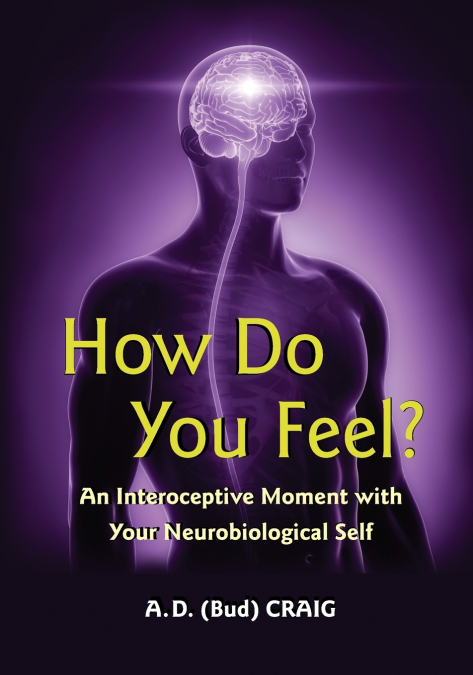
  • How Do You Feel?
    A. D. Craig
    A book that fundamentally changes how neuroscientists and psychologists categorize sensations and understand the origins and significance of human feelingsHow Do You Feel? brings together startling evidence from neuroscience, psychology, and psychiatry to present revolutionary new insights into how our brains enable us to experience the range of sensations and mental states kno...
    Disponible

    47,73 €

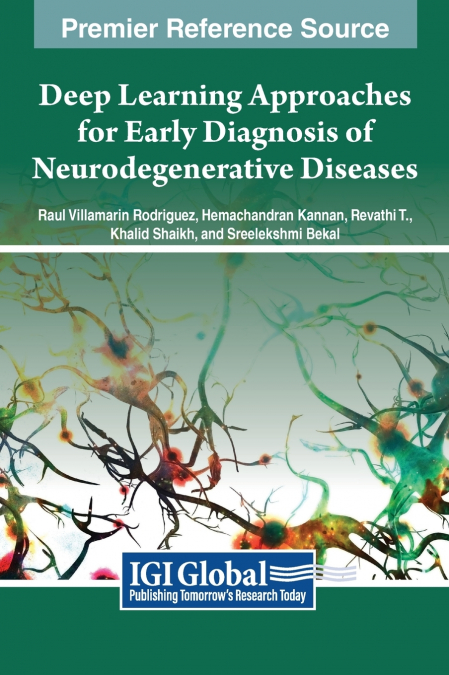
  • Deep Learning Approaches for Early Diagnosis of Neurodegenerative Diseases
    Within the context of global health challenges posed by intractable neurodegenerative diseases like Alzheimer’s and Parkinson’s, the significance of early diagnosis is critical for effective intervention, and scientists continue to discover new methods of detection. However, actual diagnosis goes beyond detection to include a significant analysis of combined data for many cases...
  • Ignite Global Change
    Alessandro Crimi
    Your essential guide to global entrepreneurship and activism. From Accra and Mumbai to Milan and New York, a vibrant new generation of activist entrepreneurs turn visionary ideas into impactful realities. Ignite Global Change offers a roadmap for crafting wealth from minimal resources, from ideation to implementation. Its practical, real-world approach provides strategies that ...
    Disponible

    23,34 €