
Biometric Recognition

Biometric Recognition

AA.VV

40,04 €
IVA incluido
Disponible
Editorial:
National Academies Press - 35
Año de edición:
2010
ISBN:
9780309142076
40,04 €
IVA incluido
Disponible

Selecciona una librería:

  • Librería Samer Atenea
  • Kálamo Books
  • Librería Elías (Asturias)
  • Librería Kolima (Madrid)
  • Librería Proteo (Málaga)

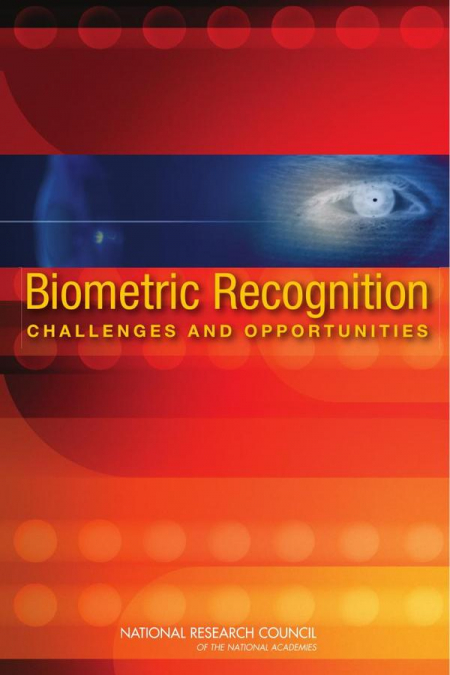
Biometric recognition—the automated recognition of individuals based on their behavioral and biological characteristic—is promoted as a way to help identify terrorists, provide better control of access to physical facilities and financial accounts, and increase the efficiency of access to services and their utilization. Biometric recognition has been applied to identification of criminals, patient tracking in medical informatics, and the personalization of social services, among other things. In spite of substantial effort, however, there remain unresolved questions about the effectiveness and management of systems for biometric recognition, as well as the appropriateness and societal impact of their use. Moreover, the general public has been exposed to biometrics largely as high-technology gadgets in spy thrillers or as fear-instilling instruments of state or corporate surveillance in speculative fiction.Now, as biometric technologies appear poised for broader use, increased concerns about national security and the tracking of individuals as they cross borders have caused passports, visas, and border-crossing records to be linked to biometric data. A focus on fighting insurgencies and terrorism has led to the military deployment of biometric tools to enable recognition of individuals as friend or foe. Commercially, finger-imaging sensors, whose cost and physical size have been reduced, now appear on many laptop personal computers, handheld devices, mobile phones, and other consumer devices.Biometric Recognition: Challenges and Opportunities addresses the issues surrounding broader implementation of this technology, making two main points: first, biometric recognition systems are incredibly complex, and need to be addressed as such. Second, biometric recognition is an inherently probabilistic endeavor. Consequently, even when the technology and the system in which it is embedded are behaving as designed, there is inevitable uncertainty and risk of error. This book elaborates on these themes in detail to provide policy makers, developers, and researchers a comprehensive assessment of biometric recognition that examines current capabilities, future possibilities, and the role of government in technology and system development.

Artículos relacionados

  • Introducción a la lingüística computacional
    Juli Bernal / Ruth Yanira Rubio
    La lingüística computacional se inició en Estados Unidos en los años 50 con el objetivo de crear un traductor automático para la traducción de textos desde diferentes idiomas al inglés, esto con el interés de crear herramientas para los conflictos bélicos que facilitaran la comunicación y permitieran descifrar mensajes ocultos en las comunicaciones de los adversarios. La lingüí...
  • Sistemas digitales, principios, análisis y diseño
    Héctor A. Flórez Fernández
    Se ofrece al lector una exposición clara y suficiente de, los conceptos básicos de los sistemas digitales combinacionales y secuenciales, además, presenta conceptos básicos de microprocesadores. En este documento se puede obtener el conocimiento y habilidad necesaria para resolver diseños de electrónica digital con base en los fundamentos del mimo; el documento evidencia una ex...
  • La planeación de clases
    Ángel Alfonso Jiménez Sierra / Dairon Alberto Costa Carranza / Jhair Joaquín Berbén Hernríquez / Jorge Mario Ortega Iglesias / Yeison Andrés Duica Galofre
    El libro ofrece orientaciones prácticas para la planificación efectiva de las sesiones de enseñanza en el área de Tecnología e Informática, dirigidas a estudiantes de educación en formación inicial y a profesores en ejercicio. Su objetivo principal es brindar las herramientas necesarias para diseñar y ejecutar un proceso de planificación de clases a partir de situaciones de apr...
  • Dinámica de sistemas
    Samuel Prieto Mejía
    Este libro está destinado a estudiantes de Ingeniería de Sistemas y ofrece una sólida base para abordar problemas complejos mediante la tecnología computacional. Dividido en diecisiete capítulos, abarca desde los fundamentos de la dinámica de sistemas hasta la aplicación de modelos en casos de estudio como la isla de Borneo y el parque Yellowstone. Se exploran compañías de mode...
  • Augmented Reality (AR) and Virtual Reality (VR)
    Jerrold Blitefield / Mariela Mendez
    ’1. Introduction to AR and VR Technologies:• Provide a comprehensive overview of augmented reality (AR) and virtual reality (VR), including their definitions, key components, and underlying technologies. Differentiate between AR and VR experiences, discussing their applications, advantages, and limitations.2. Hardware and Software Platforms:• Explore the hardware devices and so...
    Disponible

    150,80 €

  • Blockchain and AI in the 4th Industrial Revolution
    Srikanth Kumar Sridhara
    Revolutionary Enchantment: Blockchain and AI in the Fourth Industrial Revolution’ takes readers on an exciting trip through two cutting-edge technologies that are transforming our civilization. It begins by reviewing the historical relevance of previous industrial revolutions, establishing the groundwork for the fourth, which will be distinguished by the combination of blockcha...
    Disponible

    94,12 €