

ANU Girdhar / Navneet Mann / SHERBAAZ AULAKH
 Librería Samer Atenea
 Kálamo Books
 Librería Elías (Asturias)
 Librería Kolima (Madrid)
 Librería Proteo (Málaga)
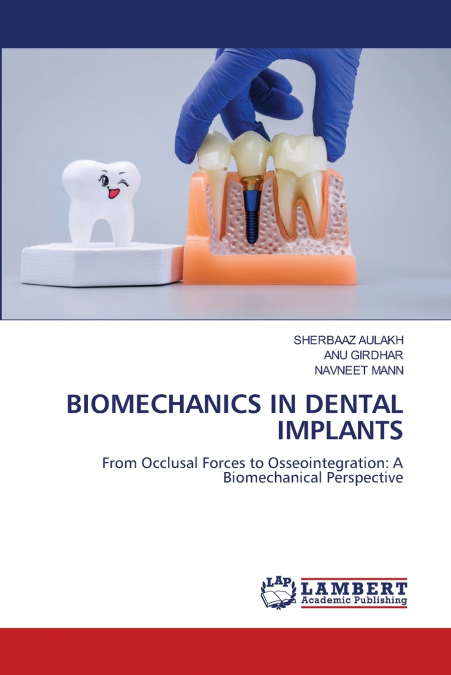
Biomechanics is fundamental to the predictable success and long-term function of dental implants. It deals with the interaction between mechanical forces and biological tissues, particularly the way occlusal forces are transferred from the prosthesis through the implant to the surrounding bone. Osseointegration allows the implant and bone to function as a unit; therefore, understanding stress, strain, force distribution and bone response is essential for implant treatment planning. Force factors. Dental implants are subjected to forces during mastication, swallowing and parafunctional activity. The major factors influencing implant biomechanics include parafunction, implant position, masticatory dynamics, opposing dentition, direction of loading and crown-implant ratio. Normal masticatory forces are relatively short in duration, whereas bruxism and clenching can produce prolonged and repetitive loading. Parafunction is particularly important. Bruxism produces excessive vertical and horizontal forces and may lead to implant or prosthetic complications.





