Inicio > Humanidades > Filosofía > Ética y filosofía moral > Bioethics with Liberty and Justice
Bioethics with Liberty and Justice

Bioethics with Liberty and Justice

Christopher Tollefsen

132,65 €
IVA incluido
Consulta disponibilidad
Editorial:
Springer Nature B.V.
Año de edición:
2010
Materia
Ética y filosofía moral
ISBN:
9789048197903

Selecciona una librería:

  • Librería Samer Atenea
  • Librería Aciertas (Toledo)
  • Kálamo Books
  • Librería Perelló (Valencia)
  • Librería Elías (Asturias)
  • Donde los libros
  • Librería Kolima (Madrid)
  • Librería Proteo (Málaga)

Joseph M. Boyle Jr. has been a major contributor to the development of Catholic bioethics over the past thirty five years. Boyle’s contribution has had an impact on philosophers, theologians, and medical practitioners, and his work has in many ways come to be synonymous with analytically rigorous philosophical bioethics done in the Catholic intellectual tradition.Four main themes stand out as central to Boyle’s contribution: the sanctity of life and bioethics: Boyle has elaborated a view of the ethics of killing at odds with central tenets of the euthanasia mentality, double effect and bioethics: Boyle is among the pre-eminent defenders of a role for double effect in medical decision making and morality, the right to health care: Boyle has moved beyond the rhetoric of social justice to provide a natural law grounding for a political right to health care; and the role of natural law and the natural law tradition in bioethics: Boyle’s arguments have been grounded in a particularly fruitful approach to natural law ethics, the so-called New Natural Law theory.The contributors to BIOETHICS WITH LIBERTY AND JUSTICE: THEMES IN THE WORK OF JOSEPH M. BOYLE discuss, criticize, and in many cases extend the Boyle’s advances in these areas with rigor and sophistication. It will be of interest to Catholic and philosophical bioethicists alike.
Artículos relacionados

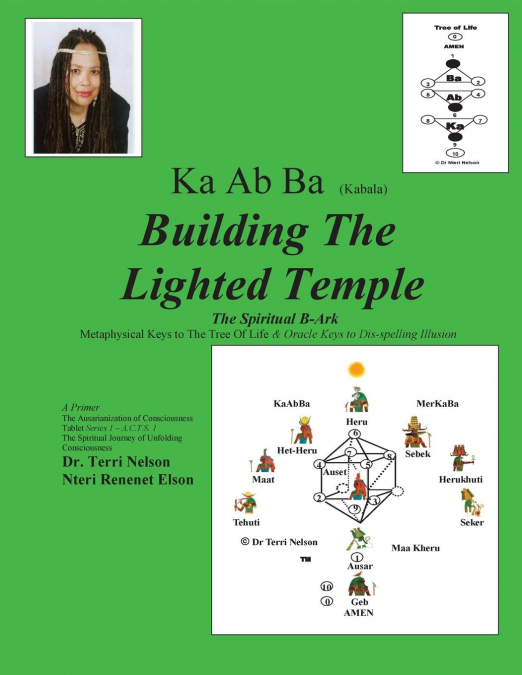
  • Ka Ab Ba Building The Lighted Temple
    Dr Terri R. Nelson / Dr Terri RNelson
    The book KaAbBa Building The Lighted Temple/Metaphysical Keys to the Tree of Life draws a circle that is inclusive of the Afrikan origin of the Ancient Kemetic/Egyptian wisdom. It reveals the undeniable root and link of Ancient Africa to all the religious systems that would develop worldwide. This book is explosive in its power to convey the meaning of KaAbBa, the Medu Neter  (...
    Disponible

    37,41 €

  • Technoethics and the Evolving Knowledge Society
    Rocci Luppicini
    Recently, there has been a major push to rediscover the ethical dimension of technology across the sciences, social sciences, and humanities. Technoethics and the Evolving Knowledge Society: Ethical Issues in Technological Design, Research, Development, and Innovation examines human processes and practices connected to technology embedded within social, political, and moral sph...
  • Kant
    Immanuel Kant
    Kant’s Groundwork of the Metaphysics of Morals is one of the most important works in modern moral philosophy. It belongs beside Plato, Aristotle, Machiavelli, and Hobbes. Here Kant sets out to articulate and defend the Categorical Imperative - the fundamental principle that underlies moral reasoning - and to lay the foundation for a comprehensive account of justice and human vi...
  • On the Duty of Civil Disobedience
    HENRY DAVID THOREAU
    Civil Disobedience argues that citizens should not permit their governments to overrule their consciences, and that they have a duty to avoid allowing their acquiescence to enable the government to make them the agents of injustice. Thoreau was motivated in part by his disgust with slavery and the Mexican-American War, but the sentiments he expresses here are just as pertinent ...
  • Beyond Good and Evil
    Friedrich Nietzsche
    Nietzsche, though primarily a philosopher, wrote widely on art, philology, history, religion, tragedy, culture, and science.  In 1886, at the height of his powers, he published Beyond Good and Evil.  Here he examines much of the best of human thought--dogmatic philosophy, Judeo-Christian morality, science and democracy – and finds it lacking.  Rejecting “slave-morality” he pres...
  • Beyond Good and Evil
    Friedrich Nietzsche
    Nietzsche, though primarily a philosopher, wrote widely on art, philology, history, religion, tragedy, culture, and science.  In 1886, at the height of his powers, he published Beyond Good and Evil.  Here he examines much of the best of human thought--dogmatic philosophy, Judeo-Christian morality, science and democracy – and finds it lacking.  Rejecting “slave-morality” he pres...
    Disponible

    9,99 €

Otros libros del autor

  • John Paul II’s Contribution to Catholic Bioethics
    Christopher Tollefsen
    Any list of the most influential figures of the second half of the twentieth century would arguably have to begin with the name of Pope John Paul II. From 1978, when he was inaugurated, to the present, over a quarter of a century later, the Pope has been a dominant force in the world, both within the Catholic and Christian Church, and in the larger in...
    Disponible

    195,83 €

  • Artificial Nutrition and Hydration
    Christopher Tollefsen
    Preface: Christopher Tollefsen;Part One: The Issue;1: Why Do Unresponsive Patients Still Matter?Bishop Anthony Fisher, O.P.;2: Are We Morally Obligated to Feed PVS Patients Until Natural Death?Michael Degnan;3: Caring for Persons in the ’Persistent Vegetative State’ and Pope John Paul II’s March 2004 Address ’On Life-Sustaining Treatments and the Vegetative State’.William E. Ma...
    Disponible

    343,16 €

  • Artificial Nutrition and Hydration
    Christopher Tollefsen
    Pope John Paul II surprised much of the medical world in 2004 with his strongly worded statement insisting that patients in a persistent vegetative state should be provided with nutrition and hydration. This collection of essays featuring some of the most prominent Catholic bioethicists addresses the Pope’s statements, the moral issues surrounding art...
  • John Paul II’s Contribution to Catholic Bioethics
    Christopher Tollefsen
    Any list of the most influential figures of the second half of the twentieth century would arguably have to begin with the name of Pope John Paul II. From 1978, when he was inaugurated, to the present, over a quarter of a century later, the Pope has been a dominant force in the world, both within the Catholic and Christian Church, and in the larger in...