
Inicio > Derecho > Teoría general del derecho > Big Data, Algorithms and Food Safety
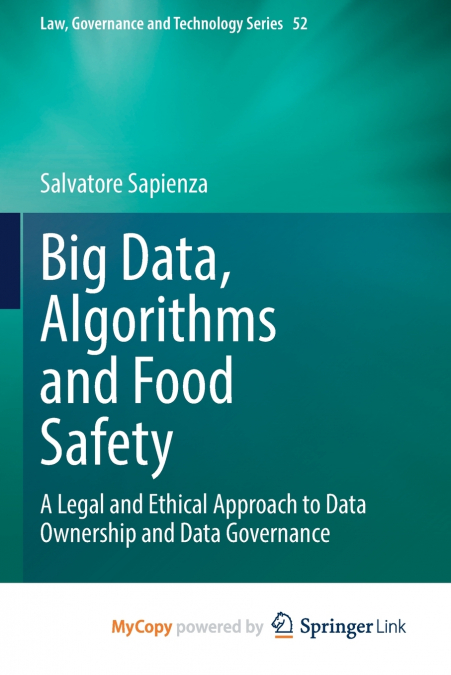
Big Data, Algorithms and Food Safety

Big Data, Algorithms and Food Safety

Salvatore Sapienza

48,12 €
IVA incluido
Disponible
Editorial:
Springer Nature B.V.
Año de edición:
2022
Materia
Teoría general del derecho
ISBN:
9783031093685
48,12 €
IVA incluido
Disponible

Selecciona una librería:

  • Librería Samer Atenea
  • Librería Aciertas (Toledo)
  • Kálamo Books
  • Librería Perelló (Valencia)
  • Librería Elías (Asturias)
  • Donde los libros
  • Librería Kolima (Madrid)
  • Librería Proteo (Málaga)

This book identifies the principles that should be applied when processing Big Data in the context of food safety risk assessments. Food safety is a critical goal in the protection of individuals’ right to health and the flourishing of the food and feed market. Big Data is fostering new applications capable of enhancing the accuracy of food safety risk assessments. An extraordinary amount of information is analysed to detect the existence or predict the likelihood of future risks, also by means of machine learning algorithms. Big Data and novel analysis techniques are topics of growing interest for food safety agencies, including the European Food Safety Authority (EFSA). This wealth of information brings with it both opportunities and risks concerning the extraction of meaningful inferences from data. However, conflicting interests and tensions among the parties involved are hindering efforts to find shared methods for steering the processing of Big Data in a sound, transparent and trustworthy way. While consumers call for more transparency, food business operators tend to be reluctant to share informational assets. This has resulted in a considerable lack of trust in the EU food safety system. A recent legislative reform, supported by new legal cases, aims to restore confidence in the risk analysis system by reshaping the meaning of data ownership in this domain. While this regulatory approach is being established, breakthrough analytics techniques are encouraging thinking about the next steps in managing food safety data in the age of machine learning.The book focuses on two core topics - data ownership and data governance - by evaluating how the regulatory framework addresses the challenges raised by Big Data and its analysis in an applied, significant, and overlooked domain. To do so, it adopts an interdisciplinary approach that considers both the technological advances and the policy tools adopted in the European Union, while also assuming an ethical perspective when exploring potential solutions. The conclusion puts forward a proposal: an ethical blueprint for identifying the principles - Security, Accountability, Fairness, Explainability, Transparency and Privacy - to be observed when processing Big Data for food safety purposes, including by means of machine learning. Possible implementations are then discussed, also in connection with two recent legislative proposals, namely the Data Governance Act and the Artificial Intelligence Act.

Artículos relacionados

  • EU General Data Protection Regulation (GDPR)
    IT Governance Privacy Team
    An in-depth guide to complying with the EU GDPR.Now in its second edition, EU GDPR – An Implementation and Compliance Guide is a clear and comprehensive guide to this new data protection law, providing a detailed commentary on the Regulation, and setting out the obligations of data  processors and controllers in clear and comprehensible terms.Read this book to learn: How the ...
    Disponible

    30,10 €

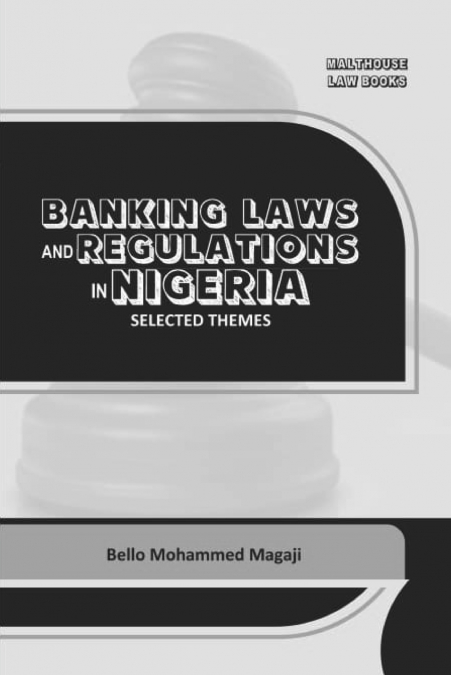
  • Banking Laws and Regulations in Nigeria
    Bello Mohammed Magaji
    Banking Law and Regulations in Nigeria: Selected Themes essentially deals with the laid down rules or code of conduct meant to control and set standards for banking business. Indeed, the main aim of the ongoing banking reforms in Nigeria, started in 2004, is to ensure banks’ conformity to the laid down banking rules and regulations. The eleven-chapter book contains vital and ri...
    Disponible

    41,17 €

  • States and the Interpretation of Treaties
    Dimitris Liakopoulos
    States and the Interpretation of Treaties opens with a provocative reconsideration of a debate on the subject of comparative international legal obligations by the United Nations’s International Law Commission. In this book, distinguished Tufts University legal scholar Dimitris Liakopoulos identifies and explores relevant considerations in the work of the Commission and offers ...
  • The role of customs in international treaties
    Dimitris Liakopoulos
    The Role of Customs in International Treaties concentrates on issues of friction between member states of the United Nations. In view of the role played by the United Nations in resolving international disputes, Dimitris Liakopoulos hypothesizes that 'practical guides' based on custom often catalyze the positions taken by states, courts, scholars, and other actors, constituting...
  • Debtor protection in American and European Union bankruptcy law
    Dimitris Liakopoulos
    In Debtor Protection in American and European Union Bankruptcy Law, international law scholar Dimitris Liakopulos raises a delicate issue at the foundations of the modern banking system by analyzing US bankruptcy law with a focus on the concept of automatic stay. His work identifies legal sources and authorities having repercussions in terms of operational protection. It then e...
  • Capital punishment in American courts
    James Biser Whisker / Kevin Spiker
    In the 400 years since the first known execution was carried out for treason in Virginia, American jurisdictions have debated both the appropriateness and methods of capital punishment. Over that time, courts have placed varying restrictions on its application, excluding categories of citizens (for example the insane or the underaged) and evaluating and excluding methods of exe...