 Librería Samer Atenea
 Kálamo Books
 Librería Elías (Asturias)
 Librería Kolima (Madrid)
 Librería Proteo (Málaga)
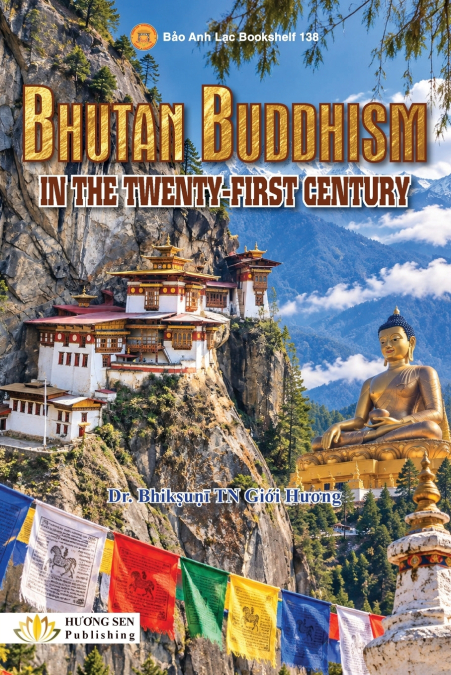
In December 2017, I (Bhikṣuṇī TN Giới Hương), alongside a delegation of Buddhists from Huong Sen Temple, had the auspicious conditions to experience a journey to the land of the Thunder Dragon known as Bhutan. It was a journey to worship and pilgrimage at Esoteric Vajrayana Buddhist holy sites and the sacred snowy ranges of the Himalayas. After nine years (2017-2026) of nurturing, contemplating, and reflecting on the unique spiritual values here, all supreme conditions have now converged for me to release these two works in English and Vietnam amese: BHUTAN BUDDHISM IN THE TWENTY-FIRST CENTURY.Bhutan is not merely a nation but a living sutra of harmony. It sustains a self-sufficient, resilient lifestyle rooted in village units-a rich community ranging from mountain girls wearing Kira smoothly plowing the fields, the Laya nomads amidst fertile valleys, and seasoned yak herders weathered by frost, to elite professors, brilliant traders, and politicians running the country. All seem to be bound together under the rhythmic and profound guidance of the Je Khenpo, Lamas, Rinpoches, and the monastic community steeped in spiritual virtues across this land of white snow. Notably, this is also home to some of the world’s most dedicated environmentalists, who believe: 'If you want to put great ideas into action, you need to apply the strength of a Himalayan mountain.' The tranquility of the snow-mountain kingdom is guarded by deeply humane laws: this singular nation of Bhutan bans tobacco and pioneered the renunciation of plastic bags since 1999. The landscape is adorned with houses bursting with colorful flowers, majestic Dzong fortresses, and Taktshang Monastery (Tiger’s Nest) hanging precariously on cliff faces-where Guru Rinpoche meditated in the 8^th century-alongside magnificent sacred peaks. These landmarks are eloquent proof that: 'The sunshine of a Lama’s mandala is necessary to remove the darkness of spiritual unawareness.' Witnessing firsthand the daily life of villagers bound to scripture and prayers, one cannot help but be moved by the fierce presence of faith in every ordinary breath. The Bhutanese understand that: 'Pile up good deeds in this life, and in the next life you will have mountains of happiness.' But ultimately, what truly captivates is the people themselves. They live fully in each moment with the compassionate and altruistic spirit of the Tara Bodhisattvas, and always placing community, family, and faith above all else. In them, we clearly see the truth: 'Happiness comes from mental freedom. Suffering comes from an emotional prison.' Spanning eight chapters, Bhutan Buddhism in the Twenty-First Century is an effort to dig deep into the meaning of existence and explore the philosophy: 'Digging into the meaning of words is like digging in mud. The deeper you go, the more you will find.' My hope is for these pages to act like a branch of fragrant cypress, carrying the breath of the Himalayan snows to help readers realize: 'There is gold in the earth, there is the Buddha nature in all sentient beings.' Dr. Bhikṣuṇī TN Giới Hương