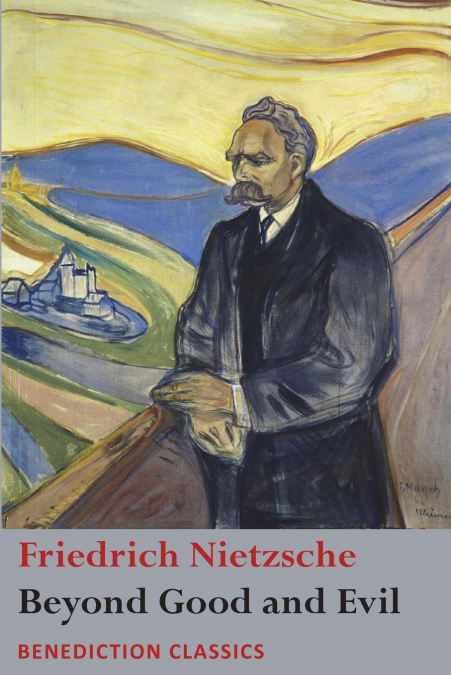
Beyond Good and Evil

Beyond Good and Evil

Friedrich Wilhelm Nietzsche

27,39 €
IVA incluido
Disponible
Editorial:
Muze Publications
Año de edición:
2026
Materia
Ética y filosofía moral
ISBN:
9781811107973
27,39 €
IVA incluido
Disponible

Selecciona una librería:

  • Librería Samer Atenea

  • Kálamo Books
  • Librería Elías (Asturias)
  • Librería Kolima (Madrid)
  • Librería Proteo (Málaga)

What if our most cherished convictions reveal more about our needs than about the truth? Nietzsche challenges readers to question not only their answers, but the values behind their questions.First published in 1886, Beyond Good and Evil takes aim at the assumptions of Western philosophy, Christian morality, and modern European culture. Friedrich Nietzsche asks whether philosophers are as impartial as they claim, examining how instinct, temperament, and desire shape even the most abstract systems of thought. Through pointed arguments and memorable aphorisms, he turns the searchlight of philosophy onto philosophers themselves.The work ranges across the will to power, religious belief, moral judgment, national identity, and the pressures of conformity. Nietzsche contrasts inherited habits of obedience with the demanding independence of the questioning spirit. His provocative distinctions between master and slave moralities invite scrutiny of how values arise and whose interests they serve. The book has endured not because it offers comfortable answers, but because it makes familiar certainties difficult to take for granted.What readers find inside:The Prejudices of Philosophers — Nietzsche investigates the hidden assumptions and personal motives beneath claims to universal truth.The Will to Power — A recurring idea connects questions of instinct, interpretation, human striving, and value.Morality Under Scrutiny — Contrasting moral outlooks expose tensions between obedience, distinction, strength, and resentment.Religion and Culture — Discussions of Christianity and European society explore the forces that shape belief and conduct.Independent Thought — Nietzsche challenges intellectual conformity and considers the demanding task of creating values.This is a compelling choice for readers of moral philosophy, those exploring the roots of existentialist thought, and anyone willing to test inherited convictions against an unsettling philosophical voice.Begin reading and put your assumptions about truth, morality, and independence to the test. 10


Artículos relacionados

  • Ka Ab Ba Building The Lighted Temple
    Dr Terri R. Nelson / Dr Terri RNelson
    The book KaAbBa Building The Lighted Temple/Metaphysical Keys to the Tree of Life draws a circle that is inclusive of the Afrikan origin of the Ancient Kemetic/Egyptian wisdom. It reveals the undeniable root and link of Ancient Africa to all the religious systems that would develop worldwide. This book is explosive in its power to convey the meaning of KaAbBa, the Medu Neter  (...
    Disponible

    45,14 €

  • Technoethics and the Evolving Knowledge Society
    Rocci Luppicini
    Recently, there has been a major push to rediscover the ethical dimension of technology across the sciences, social sciences, and humanities. Technoethics and the Evolving Knowledge Society: Ethical Issues in Technological Design, Research, Development, and Innovation examines human processes and practices connected to technology embedded within social, political, and moral sph...
  • Kant
    Immanuel Kant
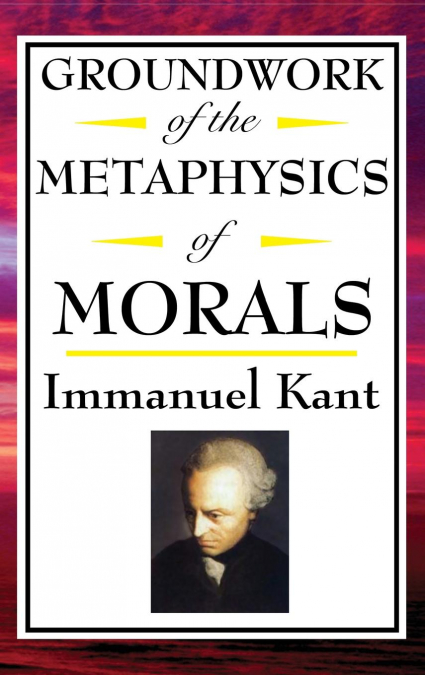
    Kant’s Groundwork of the Metaphysics of Morals is one of the most important works in modern moral philosophy. It belongs beside Plato, Aristotle, Machiavelli, and Hobbes. Here Kant sets out to articulate and defend the Categorical Imperative - the fundamental principle that underlies moral reasoning - and to lay the foundation for a comprehensive account of justice and human vi...
  • On the Duty of Civil Disobedience
    HENRY DAVID THOREAU
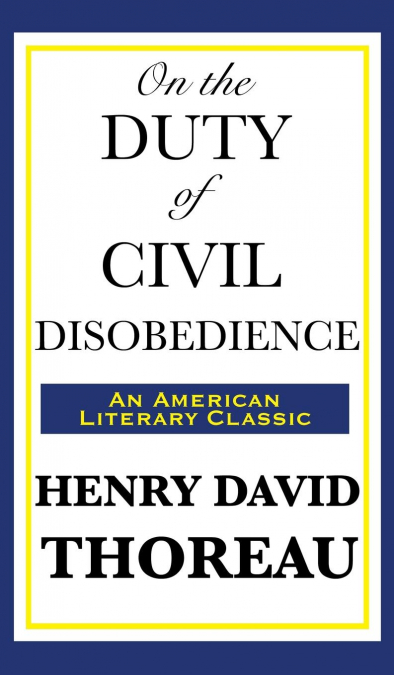
    Civil Disobedience argues that citizens should not permit their governments to overrule their consciences, and that they have a duty to avoid allowing their acquiescence to enable the government to make them the agents of injustice. Thoreau was motivated in part by his disgust with slavery and the Mexican-American War, but the sentiments he expresses here are just as pertinent ...
  • Beyond Good and Evil
    Friedrich Nietzsche
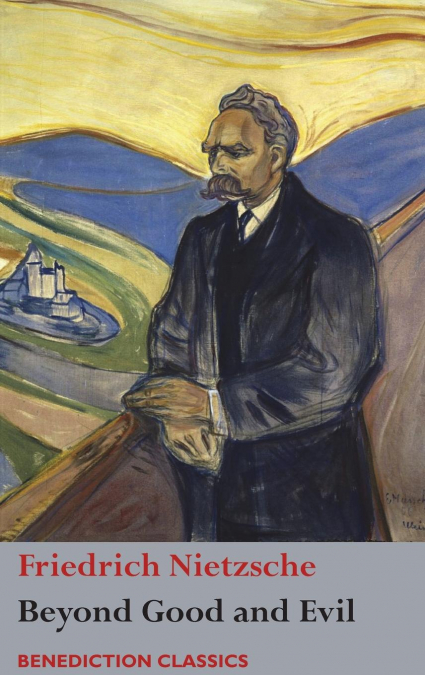
    Nietzsche, though primarily a philosopher, wrote widely on art, philology, history, religion, tragedy, culture, and science.  In 1886, at the height of his powers, he published Beyond Good and Evil.  Here he examines much of the best of human thought--dogmatic philosophy, Judeo-Christian morality, science and democracy – and finds it lacking.  Rejecting “slave-morality” he pres...
  • Beyond Good and Evil
    Friedrich Nietzsche
    Nietzsche, though primarily a philosopher, wrote widely on art, philology, history, religion, tragedy, culture, and science.  In 1886, at the height of his powers, he published Beyond Good and Evil.  Here he examines much of the best of human thought--dogmatic philosophy, Judeo-Christian morality, science and democracy – and finds it lacking.  Rejecting “slave-morality” he pres...
    Disponible

    10,94 €

Otros libros del autor

  • The Birth of Tragedy Out of the Spirit of Music
    Friedrich Wilhelm Nietzsche
    We will have achieved much for the study of aesthetics when we come, not merely to a logical understanding, but also to the immediately certain apprehension of the fact that the further development of art is bound up with the duality of the Apollonian and the Dionysian, just as reproduction depends upon the duality of the sexes, their continuing strife and only periodically occ...
  • Thoughts Out of Season
    Friedrich Wilhelm Nietzsche
    To the reader who knows Nietzsche, who has studied his Zarathustra and understood it, and who, in addition, has digested the works entitled Beyond Good and Evil, The Genealogy of Morals, The Twilight of the Idols, and The Antichrist,- to such a reader everything in this volume will be perfectly clear and comprehensible. ...
  • The Will to Power
    Friedrich Wilhelm Nietzsche
    What happens when a civilization loses faith in its highest values? Nietzsche confronts that crisis by asking whether the beliefs we cherish sustain life—or diminish it.The Will to Power brings together writings from Friedrich Nietzsche’s notebooks, arranged after his death rather than completed by him as a finished book. These fragments explore some of his most challenging ide...
    Disponible

    27,47 €

  • Thus Spake Zarathustra: A Book for All and None
    Friedrich Wilhelm Nietzsche
    What happens when inherited beliefs no longer tell us how to live? Nietzsche turns that question into a poetic journey through the dangers and possibilities of creating our own values.In Thus Spake Zarathustra: A Book for All and None, the solitary prophet Zarathustra leaves his mountain retreat to speak to humanity. His teachings challenge conventional morality, religious auth...
    Disponible

    27,39 €

  • Thus Spake Zarathustra: A Book for All and None: Large Print
    Friedrich Wilhelm Nietzsche
    What happens when inherited beliefs no longer tell us how to live? Nietzsche turns that question into a poetic journey through the dangers and possibilities of creating our own values.In Thus Spake Zarathustra: A Book for All and None, the solitary prophet Zarathustra leaves his mountain retreat to speak to humanity. His teachings challenge conventional morality, religious auth...
    Disponible

    27,47 €

  • The Birth of Tragedy; or, Hellenism and Pessimism
    Friedrich Wilhelm Nietzsche
    Can art help us face suffering without turning away from life? Nietzsche finds a provocative answer in the drama, music, and myths of ancient Greece.In The Birth of Tragedy; or, Hellenism and Pessimism, Friedrich Nietzsche explores the forces that made Greek tragic drama possible. He names them the Apollonian and the Dionysian: the impulse toward form, clarity, and beautiful ap...
    Disponible

    27,39 €