Beyond GDP

Beyond GDP

Didier Blanchet / Marc Fleurbaey

134,35 €
IVA incluido
Consulta disponibilidad
Editorial:
Oxford University Press
Año de edición:
2013
Materia
Macroeconomía
ISBN:
9780199767199

Selecciona una librería:

  • Librería Samer Atenea
  • Librería Aciertas (Toledo)
  • Kálamo Books
  • Librería Perelló (Valencia)
  • Librería Elías (Asturias)
  • Donde los libros
  • Librería Kolima (Madrid)
  • Librería Proteo (Málaga)

In spite of recurrent criticism and an impressive production of alternative indicators by scholars and NGOs, GDP remains the central indicator of countries' success. This book revisits the foundations of indicators of social welfare, and critically examines the four main alternatives to GDP that have been proposed: composite indicators, subjective well-being indexes, capabilities (the underlying philosophy of the Human Development Index), and equivalent incomes.Its provocative thesis is that the problem with GDP is not that it uses a monetary metric but that it focuses on a narrow set of aspects of individual lives. It is actually possible to build an alternative, more comprehensive, monetary indicator that takes income as its first benchmark and adds or subtracts corrections that represent the benefit or cost of non-market aspects of individual lives. Such a measure can respect the values and preferences of the people and give as much weight as they do to the non-market dimensions.A further provocative idea is that, in contrast, most of the currently available alternative indicators, including subjective well-being indexes, are not as respectful of people's values because, like GDP, they are too narrow and give specific weights to the various dimensions of life in a more uniform way, without taking account of the diversity of views on life in the population. The popular attraction that such alternative indicators derive from being non-monetary is therefore based on equivocation.Moreover, it is argued in this book that "greening" GDP and relative indicators is not the proper way to incorporate sustainability concerns. Sustainability involves predicting possible future paths, therefore different indicators than those assessing the current situation. While various indicators have been popular (adjusted net savings, ecological footprint), none of them involves the necessary forecasting effort that a proper evaluation of possible futures requires.
Artículos relacionados

  • Introduction to Dynamic Macroeconomic General Equilibrium Models
    José Luis Torres Chacon
    This book offers an introductory step-by-step course in Dynamic Stochastic General Equilibrium modelling. Modern macroeconomic analysis is increasingly concerned with the construction, calibration and/or estimation and simulation of Dynamic General Equilibrium (DGE) models. The book is intended for graduate students as an introductory course to DGE modelling and for those econo...
    Disponible

    61,40 €

  • International Education and the Next-Generation Workforce
    Wei Wang
    Education is the first stage in developing a viable, dynamic, and long-lived global economy. Unfortunately, in times of economic hardship, educational programs, teacher salaries, and extracurricular opportunities are often the first to be cut. International Education and the Next-Generation Workforce: Competition in the Global Economy presents a detailed discussion of present e...
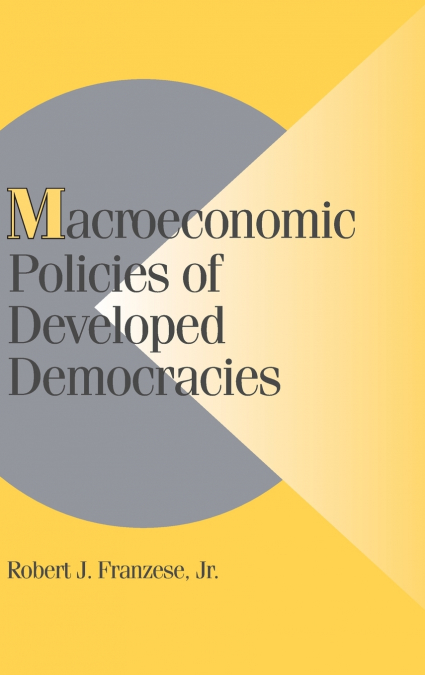
  • Macroeconomic Policies of Developed Democracies
    Robert J Franzese Jr
    ...
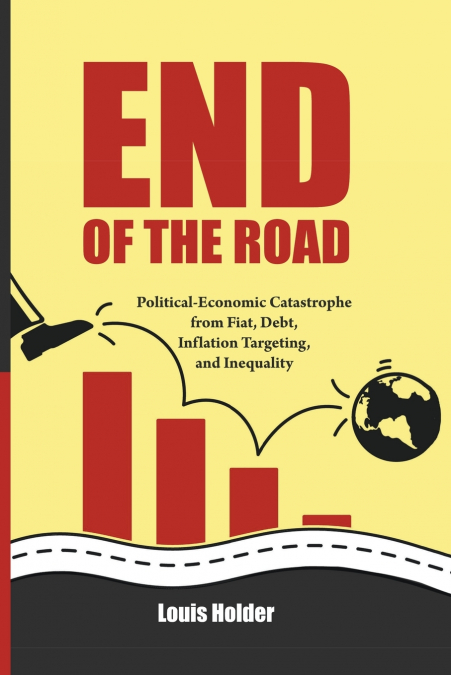
  • End Of The Road
    Louis Holder
    This book is about the mismanagement of Western economies in pursuit of political power, which resulting devastation will have to be borne by future generations. The book establishes that postponement is no longer doable and lays out the hard choices ahead causing much misery and agony.Although not fully recognized because of masking by asset bubbles, which are spun/sold as in...
    Disponible

    16,42 €

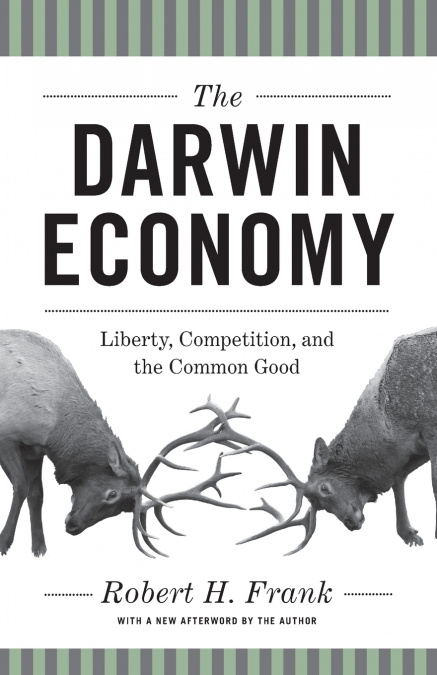
  • The Darwin Economy
    Robert H. Frank
    What Charles Darwin can teach us about building a fairer societyWho was the greater economist-Adam Smith or Charles Darwin? The question seems absurd. Darwin, after all, was a naturalist, not an economist. But Robert Frank, New York Times economics columnist and best-selling author of The Economic Naturalist, predicts that within the next century Darwin will unseat Smith as the...
    Disponible

    22,42 €

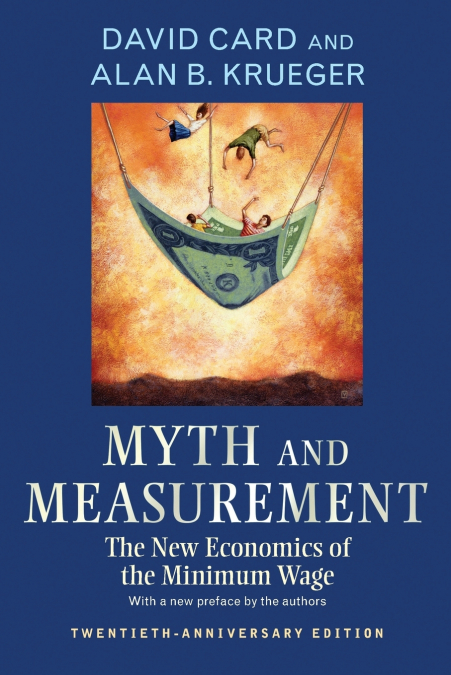
  • Myth and Measurement
    Alan B. Krueger / David Card
    From David Card, winner of the Nobel Prize in Economics, and Alan Krueger, a provocative challenge to conventional wisdom about the minimum wageDavid Card and Alan B. Krueger have already made national news with their pathbreaking research on the minimum wage. Here they present a powerful new challenge to the conventional view that higher minimum wages reduce jobs for low-wage ...
    Disponible

    39,64 €