Inicio > Humanidades > Filosofía > Ética y filosofía moral > Bewusstsein. Das menschliche Gehirn nach Antonio R. Damasio.
Bewusstsein. Das menschliche Gehirn nach Antonio R. Damasio.

Bewusstsein. Das menschliche Gehirn nach Antonio R. Damasio.

Stefan Käshammer

17,46 €
IVA incluido
Disponible
Editorial:
GRIN Publishing
Año de edición:
2007
Materia
Ética y filosofía moral
ISBN:
9783638761260
17,46 €
IVA incluido
Disponible

Selecciona una librería:

  • Librería Samer Atenea
  • Librería Aciertas (Toledo)
  • Kálamo Books
  • Librería Perelló (Valencia)
  • Librería Elías (Asturias)
  • Donde los libros
  • Librería Kolima (Madrid)
  • Librería Proteo (Málaga)

Studienarbeit aus dem Jahr 2002 im Fachbereich Ethik, Note: 1,0, Katholische Hochschule Freiburg, ehem. Katholische Fachhochschule Freiburg im Breisgau, 2 Quellen im Literaturverzeichnis, Sprache: Deutsch, Abstract: Gehirn und das Selbst. Ein Phänomen das wissenschaftlich nur teilweise erforscht ist, da es erst in den letzten Jahrzehnten an Bedeutung gewann. Dieser Bedeutungsgewinn ist zum einen auf den immer geringer werdenden Einfluss von religiösen Werten und Normen auf die Menschen und zum anderen durch den medizinischen Fortschritt in der Neurologie und dessen Evaluationen zurückzuführen. Mit dem Geheimnis des Bewusstseins und an welchen Stellen es im menschlichen Gehirn verankert ist, beschäftigt sich der portugiesische Neurologe Antonio R. Damasio, der Professor und Leiter des „Department of Neurology' an der Universität von Iowa ist. In der folgenden Arbeit werde ich zuerst die verschiedenen Typen des Bewusstsein und Selbst, sowie die möglichen Gehirnregionen beschreiben, die zur Bewusstseinsbildung beitragen. Im weiteren Verlauf stellt sich die Frage, welcher Zusammenhang zwischen Emotion, Bewusstsein und Gefühl besteht. Organismus - Objekt - Bewusstsein: Bevor ich das Kernbewusstsein beschreibe, werde ich die Begriffe Organismus, Objekt und Bewusstsein nach Damasio erläutern. „Der betreffende Organismus ist derjenige in dem Bewusstsein stattfindet; als Objekt kommt alles in Frage, was im Zuge des Bewusstseinsprozesses erkannt wird; und die Beziehungen zwischen Organismus und Objekt sind die Inhalte des Wissens, das wir Bewusstsein nennen. So gesehen, besteht Bewusstsein aus der Konstruktion von Wissen über zwei Fakten; dass der Organismus damit beschäftigt ist, eine Beziehung zu einem Objekt zu knüpfen und dass das Objekt in der Beziehung eine Veränderung im Organismus hervorruft' (Damasio, 2002 - S.33).
Artículos relacionados

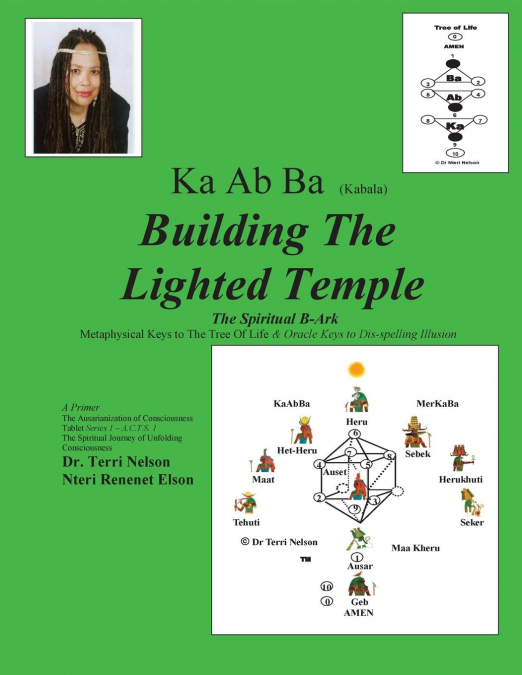
  • Ka Ab Ba Building The Lighted Temple
    Dr Terri R. Nelson / Dr Terri RNelson
    The book KaAbBa Building The Lighted Temple/Metaphysical Keys to the Tree of Life draws a circle that is inclusive of the Afrikan origin of the Ancient Kemetic/Egyptian wisdom. It reveals the undeniable root and link of Ancient Africa to all the religious systems that would develop worldwide. This book is explosive in its power to convey the meaning of KaAbBa, the Medu Neter  (...
    Disponible

    37,41 €

  • Technoethics and the Evolving Knowledge Society
    Rocci Luppicini
    Recently, there has been a major push to rediscover the ethical dimension of technology across the sciences, social sciences, and humanities. Technoethics and the Evolving Knowledge Society: Ethical Issues in Technological Design, Research, Development, and Innovation examines human processes and practices connected to technology embedded within social, political, and moral sph...
  • Kant
    Immanuel Kant
    Kant’s Groundwork of the Metaphysics of Morals is one of the most important works in modern moral philosophy. It belongs beside Plato, Aristotle, Machiavelli, and Hobbes. Here Kant sets out to articulate and defend the Categorical Imperative - the fundamental principle that underlies moral reasoning - and to lay the foundation for a comprehensive account of justice and human vi...
  • On the Duty of Civil Disobedience
    HENRY DAVID THOREAU
    Civil Disobedience argues that citizens should not permit their governments to overrule their consciences, and that they have a duty to avoid allowing their acquiescence to enable the government to make them the agents of injustice. Thoreau was motivated in part by his disgust with slavery and the Mexican-American War, but the sentiments he expresses here are just as pertinent ...
  • Beyond Good and Evil
    Friedrich Nietzsche
    Nietzsche, though primarily a philosopher, wrote widely on art, philology, history, religion, tragedy, culture, and science.  In 1886, at the height of his powers, he published Beyond Good and Evil.  Here he examines much of the best of human thought--dogmatic philosophy, Judeo-Christian morality, science and democracy – and finds it lacking.  Rejecting “slave-morality” he pres...
  • Beyond Good and Evil
    Friedrich Nietzsche
    Nietzsche, though primarily a philosopher, wrote widely on art, philology, history, religion, tragedy, culture, and science.  In 1886, at the height of his powers, he published Beyond Good and Evil.  Here he examines much of the best of human thought--dogmatic philosophy, Judeo-Christian morality, science and democracy – and finds it lacking.  Rejecting “slave-morality” he pres...
    Disponible

    9,99 €