 Librería Samer Atenea
 Kálamo Books
 Librería Elías (Asturias)
 Librería Kolima (Madrid)
 Librería Proteo (Málaga)
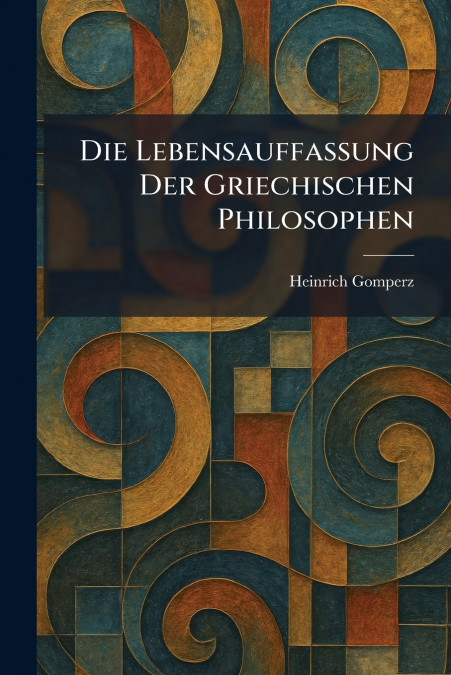
In 'Ãber Die Ursprüngliche Reihenfolge Einiger Bruchstücke Heraklits' widmet sich der namhafte Philosoph und Philologe Heinrich Gomperz einer der anspruchsvollsten Aufgaben der antiken Philosophiegeschichte: der methodischen Rekonstruktion der Fragmente des Heraklit von Ephesus. Das Werk untersucht tiefgehend die logische und thematische Struktur der überlieferten Bruchstücke, um deren ursprüngliche Anordnung und den damit verbundenen philosophischen Kontext innerhalb des verlorenen Gesamtwerks des Denkers zu erschlieÃen. Gomperz analysiert mit philologischer Präzision die sprachlichen Feinheiten und die gedankliche Kohärenz der Lehren Heraklits, der für seine rätselhafte Ausdrucksweise bekannt war. Durch akribische Textkritik versucht der Autor, Licht in das komplexe System des dunklen Philosophen zu bringen, insbesondere in Bezug auf die Lehre vom Logos und die Einheit der Gegensätze. Dieses Werk stellt einen bedeutenden Beitrag zur klassischen Philologie und zur Erforschung der Vorsokratiker dar. Es bietet Wissenschaftlern und Studierenden wertvolle Einblicke in die hermeneutische Herangehensweise an antike Texte und bleibt ein wichtiges Referenzwerk für das Verständnis der frühen griechischen Philosophie und der Entwicklung des abendländischen Denkens.This work has been selected by scholars as being culturally important, and is part of the knowledge base of civilization as we know it. This work was reproduced from the original artifact, and remains as true to the original work as possible. Therefore, you may see the original copyright references, library stamps (as most of these works have been housed in our most important libraries around the world), and other notations in the work.This work is in the public domain in the United States of America, and possibly other nations. Within the United States, you may freely copy and distribute this work, as no entity (individual or corporate) has a copyright on the body of the work.As a reproduction of a historical artifact, this work may contain missing or blurred pages, poor pictures, errant marks, etc. Scholars believe, and we concur, that this work is important enough to be preserved, reproduced, and made generally available to the public. We appreciate your support of the preservation process, and thank you for being an important part of keeping this knowledge alive and relevant.