

 Librería Samer Atenea
 Kálamo Books
 Librería Elías (Asturias)
 Librería Kolima (Madrid)
 Librería Proteo (Málaga)
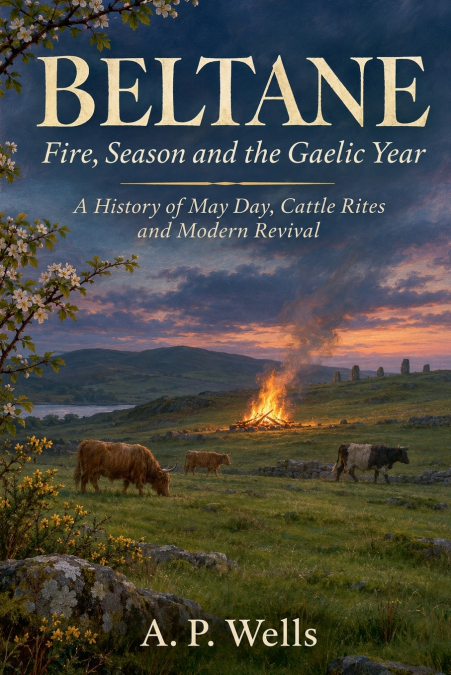
What did Beltane mean to the people who marked the beginning of summer, and how did a seasonal observance become a modern festival?Beltane is often described as an ancient fertility rite or a fire festival preserved unchanged from pagan times. The surviving evidence tells a more varied and revealing story.In Beltane: Fire, Season and the Gaelic Year, Allan Pinfield-Wells traces the festival through medieval Irish texts, Scottish and Manx customs, folklore collections and modern revival. He examines Beltane’s place in the Gaelic seasonal calendar, the fires associated with cattle protection, household practices, May Day pageantry and the changing meanings of the festival across different communities and periods.The book also explores how antiquarians shaped popular ideas about Beltane, how Gaelic cultural revival and modern Pagan calendars brought the festival new forms, and how Edinburgh’s Beltane Fire Festival became a contemporary public performance. Throughout, it distinguishes what historical sources record from later folklore, scholarly interpretation and present-day practice.Beltane is traditionally associated with the beginning of summer around May Day. It is not the spring equinox, and the evidence does not support a single ceremony shared unchanged across the Gaelic world. Recognising those limits makes the history more compelling: it reveals how people adapted seasonal customs to their landscapes, livelihoods, beliefs and communities.Grounded, accessible and attentive to regional difference, this is a history of Beltane as both a seasonal threshold and a tradition repeatedly reinterpreted.





