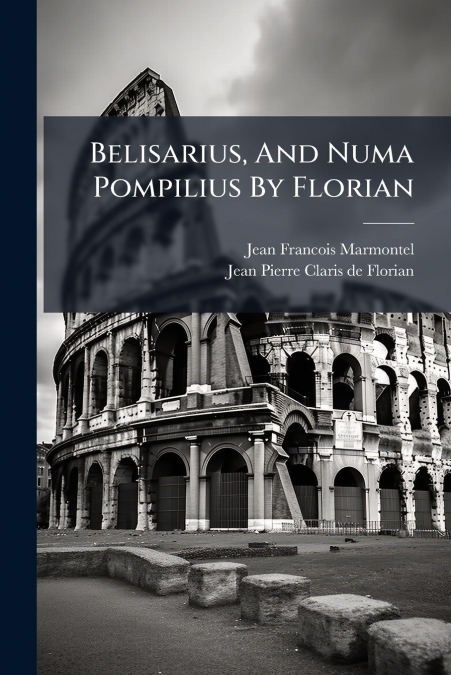
Jean Francois Marmontel / Jean-Pierre-Claris de Florian
 Librería Samer Atenea
 Kálamo Books
 Librería Elías (Asturias)
 Librería Kolima (Madrid)
 Librería Proteo (Málaga)
'Belisarius' and 'Numa Pompilius' present philosophical and historical reflections through biographical narratives. 'Belisarius,' by Jean-François Marmontel, tells the story of the renowned Byzantine general, exploring themes of justice, political intrigue, and the capriciousness of fate. Belisarius, despite his loyalty and military successes, faces unjust accusations and trials, prompting reflections on the nature of power and virtue. 'Numa Pompilius,' by Jean-Pierre Claris de Florian, delves into the life of the legendary second king of Rome, examining his wisdom, piety, and contributions to Roman law and religion. Florian’s narrative serves as a vehicle for exploring principles of governance and the moral foundations of a just society. Together, these works offer readers insights into historical figures and timeless philosophical questions.This work has been selected by scholars as being culturally important, and is part of the knowledge base of civilization as we know it. This work was reproduced from the original artifact, and remains as true to the original work as possible. Therefore, you will see the original copyright references, library stamps (as most of these works have been housed in our most important libraries around the world), and other notations in the work.This work is in the public domain in the United States of America, and possibly other nations. Within the United States, you may freely copy and distribute this work, as no entity (individual or corporate) has a copyright on the body of the work.As a reproduction of a historical artifact, this work may contain missing or blurred pages, poor pictures, errant marks, etc. Scholars believe, and we concur, that this work is important enough to be preserved, reproduced, and made generally available to the public. We appreciate your support of the preservation process, and thank you for being an important part of keeping this knowledge alive and relevant.