
Behaviorism, Consciousness, and the Literary Mind

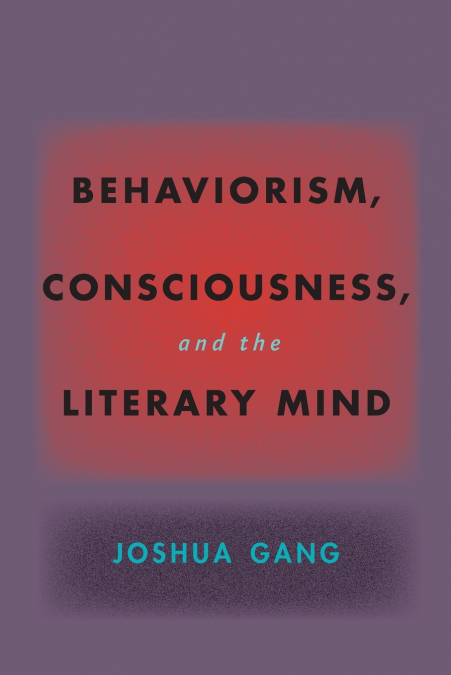
Behaviorism, Consciousness, and the Literary Mind

Joshua Gang

48,71 €
IVA incluido
Disponible
Editorial:
Hopkins Fulfillment Service
Año de edición:
2021
Materia
Teoría literaria
ISBN:
9781421440859
48,71 €
IVA incluido
Disponible

Selecciona una librería:

  • Librería Samer Atenea
  • Librería Aciertas (Toledo)
  • Kálamo Books
  • Librería Perelló (Valencia)
  • Librería Elías (Asturias)
  • Donde los libros
  • Librería Kolima (Madrid)
  • Librería Proteo (Málaga)

What might behaviorism, that debunked school of psychology, tell us about literature? If inanimate objects such as novels or poems have no mental properties of their own, then why do we talk about them as if they do? Why do we perceive the minds of characters, narrators, and speakers as if they were comparable to our own? In Behaviorism, Consciousness, and the Literary Mind, Joshua Gang offers a radical new approach to these questions, which are among the most challenging philosophical problems faced by literary study today.Recent cognitive criticism has tried to answer these questions by looking for similarities and analogies between literary form and the processes of the brain. In contrast, Gang turns to one of the twentieth century’s most infamous psychological doctrines: behaviorism. Beginning in 1913, a range of psychologists and philosophers--including John B. Watson, B. F. Skinner, and Gilbert Ryle--argued that many of the things we talk about as mental phenomena aren’t at all interior but rather misunderstood behaviors and physiological processes. Today, behaviorism has relatively little scientific value, but Gang argues for its enormous critical value for thinking about why language is so good at creating illusions of mental life.Turning to behaviorism’s own literary history, Gang offers the first sustained examination of the outmoded science’s place in twentieth-century literature and criticism. Through innovative readings of figures such as I. A. Richards, the American New Critics, Samuel Beckett, Harold Pinter, and J. M. Coetzee, Behaviorism, Consciousness, and the Literary Mind reveals important convergences between modernist writers, experimental psychology, and analytic philosophy of mind--while also giving readers a new framework for thinking about some of literature’s most fundamental and exciting questions.
Artículos relacionados

  • Critical theory and dystopia
    Patricia McManus
    Critical theory and dystopia offers a uniquely rich study of dystopian fiction, drawing on the insights of critical theory. Asking what ideological work these dark imaginings perform, the book reconstructs the historical emergence, consolidation and transformation of the genre across the twentieth century and into our own, ranging from Yevgeny Zamyatin’s We (1924) and Aldous Hu...
    Disponible

    35,86 €

  • Pen of Iron
    Robert Alter
    How the King James Bible has influenced the style of the American novel from Melville to Cormac McCarthyThe simple yet grand language of the King James Bible has pervaded American culture from the beginning-and its powerful eloquence continues to be felt even today. In this book, acclaimed biblical translator and literary critic Robert Alter traces some of the fascinating ways ...
  • The Last Utopians
    Michael Robertson
    The entertaining story of four utopian writers-Edward Bellamy, William Morris, Edward Carpenter, and Charlotte Perkins Gilman-and their continuing influence todayIn this lively literary history, Michael Robertson introduces readers to a vital strain of utopianism that seized the imaginations of four American and British writers during an extraordinary period of literary and soc...
    Disponible

    30,46 €

  • Dao and Sign in History
    Daniel Fried
    Provides a new perspective on important linguistic issues in philosophical and religious Daoism through the comparative lens of twentieth-century European philosophies of language.From its earliest origins in the Dao De Jing, Daoism has been known as a movement that is skeptical of the ability of language to fully express the truth. While many scholars have compared the earlies...
  • Camões E O Outro Camões De José Saramago
    Flávio G Vichinsky
    A consolidação da figura de Camões como elemento dos mais relevantes na cultura portuguesa é consenso entre os historiadores, literatos e demais estudiosos do processo de formação histórica e social desse país. A obra do poeta e a sua biografia, bem como a mitologia que as envolvem, transformaram-no em um dos maiores e mais conhecidos símbolos de Portugal, o que o coloca muitas...
    Disponible

    8,84 €

  • La enseñanza de la literatura
    José Emilio Hernández Sánchez
    El libro se centra en la enseñanza de la literatura. Consta de varios capítulos: El primero se dedica a ubicar el texto literario dentro del marco de la cultura. Se ofrecen diversas indicaciones didácticas para el estudio del texto literario desde el enfoque histórico-cultural de Lov Vigostky o constructivismo social. Igualmente se incluye un capítulo dedicado al sistema concep...