Behaving

Behaving

Kenneth F. Schaffner

173,64 €
IVA incluido
Consulta disponibilidad
Editorial:
Oxford University Press
Año de edición:
2016
Materia
Ética y filosofía moral
ISBN:
9780195171402

Selecciona una librería:

  • Librería Samer Atenea
  • Librería Aciertas (Toledo)
  • Kálamo Books
  • Librería Perelló (Valencia)
  • Librería Elías (Asturias)
  • Donde los libros
  • Librería Kolima (Madrid)
  • Librería Proteo (Málaga)

Behaving presents an overview of the recent history and methodology of behavioral genetics and psychiatric genetics, informed by a philosophical perspective. Kenneth F. Schaffner addresses a wide range of issues, including genetic reductionism and determinism, 'free will,' and quantitative and molecular genetics. The latter covers newer genome-wide association studies (GWAS) that have produced a paradigm shift in the subject, and generated the problem of 'missing heritability.' Schaffner also presents cases involving pro and con arguments for genetic testing for IQ and for Attention Deficit Hyperactivity Disorder (ADHD). Schaffner examines the nature-nurture controversy and Developmental Systems Theory using C. elegans or 'worm' studies as a test case, concluding that genes are special and provide powerful tools, including 'deep homology,' for investigating behavior. He offers a novel account of biological knowledge emphasizing the importance of models, mechanisms, pathways, and networks, which clarifies how partial reductions provide explanations of traits and disorders. The book also includes examinations of personality genetics and of schizophrenia and its etiology, alongside interviews with prominent researchers in the area, and discusses debates about psychosis that led to changes in the DSM-5 in 2013. Schaffner concludes by discussing additional philosophical implications of the genetic analyses in the book, some major worries about 'free will,' and arguments pro and con about why genes and DNA are so special. Though genes are special, newer perspectives presented in this book will be needed for progress in behavioral genetics- perspectives that situate genes in complex multilevel prototypic pathways and networks. With a mix of optimism and pessimism about the state of the field and the subject, Schaffner’s book will be of interest to scholars in the history and philosophy of science, medicine, and psychiatry.


Artículos relacionados

  • Ka Ab Ba Building The Lighted Temple
    Dr Terri R. Nelson / Dr Terri RNelson
    The book KaAbBa Building The Lighted Temple/Metaphysical Keys to the Tree of Life draws a circle that is inclusive of the Afrikan origin of the Ancient Kemetic/Egyptian wisdom. It reveals the undeniable root and link of Ancient Africa to all the religious systems that would develop worldwide. This book is explosive in its power to convey the meaning of KaAbBa, the Medu Neter  (...
    Disponible

    37,41 €

  • Technoethics and the Evolving Knowledge Society
    Rocci Luppicini
    Recently, there has been a major push to rediscover the ethical dimension of technology across the sciences, social sciences, and humanities. Technoethics and the Evolving Knowledge Society: Ethical Issues in Technological Design, Research, Development, and Innovation examines human processes and practices connected to technology embedded within social, political, and moral sph...
  • Kant
    Immanuel Kant
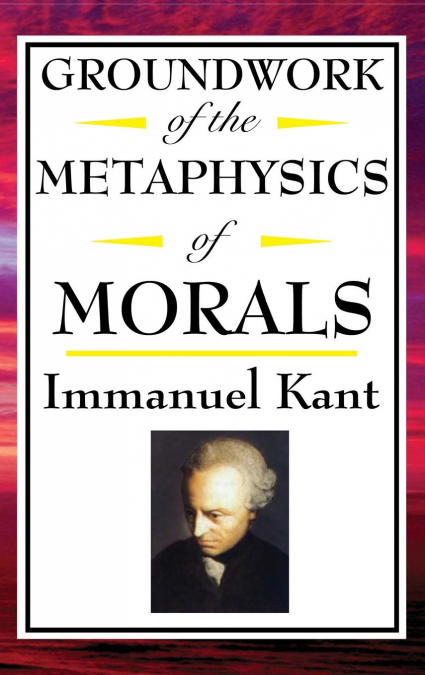
    Kant’s Groundwork of the Metaphysics of Morals is one of the most important works in modern moral philosophy. It belongs beside Plato, Aristotle, Machiavelli, and Hobbes. Here Kant sets out to articulate and defend the Categorical Imperative - the fundamental principle that underlies moral reasoning - and to lay the foundation for a comprehensive account of justice and human vi...
  • On the Duty of Civil Disobedience
    HENRY DAVID THOREAU
    Civil Disobedience argues that citizens should not permit their governments to overrule their consciences, and that they have a duty to avoid allowing their acquiescence to enable the government to make them the agents of injustice. Thoreau was motivated in part by his disgust with slavery and the Mexican-American War, but the sentiments he expresses here are just as pertinent ...
  • Beyond Good and Evil
    Friedrich Nietzsche
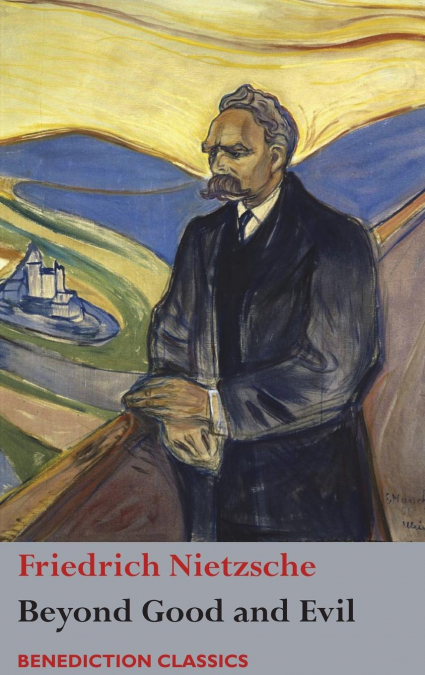
    Nietzsche, though primarily a philosopher, wrote widely on art, philology, history, religion, tragedy, culture, and science.  In 1886, at the height of his powers, he published Beyond Good and Evil.  Here he examines much of the best of human thought--dogmatic philosophy, Judeo-Christian morality, science and democracy – and finds it lacking.  Rejecting “slave-morality” he pres...
  • Beyond Good and Evil
    Friedrich Nietzsche
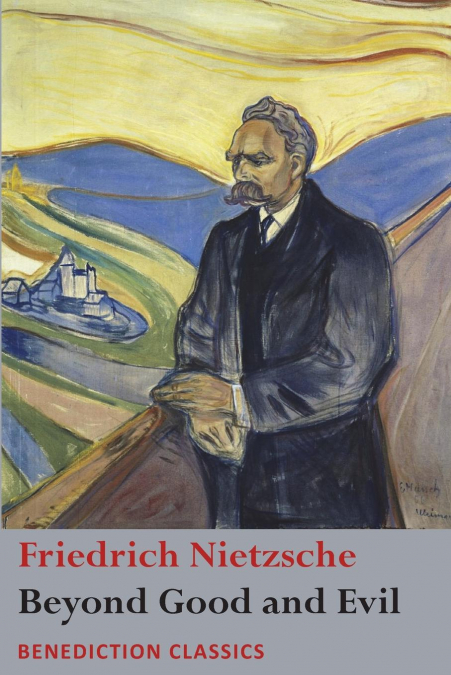
    Nietzsche, though primarily a philosopher, wrote widely on art, philology, history, religion, tragedy, culture, and science.  In 1886, at the height of his powers, he published Beyond Good and Evil.  Here he examines much of the best of human thought--dogmatic philosophy, Judeo-Christian morality, science and democracy – and finds it lacking.  Rejecting “slave-morality” he pres...
    Disponible

    9,99 €