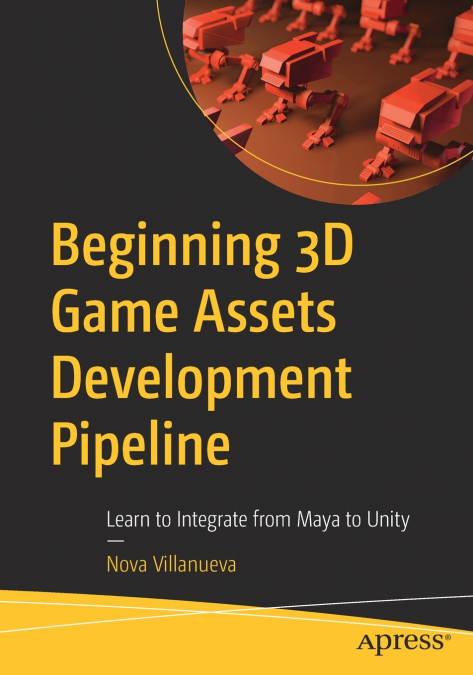

Beginning 3D Game Assets Development Pipeline

Beginning 3D Game Assets Development Pipeline

Nova Villanueva

74,34 €
IVA incluido
Disponible
Editorial:
Springer Nature B.V.
Año de edición:
2021
ISBN:
9781484271957
74,34 €
IVA incluido
Disponible

Selecciona una librería:

  • Librería Samer Atenea
  • Librería Aciertas (Toledo)
  • Kálamo Books
  • Librería Perelló (Valencia)
  • Librería Elías (Asturias)
  • Donde los libros
  • Librería Kolima (Madrid)
  • Librería Proteo (Málaga)

This project-based tutorial covers the creation of 3D assets in a game engine, from concept to implementation. You will learn the 3D pipeline using Maya and Substance Painter, which are industry-standard programs used for content creation in game development. You also will know how to add them and work with them in Unity.The book begins with an overall look at the production of game development and the different roles in creating assets. Then, starting with Maya, you learn how to start with a concept and take it through the entire production pipeline: base mesh, UV mapping, high poly, texturing, rigging, and animation. You will be working on one asset project throughout the entire book to understand how one phase leads to the next one. Lastly, you will cover asset placement and integration into Unity.What You Will LearnBuild a thorough knowledge of the 3D game asset production workflowUnderstand how each phase leads up to the next oneKnow how 3D assets are implemented into UnityTexture, rig, and animate the 3D modelExport and import the 3D asset or modelUnderstand the iterative design processWho This Book Is For3D artists, from beginners to specialists, who are interested in learning the 3D production pipeline of game assets as a whole
Artículos relacionados

  • Learning, Education, & Games
    How can we use games to support inclusion, compassion, care, equity, and justice-in the classroom and beyond? This book is aimed at educators, researchers, and designers who want to use games to enhance equity and justice for marginalized students, and create communities where everyone feels like they belong. The book explores 50 different games, including popular games like An...
    Disponible

    36,94 €

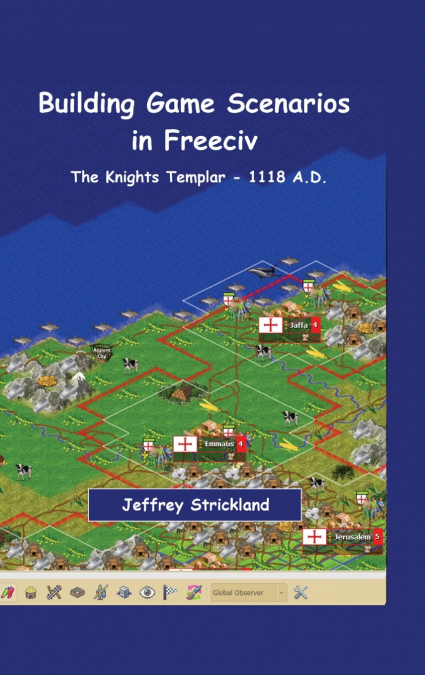
  • Building Scenarios in Freeciv
    Jeffrey Strickland
    This book is about creating scenarios for games and simulations using Freeciv 2.5. Here I demonstrate how use the Freeciv Map Tool to generate a relief map with terrain features and resources. Also, I introduce a new terrain type, pastureland. I also use the open-source tool Terrain2STL to generate STL files, Autodesk Meshmixer to impart and reshape a terrain model, and Autodes...
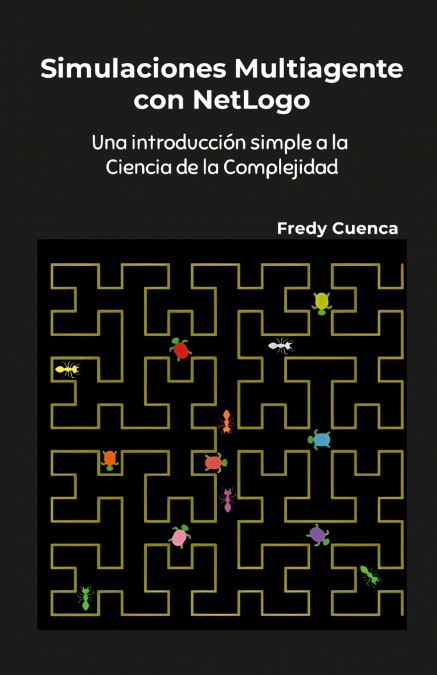
  • Simulaciones Multiagente con NetLogo
    Fredy Cuenca
    El tráfico vehicular, las colonias de insectos, los sistemas financieros, las moléculas de un gas, el sistema inmunológico y las redes neuronales son unos pocos ejemplos de sistemas que poseen una multitud de agentes que interactúan entre sí. A causa de su complejidad, dichos sistemas son esquivos a las ecuaciones diferenciales y los métodos analíticos tradicionales y suelen se...
    Disponible

    31,14 €

  • Game Design Deep Dive
    Joshua Bycer
    Game Design Deep Dive: Jumping examines the history of jumping - one of the oldest mechanics in the industry, and how it has evolved and changed over the years. We will look at the transition from 2D to 3D, and multiple elements that make jumping more complicated than it looks from a design perspective. ...
  • Creating Games with Unity, Substance Painter, & Maya
    Adam Watkins / Jingtian Li / Kassandra Arevalo
    This tutorial-based book allows readers to create a first-person game from start to finish using industry-standard (and free to student) tools of Maya, Substance Painter, and Unreal Engine. The first half of the book lays out the basics of using Maya and Substance Painter to create game-ready assets. ...
  • Creating Games with Unreal Engine, Substance Painter, & Maya
    Jingtian Li / Kassandra Arevalo / Matthew Tovar
    This tutorial-based book allows readers to create a first-person game from start to finish using industry-standard (and free to student) tools of Maya, Substance Painter, and Unreal Engine. ...