
Before the Roads Were Paved

Before the Roads Were Paved

Dorothy Cumming

13,90 €
IVA incluido
Disponible
Editorial:
Trafford Publishing
Año de edición:
2007
ISBN:
9781552126622
13,90 €
IVA incluido
Disponible

Selecciona una librería:

  • Librería Samer Atenea
  • Librería Aciertas (Toledo)
  • Kálamo Books
  • Librería Perelló (Valencia)
  • Librería Elías (Asturias)
  • Donde los libros
  • Librería Kolima (Madrid)
  • Librería Proteo (Málaga)

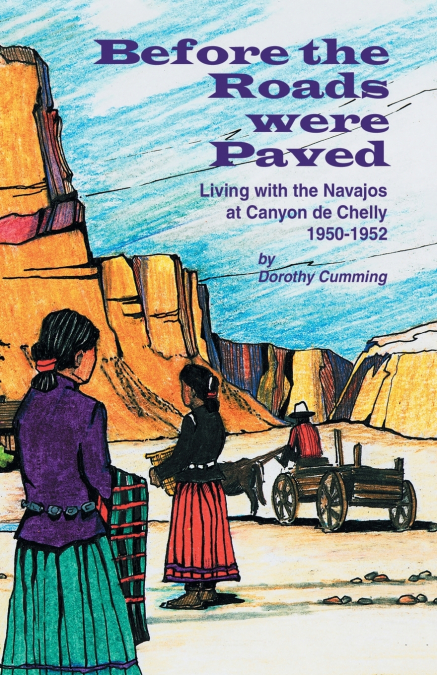
It was on Columbus Day, October 12, 1950, that my husband and I joined the United States Indian Service and went to live with the Navajos in northern Arizona at Chinle, near the entrance to the famous Canyon de Chelly. We were just out of the University of Arizona, my husband with a degree in Range Ecology and I with a degree in Anthropology. And like Columbus, we sailed forth on uncharted seas to a new frontier and we arrived just in time because, although we didn’t realize it, an era was dying. The last real American frontier, the frontier of cowboys and Indians, was passing, but we didn’t stop to think about it as we were too busy living it. Every day was an adventure and life was good.Yah te hey as the Navajos say, it was good.In 1950 there were no paved roads on the twenty-four thousand square mile reservation. There were no motels, no restaurants, no movie theaters, and no supermarkets. In short, there were none of the so-called necessities of our civilization. But there were 24,000 square miles of open country of stark, rugged beauty, and here and there a hogan, a flock of sheep and goats, and once in a while, a trading post. Wagons and horses were the common method of transportation. It was three or four months sometimes before we got into a town and then we went only out of necessity. I didn’t want to leave the reservation for too long as I was afraid that I might miss something while I was gone. We purchased our daily supplies at the local trading post and hoped we would not get sick as it was 40 miles to a mission doctor, if the road was open.Now all that has changed. We left the reservation in 1962, after having spent ten years in three agencies with the Navajos and two years with the Hopis, whose reservation is surrounded by the larger Navajo reservation.This book is dedicated to the Indians and to the personnel of the United States Indian Service, and it is told with the spirit of sharing - sharing an adventure with others who were not so fortunate as to have been there with us at the time.
Artículos relacionados

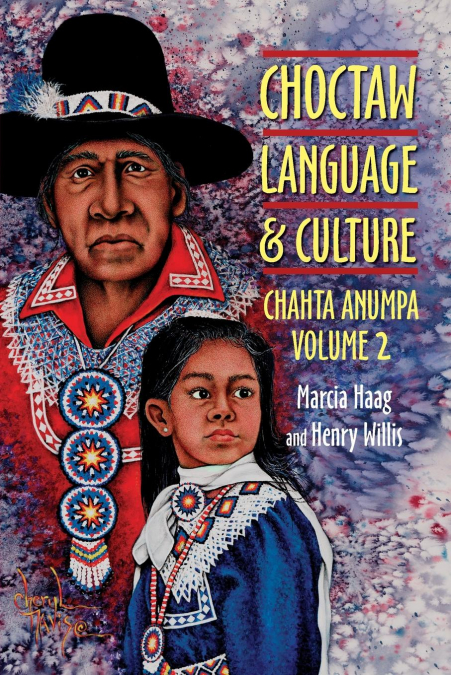
  • Choctaw Language and Culture
    Henry Willis / Marcia Haag
    Building on the foundations laid by the first volume of Choctaw Language and Culture, this follow-up text presents a more advanced linguistic study of Oklahoma Choctaw, accompanied by short stories and anecdotes written by Choctaws in their native language.The book is organized around twelve texts with translations, each followed by a grammar lesson, a vocabulary section that a...
    Disponible

    38,64 €

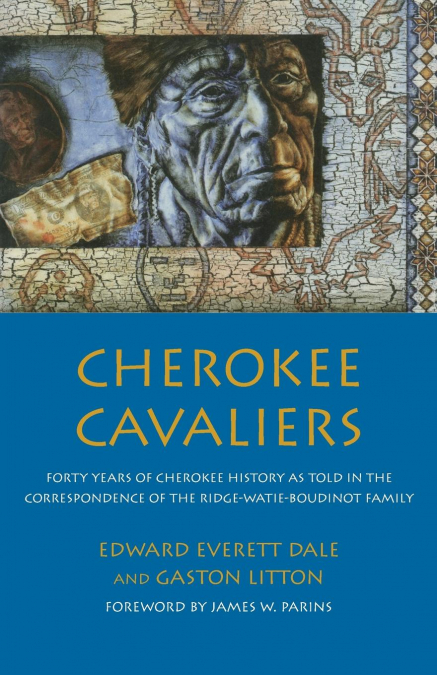
  • Cherokee Cavaliers
    Edward Everett Dale / Gaston Liston
    The two hundred letters which from the colorful mosaic of this story of the Cherokee tell for the first time, in the Indian’s own words, of more than forty years in the history of the old Cherokee Nation. These letters, found in three great trunks in Oklahoma by Edward Everett Dale, and here brought together, in collaboration with Gaston Litton, in sequence and with the necessa...
    Disponible

    17,00 €

  • Indigenous Peoples and Borders
    Sheryl Lightfoot
    The legacies of borders are far-reaching for Indigenous Peoples. This collection offers new ways of understanding borders by departing from statist approaches to territoriality. Bringing together the fields of border studies, human rights, international relations, and Indigenous studies, it features a wide range of voices from across academia, public policy, and civil society. ...
    Disponible

    38,69 €

  • The Politics of Kinship
    Mark Rifkin
    What if we understood the idea of family as central to representing alternative forms of governance as expressions of racial deviance? In The Politics of Kinship, Mark Rifkin shows how ideologies of family, including notions of kinship, recast Indigenous and other forms of collective self-organization and self-determination as disruptive racial tendencies in need of state conta...
    Disponible

    38,84 €

  • Defend the Sacred
    Michael D. McNally
    The remarkable story of the innovative legal strategies Native Americans have used to protect their religious rightsFrom North Dakota’s Standing Rock encampments to Arizona’s San Francisco Peaks, Native Americans have repeatedly asserted legal rights to religious freedom to protect their sacred places, practices, objects, knowledge, and ancestral remains. But these claims have ...
  • Plants and Animals in the Yoeme World
    Felipe S. Molina / Richard S. Felger
    This is a book about plants and animals in the Yoeme world, including the Yoem Bwiara in Sonora, Mexico, and that region of south-central Arizona where Yoeme communities formed during the diasporas of the nineteenth and twentieth centuries. We document more than 415 plant species and over 600 kinds (taxa) of animal life, and describe from historical and first-person accounts ma...