Barack Obama’s Ultimate End Game

Barack Obama’s Ultimate End Game

Barack Obama's Ultimate End Game

Gary Patterson

15,14 €
IVA incluido
Disponible
Editorial:
Outskirts Press
Año de edición:
2011
Materia
Gobierno central
ISBN:
9781432758370
15,14 €
IVA incluido
Disponible

Selecciona una librería:

  • Librería Samer Atenea
  • Librería Aciertas (Toledo)
  • Kálamo Books
  • Librería Perelló (Valencia)
  • Librería Elías (Asturias)
  • Donde los libros
  • Librería Kolima (Madrid)
  • Librería Proteo (Málaga)

Is Winning a Second Presidential Term Really Barack Obama’s 'Ultimate End Game'? Considering twelve specific events - with foreign policy implications - that have occurred during the first 18 months of the Obama Presidency, there is one common thread that emerges suggesting a recurring potential political motivation beyond just President Obama’s desire to serve a second Presidential term. And, if so, the American people have a right to know it before the 2012 Presidential Election. The Voters can then decide for themselves whether they are concerned or not as to what degree Barack Obama’s attitudes and judgment regarding U.S. foreign policy issues - as President of the United States - may be influenced or constrained by his 'Ultimate End Game' and, potentially, conflict with America’s best self-interests. Supplanting ObamaCareRegarding meaningful Health Care Reform, although professing that The Will of The People was paramount, President Obama consciously made no Health Care decision that, at all, conflicted with the interests of his two biggest campaign donors - Trial Lawyers and Unions - or his own prospects for re-election in 2012. In fact, even at the risk and on the verge of a failed Presidency that a defeat on Health Care would bring (as the bar previously set by the Democrats themselves), President Obama still refused, in reality, to even consider compromising on either Health Care Premium Price Competition across state lines - a non-starter with the Service Employees International Union (SEIU) - or Tort Reform - the bane of all Trial Lawyers. But, exactly why would President Obama insist on taking such a risk? It is not that the Obama Administration is, by any means, the first and only Presidential administration to be influenced by political interest groups or the political consequences of their actions. However, this book chronicles the pervasive extent to which the priority interests of Labor Unions and Trial Lawyers enveloped the Presidential decision-making process within the Obama Administration - to the detriment of The Will of The People. The Optimal Health Care SolutionHowever, through just a single change in the tax law (as detailed and recommended herein), President Obama not only could have accomplished comprehensive Health Care Reform, but simultaneously achieved both 1) Health Care premium cost control as well as 2) meaningful Medical Provider cost reduction and containment - neither tenet of which was addressed in the ObamaCare legislation as passed. Nor would this simple tax law change necessitate - as does ObamaCare - the pervasive government control of one-sixth of the U.S economy; dictating the creation of more than 120 separate new federal bureaucracies, agencies and boards and the hiring of tens of thousands of additional federal government employees to staff and run them at an average lifetime cost of $4 million per new federal employee hired. Finally, in dissecting ObamaCare, an extensive analysis was performed of 1) the additional budgetary ramifications of deals struck by Congressional Democrats - with President Obama’s blessing - to subsequently pass ObamaCare; 2) obvious Health Care expenses not included (e.g. The 'Doctor Fix') and 3) the $500 Billion in unrealistic and virtually unattainable cost savings offsets pertaining to the recovery of Fraudulent Medicare payments and waste. Revealingly, this analysis disclosed that, in actuality, the ultimate cost of ObamaCare balloons well beyond $3 Trillion - more than three times the CBO estimate of $940 Billion.
Artículos relacionados

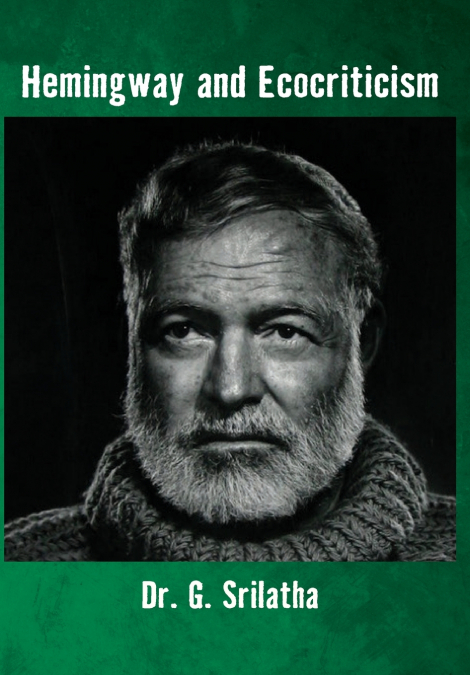
  • Hemingway and Ecocriticism
    Dr. G. Srilatha
    Hemingway and Ecocriticism focuses on the famous author’s short stories from ecocritical perspectives, which are concerned with the relationship between humans and the landscape and plead for a better understanding of nature. Of Hemingway’s first 49 short stories, 22 exhibit ecological concerns in some form or other. They reveal great damage caused to nature and human beings al...
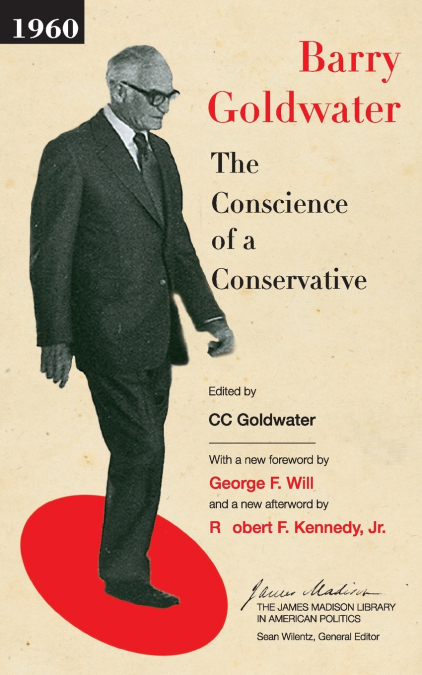
  • The Conscience of a Conservative
    Barry M. Goldwater
    In 1960, Barry Goldwater set forth his brief manifesto in The Conscience of a Conservative. Written at the height of the Cold War and in the wake of America’s greatest experiment with big government, the New Deal, Goldwater’s message was not only remarkable, but radical. He argued for the value and importance of conservative principles--freedom, foremost among them--in contempo...
    Disponible

    25,57 €

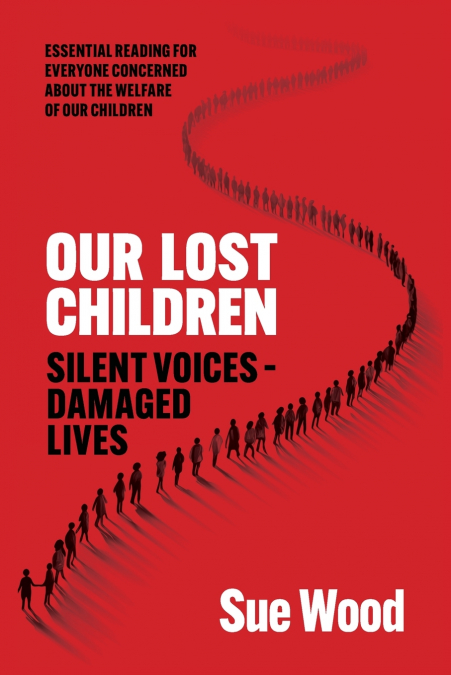
  • Our Lost Children
    Sue Wood
    ’If their voices were heard’. These are the words which stand out in a report by Save the Children when discussing the needs of children during the pandemic. Children have different needs from adults and too often these are not considered in sufficient detail. This book highlights the voices of all our young people as we read about their experiences before, during and after the...
    Disponible

    13,66 €

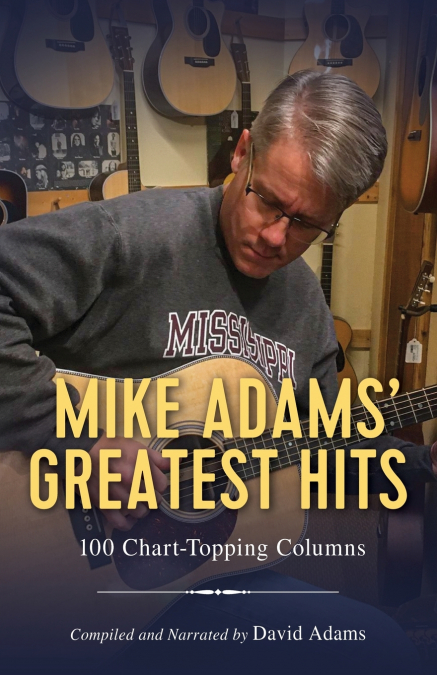
  • Mike Adams’ Greatest Hits
    Mike Adams
    Welcome to Mike Adams’ Greatest Hits. This is Mike’s older brother and only sibling, David. This book, as the title implies, is simply a collection of the best columns, regardless of the topic, presented in the order in which they were written.Speaker, writer, and educator Mike Adams made a significant impact through the columns he wrote addressing key moral and political issue...
    Disponible

    21,70 €

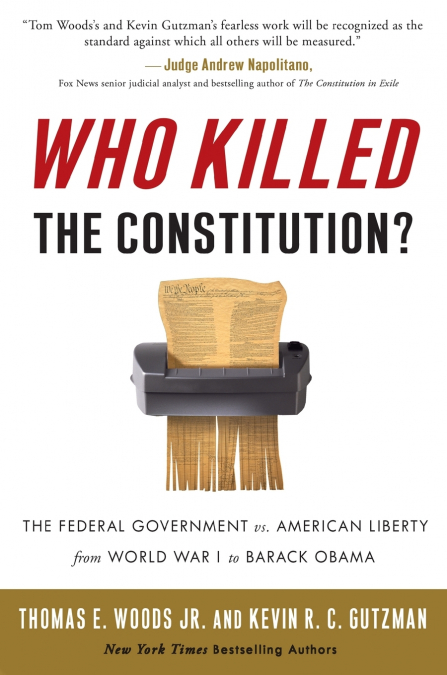
  • Who Killed the Constitution?
    Kevin R. C. Gutzman / Thomas E. Woods
    ...
    Disponible

    16,73 €

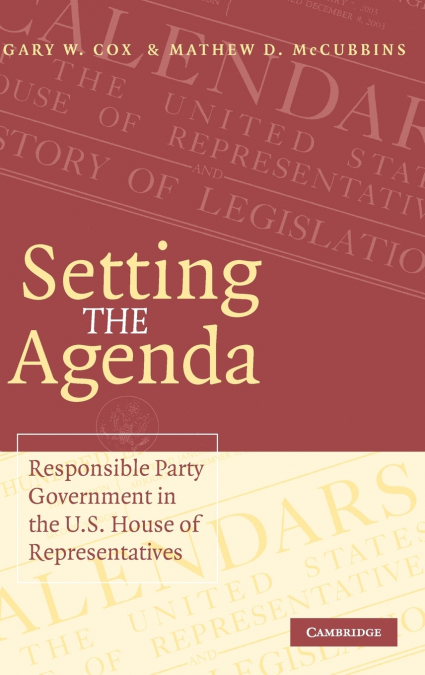
  • Setting the Agenda
    Gary W. Cox / Gary WCox / Mathew D. McCubbins / Mathew DMcCubbins
    ...

Otros libros del autor

  • Chemistry in 17th-Century New England
    Gary Patterson
    This book explores the lively chemistry culture that arose during the 17th century in Colonial New England. This was chiefly due to the efforts of John Winthrop, Jr. who brought both chemical knowledge and the largest library of chemical books in the New World to Boston. He founded towns, such as Ipswich and New London, and industrial enterprises, such as salt works and ironwor...
    Disponible

    80,31 €

  • Physical Chemistry of Macromolecules
    Gary Patterson
    This book relates firsthand the unique environment that fostered experimental breakthroughs underlying some of today’s most widely accepted theories, mathematical principles, and models for characterizing macromolecules. The author uses principles of physical chemistry to describe structural, dynamic, and optical properties of macromolecules in both solution and bulk states. He...
    Disponible

    121,05 €

  • Polymer Science from 1935-1953
    Gary Patterson
    This sequel to A Prehistory of Polymer Science begins with the Faraday Discussion of 1935 on Polymerization. Patterson then examines the remarkable rise and establishment of polymer science after 1935 from the perspective of the emergence of strong intellectual leaders. While enough biographical detail is presented to gain an appreciation for the role played by each leader, the...
    Disponible

    68,01 €

  • What Obama and the Democrats Knew That McCain Didn’t
    Gary Patterson
    Had John McCain simultaneously chosen Condoleezza Rice as his Vice Presidential running mate (instead of Sarah Palin) and Mitt Romney as his Chief Economic Advisor coming out of the Convention, the Republicans could have actually won the 2008 Presidential Election; even in the aftermath of the Wall Street Economic Meltdown (based on an objective analysis of Presidential Exit P...
    Disponible

    14,28 €

  • Physical Chemistry of Macromolecules
    Gary Patterson
    This book relates firsthand the unique environment that fostered experimental breakthroughs underlying some of today’s most widely accepted theories, mathematical principles, and models for characterizing macromolecules. The author uses principles of physical chemistry to describe structural, dynamic, and optical properties of macromolecules in both solution and bulk states. He...