Inicio > Humanidades > Filosofía > Ética y filosofía moral > Autonomy, Rationality, and Contemporary Bioethics
Autonomy, Rationality, and Contemporary Bioethics

Autonomy, Rationality, and Contemporary Bioethics

Jonathan Pugh

141,01 €
IVA incluido
Consulta disponibilidad
Editorial:
Oxford University Press
Año de edición:
2020
Materia
Ética y filosofía moral
ISBN:
9780198858584

Selecciona una librería:

  • Librería Samer Atenea
  • Librería Aciertas (Toledo)
  • Kálamo Books
  • Librería Perelló (Valencia)
  • Librería Elías (Asturias)
  • Donde los libros
  • Librería Kolima (Madrid)
  • Librería Proteo (Málaga)

This is an open access title available under the terms of a CC BY-NC-ND 4.0 International licence. It is free to read at Oxford Scholarship Online and offered as a free PDF download from OUP and selected open access locations. Personal autonomy is often lauded as a key value in contemporary Western bioethics. Though the claim that there is an important relationship between autonomy and rationality is often treated as uncontroversial in this sphere, there is also considerable disagreement about how we should cash out therelationship. In particular, it is unclear whether a rationalist view of autonomy can be compatible with legal judgments that enshrine a patient’s right to refuse medical treatment, regardless of whether the reasons underpinning the choice are known and rational, or indeed whether they even exist.Jonathan Pugh brings recent philosophical work on the nature of rationality to bear on the question of how we should understand personal autonomy in contemporary bioethics. In doing so, he develops a new framework for thinking about the concept of autonomy, one that is grounded in an understandingof the different roles that rational beliefs and rational desires have to play in it. Pugh’s account allows for a deeper understanding of d the relationship between our freedom to act and our capacity to decide autonomously. His rationalist perspective is contrasted with other prominent accounts ofautonomy in bioethics, and the revisionary implications it has for practical questions in biomedicine are also outlined.

Artículos relacionados

  • Ka Ab Ba Building The Lighted Temple
    Dr Terri R. Nelson / Dr Terri RNelson
    The book KaAbBa Building The Lighted Temple/Metaphysical Keys to the Tree of Life draws a circle that is inclusive of the Afrikan origin of the Ancient Kemetic/Egyptian wisdom. It reveals the undeniable root and link of Ancient Africa to all the religious systems that would develop worldwide. This book is explosive in its power to convey the meaning of KaAbBa, the Medu Neter  (...
    Disponible

    37,41 €

  • Technoethics and the Evolving Knowledge Society
    Rocci Luppicini
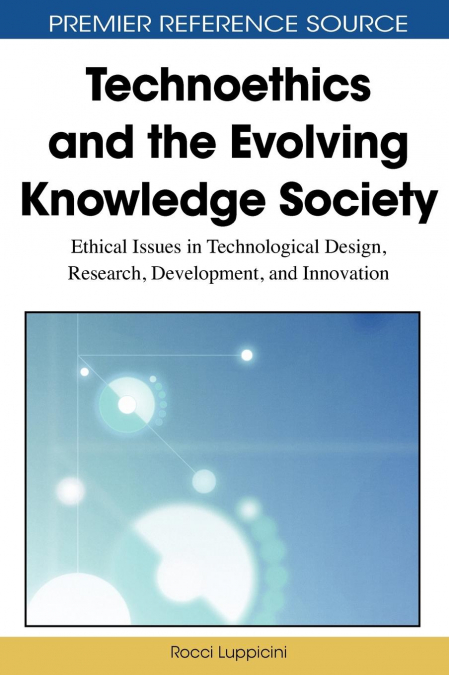
    Recently, there has been a major push to rediscover the ethical dimension of technology across the sciences, social sciences, and humanities. Technoethics and the Evolving Knowledge Society: Ethical Issues in Technological Design, Research, Development, and Innovation examines human processes and practices connected to technology embedded within social, political, and moral sph...
  • Kant
    Immanuel Kant
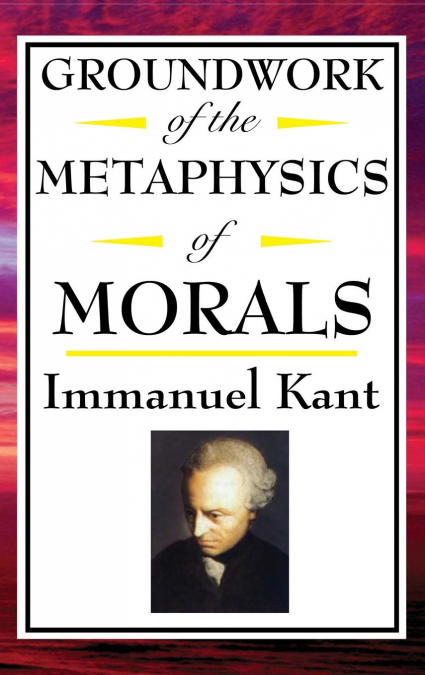
    Kant’s Groundwork of the Metaphysics of Morals is one of the most important works in modern moral philosophy. It belongs beside Plato, Aristotle, Machiavelli, and Hobbes. Here Kant sets out to articulate and defend the Categorical Imperative - the fundamental principle that underlies moral reasoning - and to lay the foundation for a comprehensive account of justice and human vi...
  • On the Duty of Civil Disobedience
    HENRY DAVID THOREAU
    Civil Disobedience argues that citizens should not permit their governments to overrule their consciences, and that they have a duty to avoid allowing their acquiescence to enable the government to make them the agents of injustice. Thoreau was motivated in part by his disgust with slavery and the Mexican-American War, but the sentiments he expresses here are just as pertinent ...
  • Beyond Good and Evil
    Friedrich Nietzsche
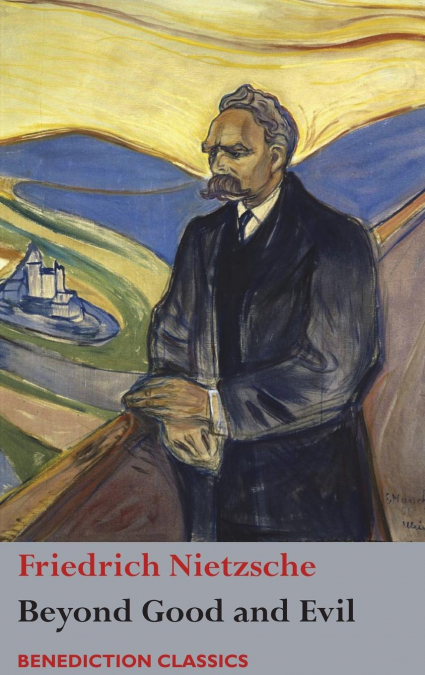
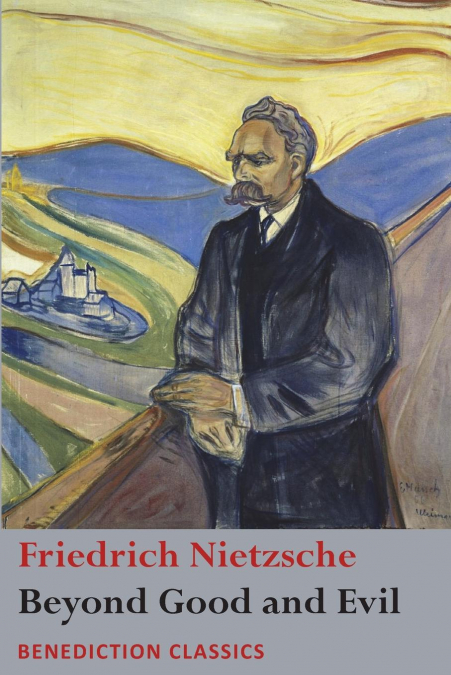
    Nietzsche, though primarily a philosopher, wrote widely on art, philology, history, religion, tragedy, culture, and science.  In 1886, at the height of his powers, he published Beyond Good and Evil.  Here he examines much of the best of human thought--dogmatic philosophy, Judeo-Christian morality, science and democracy – and finds it lacking.  Rejecting “slave-morality” he pres...
  • Beyond Good and Evil
    Friedrich Nietzsche
    Nietzsche, though primarily a philosopher, wrote widely on art, philology, history, religion, tragedy, culture, and science.  In 1886, at the height of his powers, he published Beyond Good and Evil.  Here he examines much of the best of human thought--dogmatic philosophy, Judeo-Christian morality, science and democracy – and finds it lacking.  Rejecting “slave-morality” he pres...
    Disponible

    9,99 €

Otros libros del autor

  • What is Radical Politics Today?
    Jonathan Pugh
    This book brings together a variety of studies that are engaged with notions of gender in different African localities, institutions and historical time periods. The objective is to expand empirical and theoretical studies that take seriously the idea that in order to understand gender and gender relations in Africa, we must start with Africa. If gender emerges out of particula...
    Disponible

    66,24 €

  • What is Radical Politics Today?
    Jonathan Pugh
    A crisis makes you rethink your life. The recent economic crisis is no exception. All of us are now thinking how the world could be run differently. Despite this, a radical alternative has hardly emerged to mobilize the masses. Written for the public and students, this book explores the character and spirit of radical politics in our times. ...