Automated Model Building

Automated Model Building

Alexander Leitsch / Nicolas Peltier / Ricardo Caferra

207,38 €
IVA incluido
Disponible
Editorial:
Springer Nature B.V.
Año de edición:
2010
Materia
Filosofía: lógica
ISBN:
9789048166961
207,38 €
IVA incluido
Disponible

Selecciona una librería:

  • Librería Samer Atenea
  • Librería Aciertas (Toledo)
  • Kálamo Books
  • Librería Perelló (Valencia)
  • Librería Elías (Asturias)
  • Donde los libros
  • Librería Kolima (Madrid)
  • Librería Proteo (Málaga)

On the history of the book: In the early 1990s several new methods and perspectives in au- mated deduction emerged. We just mention the superposition calculus, meta-term inference and schematization, deductive decision procedures, and automated model building. It was this last ?eld which brought the authors of this book together. In 1994 they met at the Conference on Automated Deduction (CADE-12) in Nancy and agreed upon the general point of view, that semantics and, in particular, construction of models should play a central role in the ?eld of automated deduction. In the following years the deduction groups of the laboratory LEIBNIZ at IMAG Grenoble and the University of Technology in Vienna organized several bilateral projects promoting this topic. This book emerged as a main result of this cooperation. The authors are aware of the fact, that the book does not cover all relevant methods of automated model building (also called model construction or model generation); instead the book focuses on deduction-based symbolic methods for the construction of Herbrand models developed in the last 12 years. Other methods of automated model building, in particular also ?nite model building, are mainly treated in the ?nal chapter; this chapter is less formal and detailed but gives a broader view on the topic and a comparison of di?erent approaches. Howtoreadthisbook: In the introduction we give an overview of automated deduction in a historical context, taking into account its relationship with the human views on formal and informal proofs.
Artículos relacionados

  • Argument, Sex and Logic
    Dov Gabbay / Gadi Rozenberg / Lydia Rivlin
    This book is intended for the formal argumentation community and for the sex offender therapist community.Both communities use logic.The message of this book is that the argumentation logic models are applicable for modelling and improving the practices of the sex offender therapist community and in parallel stimulate new logic models of argumentationDov Gabbay is a Professor a...
    Disponible

    30,70 €

  • Experience and the Ultimate Structure of Reality on Husserl’s Pursuit of Truth
    Claire Hill / Claire Ortiz Hill
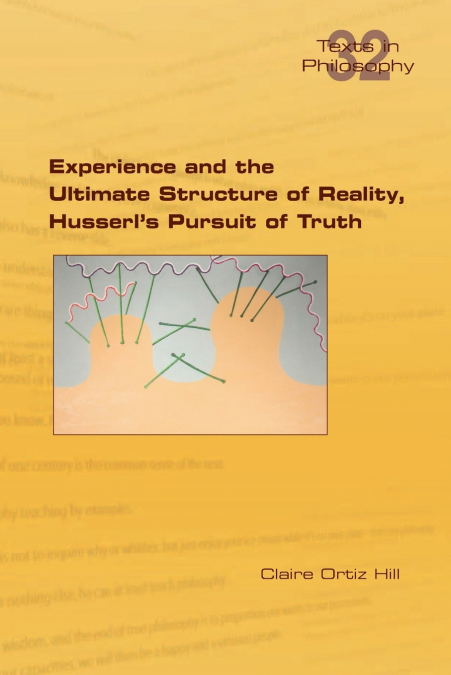
    Experience and the Ultimate Structure of Reality, Husserl’s Pursuit of Truth follows the evolution of Edmund Husserl’s thought through those crucial years at the end of the nineteenth century and the beginning of the twentieth century when reason compelled the young doctor of mathematics to forsake empirical psychology and to strive to find the theories respecting the central t...
    Disponible

    24,14 €

  • Memorabilia (Royal Collector’s Edition) (Case Laminate Hardcover with Jacket)
    Henry Graham Dakyns / Xenophon
    The lengthiest and most famous of Xenophon’s Socratic writings, the Memorabilia is a defense of Socrates, offering edifying examples of Socrates’ conversations and activities. Xenophon argues that Socrates was innocent of the formal charges against him: failure to recognize the gods of Athens, introduction of new gods, and corruption of youth. He demonstrates through recounted ...
  • Logic
    Bernard Bosanquet
    ...
    Disponible

    62,25 €

  • Logic
    Bernard Bosanquet
    ...
    Disponible

    48,20 €

  • Logic and Information
    Edwin Mares
    ...
    Disponible

    27,45 €

Otros libros del autor

  • Automated Model Building
    Alexander Leitsch / Nicolas Peltier / Ricardo Caferra
    On the history of the book: In the early 1990s several new methods and perspectives in au- mated deduction emerged. We just mention the superposition calculus, meta-term inference and schematization, deductive decision procedures, and automated model building. It was this last ?eld which brought the authors of this book together. In 1994 they met at t...