Inicio > Lenguas > Lingüistica > Automated Grammatical Error Detection for Language Learners, Second Edition
Automated Grammatical Error Detection for Language Learners, Second Edition

Automated Grammatical Error Detection for Language Learners, Second Edition

Claudia Leacock / Joel Alejandro Mejia / Michael Gamon

48,67 €
IVA incluido
Disponible
Editorial:
Springer Nature B.V.
Año de edición:
2014
Materia
Lingüistica
ISBN:
9783031010255
48,67 €
IVA incluido
Disponible

Selecciona una librería:

  • Librería Samer Atenea
  • Librería Aciertas (Toledo)
  • Kálamo Books
  • Librería Perelló (Valencia)
  • Librería Elías (Asturias)
  • Donde los libros
  • Librería Kolima (Madrid)
  • Librería Proteo (Málaga)

It has been estimated that over a billion people are using or learning English as a second or foreign language, and the numbers are growing not only for English but for other languages as well. These language learners provide a burgeoning market for tools that help identify and correct learners’ writing errors. Unfortunately, the errors targeted by typical commercial proofreading tools do not include those aspects of a second language that are hardest to learn. This volume describes the types of constructions English language learners find most difficult: constructions containing prepositions, articles, and collocations. It provides an overview of the automated approaches that have been developed to identify and correct these and other classes of learner errors in a number of languages. Error annotation and system evaluation are particularly important topics in grammatical error detection because there are no commonly accepted standards. Chapters in the book describe the options available to researchers, recommend best practices for reporting results, and present annotation and evaluation schemes. The final chapters explore recent innovative work that opens new directions for research. It is the authors’ hope that this volume will continue to contribute to the growing interest in grammatical error detection by encouraging researchers to take a closer look at the field and its many challenging problems.
Artículos relacionados

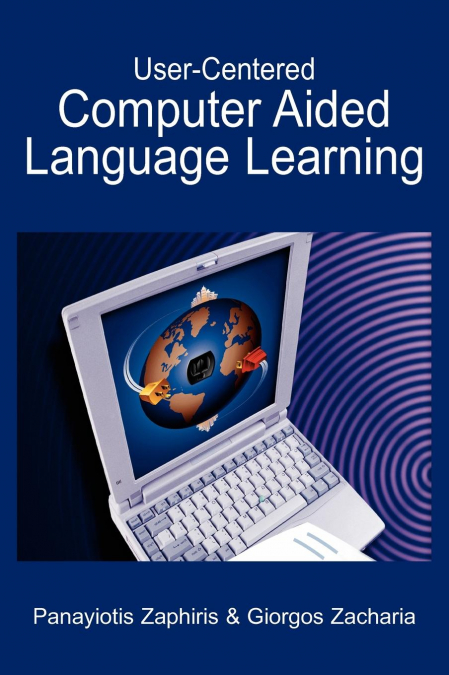
  • User-Centered Computer Aided Language Learning
    Giorgos Zacharia / Panayiotis Zaphiris
    ...
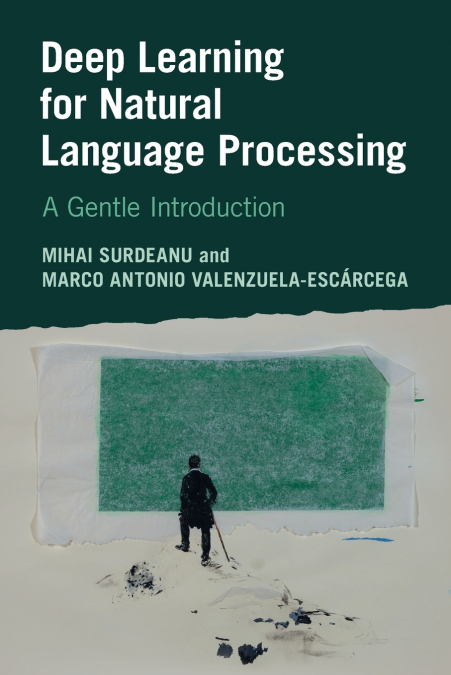
  • Deep Learning for Natural Language Processing
    Marco Antonio Valenzuela-Escárcega / Mihai Surdeanu
    ...
    Disponible

    47,60 €

  • Deep Learning for Natural Language Processing
    Marco Antonio Valenzuela-Escárcega / Mihai Surdeanu
    ...
  • Lecciones sobre espinosa medrano
    Luis Jaime Cisneros Vizquerra
    La obra de Juan de Espinosa Medrano, apodado en su tiempo «El Lunarejo» (c. 1629-1688), fue uno de los mayores focos de interés académico de Luis Jaime Cisneros (1921-2011). En 1980 aparecieron sus primeros trabajos dedicados a estudiar los textos capitales de Espinosa Medrano (el Apologético en favor de don Luis de Góngora, la Panegírica declamación por la protección de las ci...
    Disponible

    17,63 €

  • Lyre Book
    Matthew Kilbane
    Redefines modern lyric poetry at the intersection of literary and media studies.In The Lyre Book, Matthew Kilbane urges literary scholars to consider lyric not as a genre or a reading practice but as a media condition: the generative tension between writing and sound. In addition to clarifying issues central to the study of modern poetry--including its proximity to popular song...
    Disponible

    50,84 €

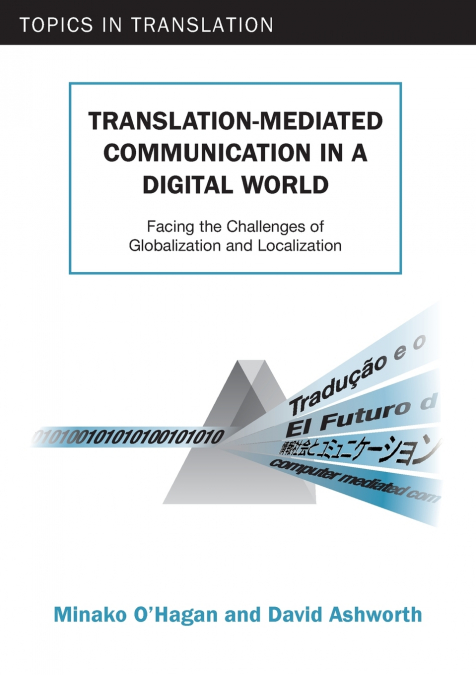
  • Translation-mediated Communication in a Digital World
    David Ashworth / Minako O’Hagan
    The Internet is accelerating globalization by exposing organizations and individuals to global audiences. This in turn is driving teletranslation and teleinterpretation, new types of multilingual support, which are functional in digital communications environments. The book describes teletranslation and teleinterpretation by exploring a number of key emerging contexts for langu...
    Disponible

    45,19 €