 Librería Samer Atenea
 Kálamo Books
 Librería Elías (Asturias)
 Librería Kolima (Madrid)
 Librería Proteo (Málaga)
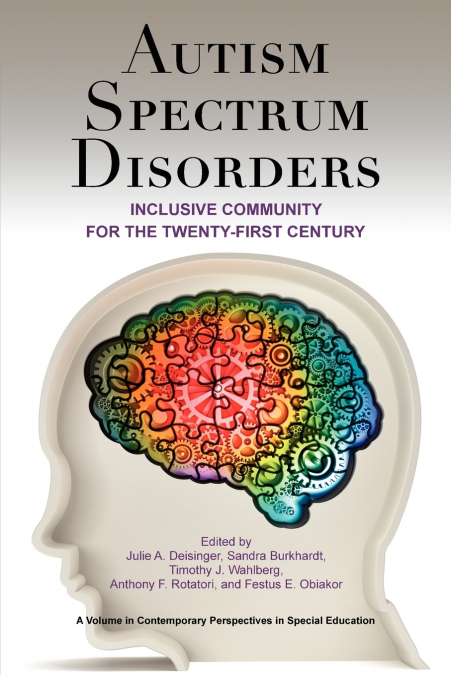
Autism Spectrum Disorders (ASD) has received considerable educational, research, medical and mediaattention the past ten years. Yet the condition was first described more than a hundred years ago. Due to thedisorder being confused with childhood schizophrenia, there was a lack of definitive attention by specialeducators, medical professionals and mental health clinicians to advance parameters related to: causes;prevalence; identification and diagnosis; education and treatment. Positively, this confusion changedstarting in the 1980s with the clarification of the differences between these disorders with the 1980publication of the' Diagnostic and Statistical Manual of Mental Disorders' (DSM-III). Soon after, the1990 federal legislation 'Individuals with Disabilities Education Act' recognized the disorder as a disability category eligible for special educationservices. Both of these events lead to an explosion of information related to: finding causes; accurate identification and diagnosis; best educationalpractices; and social, emotional, and behavioral treatments.Even with this explosion in the body of knowledge concerned with this disorder, much more needs to be learned and discovered. The successful useof this body of knowledge requires that accurate information be provided to educators, parents, clinicians, medical professionals, and mental healthprofessionals to counter misinformation that exists among the general public, educators and clinical professionals. This is the primary purpose of'Autism Spectrum Disorders: Inclusive Community for the 21st Century'. It is accomplished by chapters on: the delineation of a blueprint for systemsof care for persons with ASD and their families; a model to assist professionals in tackling the challenge of developing employability for individualswith high functioning ASD; best practice and research guidelines that lead to an affirmative ASD diagnosis; a comprehensive and current synopsis ofgenetic factors associated with ASD; adjustment challenges that may be present for a sibling of an individual with ASD; a comprehensive descriptionof an innovative community-based clinic that provides services needed by Individuals with ASD tomeet their social, behavioral, educational and mental health needs; and effective treatment strategiesand techniques that can be utilized by parents and educators to work effectively with children whohave ASD. The chapters are written by researchers, clinicians, business professionals, and universityprofessors who have an extensive knowledge of ASD. The contents of the book are an excellentreference for special education teachers, school psychologists, practicing mental health clinicians, andparents and family members of children and adults with ASD.