Alexandre Delamou / Gnakoï Kolié / Niouma Nestor Leno
 Librería Samer Atenea
 Kálamo Books
 Librería Elías (Asturias)
 Librería Kolima (Madrid)
 Librería Proteo (Málaga)
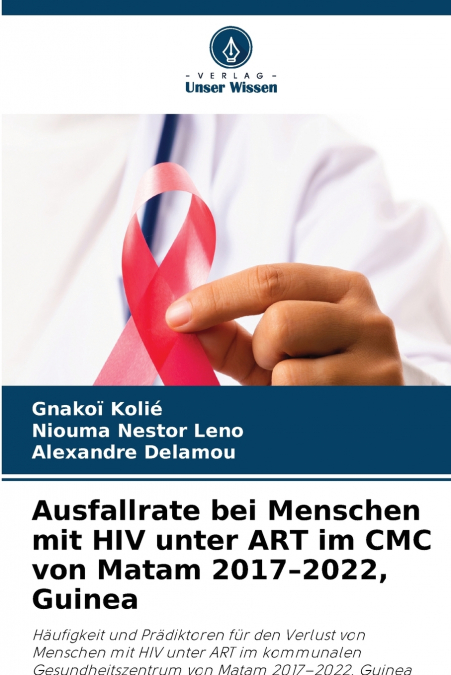
This study, conducted at the Matam Municipal Medical Center, aimed to estimate the incidence of attrition and identify its predictive factors. A retrospective cohort study was conducted on 2,206 patients living with HIV, aged 9 years or older, who initiated ART between March 2017 and February 2022. Attrition was defined as all patients who died or were lost to follow-up (no follow-up for 90 days or more after the last visit). The majority of participants (69.0%) were women with a mean age of 34.04 ± 11.55 years. More than half, or 50.3%, had initiated treatment at WHO clinical stage 3. Nearly 91.3% of patients were on the TDF+3TC+EFV regimen. The incidence of attrition increased gradually between 6 and 36 months of treatment. Factors associated with an increased risk of attrition included a baseline CD4 count < 100 (p < 0.001; HR = 2.151), age between 25 and 35 years (p = 0.010; HR = 1.531), and the presence of tuberculosis (p = 0.001; HR = 1.154). This study highlights a high incidence of attrition and underscores the importance of improving patient retention in ART programs.