Atomic and Molecular Physics of Controlled Thermonuclear Fusion

Atomic and Molecular Physics of Controlled Thermonuclear Fusion

Douglass E. Joachain

64,85 €
IVA incluido
Disponible
Editorial:
Springer Nature B.V.
Año de edición:
2013
ISBN:
9781461337652
64,85 €
IVA incluido
Disponible

Selecciona una librería:

  • Librería Samer Atenea
  • Librería Aciertas (Toledo)
  • Kálamo Books
  • Librería Perelló (Valencia)
  • Librería Elías (Asturias)
  • Donde los libros
  • Librería Kolima (Madrid)
  • Librería Proteo (Málaga)

The need for long-term energy sources, in particular for our highly technological society, has become increasingly apparent during the last decade. One of these sources, of tremendous poten­ tial importance, is controlled thermonuclear fusion. The goal of controlled thermonuclear fusion research is to produce a high-temperature, completely ionized plasma in which the nuclei of two hydrogen isotopes, deuterium and tritium, undergo enough fusion reactions so that the nuclear energy released by these fusion reactions can be transformed into heat and electricity with an overall gain in energy. This requires average kinetic energies for the nuclei of the order of 10 keV, corresponding to temperatures of about 100 million degrees. Moreover, the plasma must remain confined for a certain time interval, during which sufficient energy must be produced to heat the plasma, overcome the energy losses and supply heat to the power station. At present, two main approaches are being investigated to achieve these objectives: magnetic confinement and inertial con­ finement. In magnetic confinement research, a low-density plasma is heated by electric currents, assisted by additional heating methods such as radio-frequency heating or neutral beam injection, and the confinement is achieved by using various magnetic field configurations. Examples of these are the plasmas produced in stellarator and tokamak devices.
Artículos relacionados

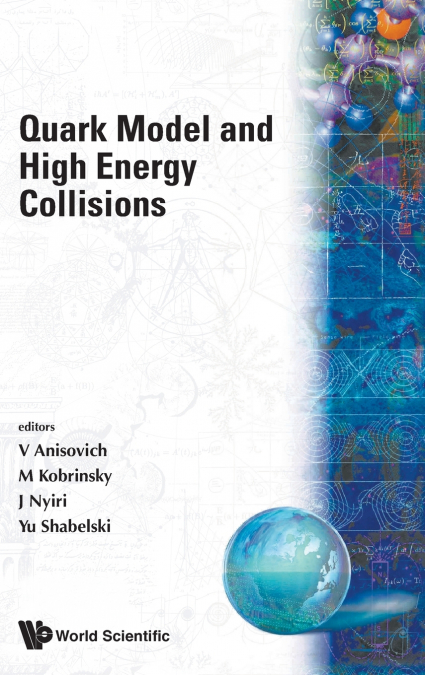
  • QUARK MODEL AND HIGH ENERGY COLLISIONS
    AL V V ANISOVICH ET / V V ANISOVICH ET AL
    The book discusses constituent quarks, diquarks, the massive effective gluons and the problem of scalar isoscalar mesons. The quark-gluonium classification of meson states is also given. Experimentally observed properties of hadrons are presented together with the corresponding theoretical interpretation in the framework of the composite hadron structure. ...
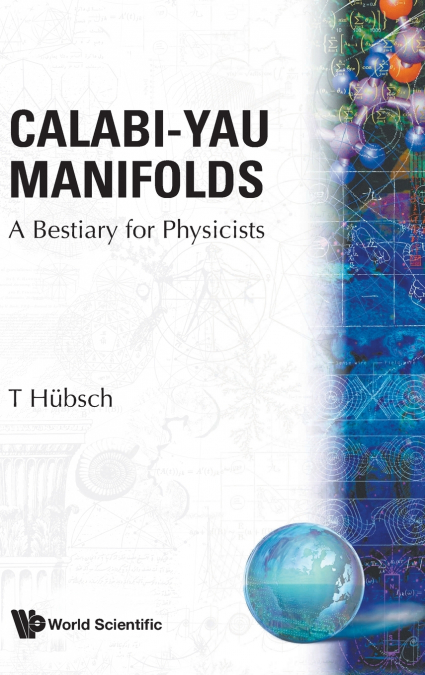
  • CALABI-YAU MANIFOLDS-BESTIARY FOR PHYSIC
    HUBSCH T / T HUBSCH
    Calabi-Yau spaces are complex spaces with a vanishing first Chern class, or equivalently, with trivial canonical bundle (canonical class). They are used to construct possibly realistic (super)string models and are thus being studied vigorously in the recent physics literature.In the main part of the Book, collected and reviewed are relevant results on (1) several major techniqu...
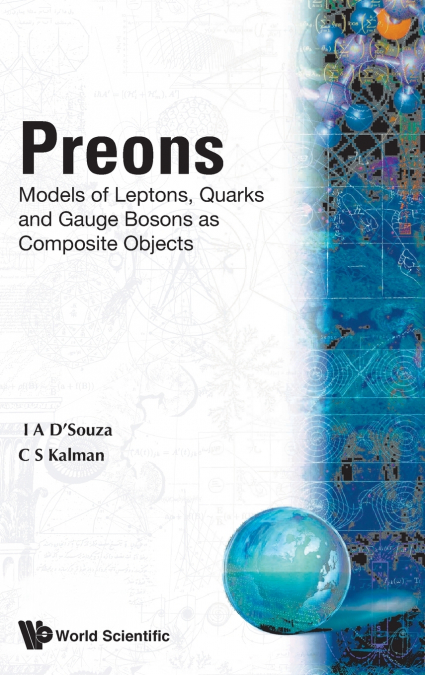
  • PREONS-MODELS OF LEPTONS,QUARK& GAUGE BO
    C S Kalman / C S KALMAN I D’SOUZA / D’SOUZA I / I A D’Souza
    There are a number of unanswered questions which indicate that the Standard Model, successful as it is, cannot be the entire story. One solution to answering these questions is that the Standard Model is an effective low-energy theory of structure hopefully nearby in its energy scale in much the same way that a model of strong interactions among nucleons mediated by pions is an...
  • Physics of Massive Neutrinos
    Boehm Felix / Felix Boehm / Petr Vogel
    ...
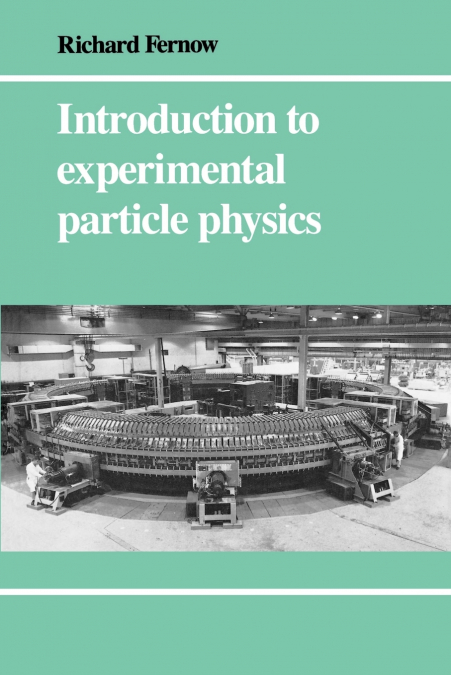
  • Introduction Experimental Particle Physics
    Richard C. Fernow / Richard CFernow
    A concise, balanced overview of the most important topics in experimental particle physics of the past forty years is presented in this comprehensive study. Beginning with a review of particle physics and electromagnetic and nuclear interactions, the book continues with a discussion of three nearly universal aspects of particle physics experiments: beams, targets and fast elect...
    Disponible

    121,22 €

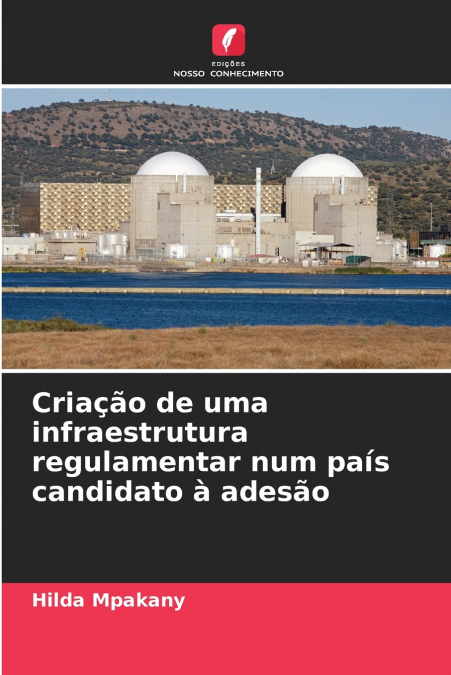
  • Criação de uma infraestrutura regulamentar num país candidato à adesão
    Hilda Mpakany
    Com a introdução de um programa de energia nuclear no Quénia, é imperativo estabelecer um sistema jurídico abrangente e um quadro regulamentar para gerir o programa. Este estudo delineou os principais factores que devem ser considerados ao instituir uma infraestrutura reguladora nacional num país candidato, que incluem o estabelecimento de um sistema jurídico e de um quadro reg...
    Disponible

    61,42 €