 Librería Samer Atenea
 Kálamo Books
 Librería Elías (Asturias)
 Librería Kolima (Madrid)
 Librería Proteo (Málaga)
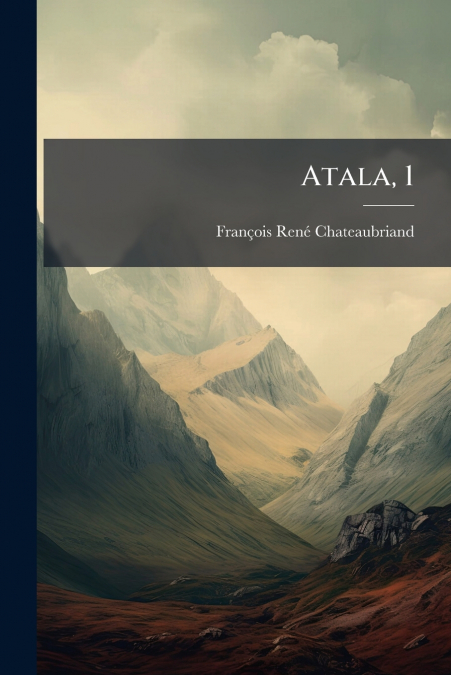
Atala et René sont deux œuvres du romantisme français écrites par François-René de Chateaubriand, publiées pour la première fois en 1801 et 1802 respectivement. Atala est une courte histoire d’amour entre un jeune Américain natif, Chactas, et une jeune femme chrétienne, Atala. L’histoire se déroule dans la nature sauvage de la Louisiane. L’œuvre explore les thèmes de l’innocence, de la foi et du conflit entre la nature et la civilisation. Chateaubriand y dépeint la beauté du paysage américain et la noblesse des peuples indigènes, tout en explorant les complexités de la religion et de l’amour. René, souvent publié avec Atala, est un récit plus introspectif. René, un jeune homme mélancolique, raconte son histoire de désenchantement et de quête de sens. L’œuvre explore les thèmes de l’isolement, de l’ennui et de la recherche d’idéal. Le personnage de René est considéré comme une figure emblématique du mal du siècle romantique.This work has been selected by scholars as being culturally important, and is part of the knowledge base of civilization as we know it. This work was reproduced from the original artifact, and remains as true to the original work as possible. Therefore, you will see the original copyright references, library stamps (as most of these works have been housed in our most important libraries around the world), and other notations in the work.This work is in the public domain in the United States of America, and possibly other nations. Within the United States, you may freely copy and distribute this work, as no entity (individual or corporate) has a copyright on the body of the work.As a reproduction of a historical artifact, this work may contain missing or blurred pages, poor pictures, errant marks, etc. Scholars believe, and we concur, that this work is important enough to be preserved, reproduced, and made generally available to the public. We appreciate your support of the preservation process, and thank you for being an important part of keeping this knowledge alive and relevant.