Librería Samer Atenea
 Kálamo Books
 Librería Elías (Asturias)
 Librería Kolima (Madrid)
 Librería Proteo (Málaga)
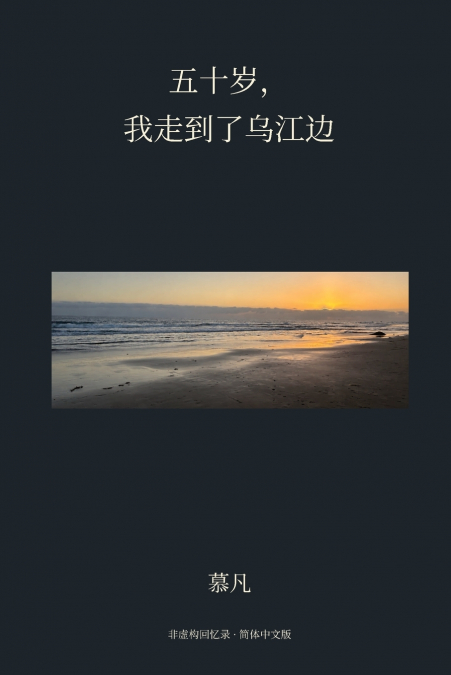
At Fifty, I Came to the Wu River is a nonfiction memoir tracing Mufan’s life from a village in Henan Province to Shanghai and then the United States. At fifty, he asks why a man who worked hard, shouldered responsibilities, and tried to change his circumstances still came to feel besieged on every side.The story begins with running away during the Spring Festival at seven or eight. Poverty was only part of his suffering. He slept in the kitchen, did household chores, and struggled to understand why his parents treated him and his younger brother so differently. Escaping that home became his strongest desire.Friends introduced him to a world beyond his family, but loneliness, conflict, and fighting at school preceded his departure from education at fifteen. He worked at a lumber mill, for a village official, and in a factory, enduring humiliation for opportunities and meager wages. Later, persistence in factory sales brought success and better income. He believed money would bring independence, while neglecting his health, education, and preparation for life.His first marriage seemed to offer a home of his own. He tried to treat his wife well but lacked experience in handling conflict. The marriage ended, and he began raising their young son alone. Meanwhile, a paternity test confirmed that he was his mother’s biological son, but not the son of the man he had always called his father. Searching for answers changed his understanding of childhood without healing its wounds.After his son entered a boarding kindergarten, he returned to work in purchasing and management. His efforts to introduce expense, reporting, and payment procedures led to workplace conflicts. Heavy workloads, little sleep, and business entertaining damaged his health; his son grew thin and timid. He resigned and took the boy to Shanghai in search of better schooling and a better life.In Shanghai, he put his son’s meals, studies, and daily needs before his own. Starting a company brought problems with recruitment, management, labor disputes, and trust. Reading management books and Chinese classics made him recognize how leaving school early and lacking a reading habit had limited his knowledge and judgment.Games, unfinished homework, concealment, and a housekeeper signing incomplete assignments strained the father-son relationship. When schooling requirements and poor grades became obstacles, he arranged for his son to study in Britain. He found host families, schools, tutors, and activities, paid the costs, and traveled repeatedly between the two countries. Yet his son increasingly needed his own space. A conversation about affectionate names revealed how their relationship had changed and led Mufan to consider a life of his own.He fell in love with a young employee and, despite their age difference, her parents’ opposition, and disagreements, entered a second marriage. After his company closed, they moved to the United States. Limited English made him dependent on his wife for everyday dealings. Conflicts over parenting, housework, spending, and money eroded trust. He carried much of the childcare and household work as his savings dwindled and his health suffered. His eldest son was building a separate life, and the distance between them grew.At fifty, he examines both the harm he experienced and his own limitations: pursuing money without preparing for how to live, using sacrifice to sustain relationships while neglecting himself, and acting with determination but without enough direction, knowledge, or method.The book closes on the banks of the Wu River, with no easy resolution. It asks how childhood deprivation shapes adult choices, where responsibility ends and self-neglect begins, and what understanding and preparation a person needs alongside courage and devotion to change a life.