 Librería Samer Atenea
 Kálamo Books
 Librería Elías (Asturias)
 Librería Kolima (Madrid)
 Librería Proteo (Málaga)
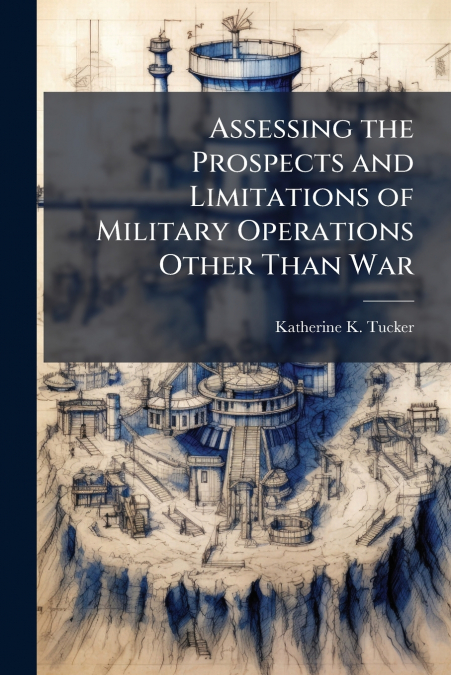
Since the end of the Cold War and the Gulf War, the US military has been increasingly tasked for operations short of war, in what has come to be labeled Military Operations Other Than War (MOOTW). While the MOOTW concept has been incorporated into extant US military doctrine, specific missions attributed to MOOTW remain controversial, such as peace operations (Somalia, Haiti, and Bosnia) or humanitarian operations (Somalia, Rwanda). This paper broadly analyzes contemporary MOOTW missions and evaluates their relevance for the military in the future. First, it looks historically to determine the roots of MOOTW and how it differs from earlier, related, concepts such as Low-Intensity-Conflict and Unconventional Warfare. The missions encompassed in MOOTW are not new but follow a long history in the US military, described herein. Several differing concepts of future threats are reviewed to determine the continued applicability of MOOTW. Within a wide variety of future threat environments, MOOTW missions should still be able to contribute to enhancing national security. However, the ability of MOOTW responses to counter the threat does not, alone, justify using the military. The paper next examines which MOOTW missions can or should be carried out by the military. Many of the missions in MOOTW are likely to involve combating organized violence; hence those missions are appropriate for the military. For those that do not involve combat, there are several rationale: the miltiary provides exclusive expertise, has appropriate resources, or performing those missions contributes to justifying military budgets and personnel designed for other threats or conflicts. These rationales are not sufficient to justify using the military in some MOOTW missions. The conclusion of the paper expands that discussion with suggestions for other organizations or mechanisms to address those mission areas without reliance on the military.This work has been selected by scholars as being culturally important, and is part of the knowledge base of civilization as we know it. This work was reproduced from the original artifact, and remains as true to the original work as possible. Therefore, you will see the original copyright references, library stamps (as most of these works have been housed in our most important libraries around the world), and other notations in the work.This work is in the public domain in the United States of America, and possibly other nations. Within the United States, you may freely copy and distribute this work, as no entity (individual or corporate) has a copyright on the body of the work.As a reproduction of a historical artifact, this work may contain missing or blurred pages, poor pictures, errant marks, etc. Scholars believe, and we concur, that this work is important enough to be preserved, reproduced, and made generally available to the public. We appreciate your support of the preservation process, and thank you for being an important part of keeping this knowledge alive and relevant.