
Artificial Mathematical Intelligence

Artificial Mathematical Intelligence

Danny A. J. Gómez Ramírez

68,61 €
IVA incluido
Disponible
Editorial:
Springer Nature B.V.
Año de edición:
2021
ISBN:
9783030502751
68,61 €
IVA incluido
Disponible

Selecciona una librería:

  • Librería Samer Atenea
  • Librería Aciertas (Toledo)
  • Kálamo Books
  • Librería Perelló (Valencia)
  • Librería Elías (Asturias)
  • Donde los libros
  • Librería Kolima (Madrid)
  • Librería Proteo (Málaga)

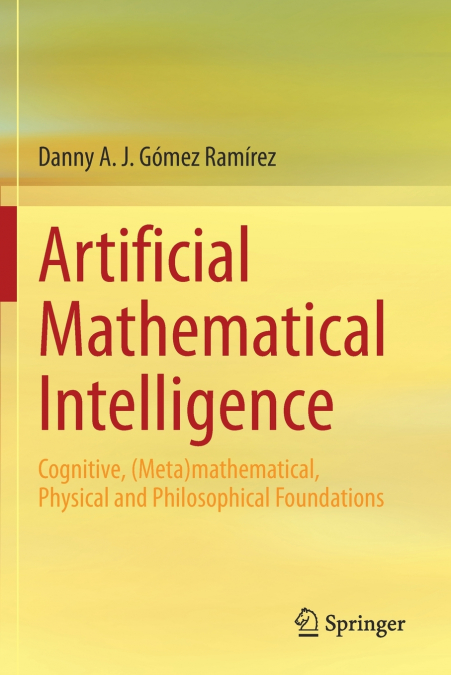
This volume discusses the theoretical foundations of a new inter- and intra-disciplinary meta-research discipline, which can be succinctly called cognitive metamathematics, with the ultimate goal of achieving a global instance of concrete Artificial Mathematical Intelligence (AMI). In other words, AMI looks for the construction of an (ideal) global artificial agent being able to (co-)solve interactively formal problems with a conceptual mathematical description in a human-style way. It first gives formal guidelines from the philosophical, logical, meta-mathematical, cognitive, and computational points of view supporting the formal existence of such a global AMI framework, examining how much of current mathematics can be completely generated by an interactive computer program and how close we are to constructing a machine that would be able to simulate the way a modern working mathematician handles solvable mathematical conjectures from a conceptual point of view.  The thesis that it is possible to meta-model the intellectual job of a working mathematician is heuristically supported by the computational theory of mind, which posits that the mind is in fact a computational system, and by the meta-fact that genuine mathematical proofs are, in principle, algorithmically verifiable, at least theoretically. The introduction to this volume provides then the grounding multifaceted principles of cognitive metamathematics, and, at the same time gives an overview of some of the most outstanding results in this direction, keeping in mind that the main focus is human-style proofs, and not simply formal verification. The first part of the book presents the new cognitive foundations of mathematics’ program dealing with the construction of formal refinements of seminal (meta-)mathematical notions and facts. The second develops positions and formalizations of a global taxonomy of classic and new cognitive abilities, and computational tools allowing for calculation of formal conceptual blends are described. In particular, a new cognitive characterization of the Church-Turing Thesis is presented. In the last part, classic and new results concerning the co-generation of a vast amount of old and new mathematical concepts and the key parts of several standard proofs in Hilbert-style deductive systems are shown as well, filling explicitly a well-known gap in the mechanization of mathematics concerning artificial conceptual generation.
Artículos relacionados

  • BEYOND THE TRIANGLE
    Kei Kobayashi / Marjorie Hahn / MARJORIE HAHN & KEI KOBAYA SABIR UMAROV / Sabir Umarov / UMAROV SABIR
     The book is devoted to the fundamental relationship between three objects: a stochastic process, stochastic differential equations driven by that process and their associated Fokker–Planck–Kolmogorov equations. This book discusses wide fractional generalizations of this fundamental triple relationship, where the driving process represents a time-changed stochastic process; the...
  • Topics in Mathematical Modeling
    K. K. Tung / Ka-Kit Tung
    Topics in Mathematical Modeling is an introductory textbook on mathematical modeling. The book teaches how simple mathematics can help formulate and solve real problems of current research interest in a wide range of fields, including biology, ecology, computer science, geophysics, engineering, and the social sciences. Yet the prerequisites are minimal: calculus and elementary ...
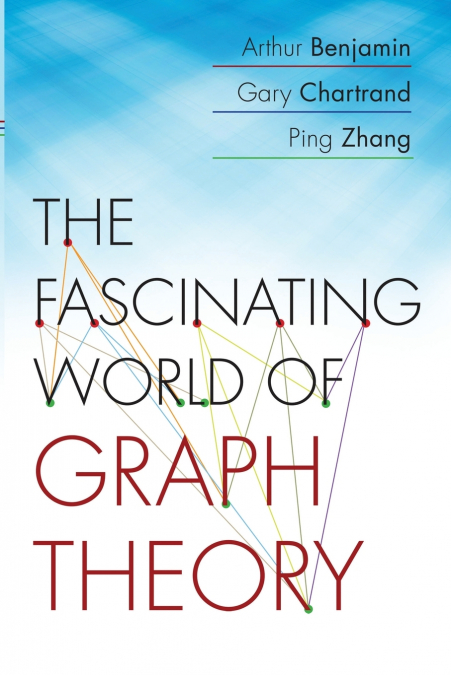
  • The Fascinating World of Graph Theory
    Arthur Benjamin / Gary Chartrand / Ping Zhang
    The history, formulas, and most famous puzzles of graph theoryGraph theory goes back several centuries and revolves around the study of graphs-mathematical structures showing relations between objects. With applications in biology, computer science, transportation science, and other areas, graph theory encompasses some of the most beautiful formulas in mathematics-and some of i...
    Disponible

    27,44 €

  • Dr. Euler’s Fabulous Formula
    Paul J. Nahin / Paul Nahin
    In the mid-eighteenth century, Swiss-born mathematician Leonhard Euler developed a formula so innovative and complex that it continues to inspire research, discussion, and even the occasional limerick. Dr. Euler’s Fabulous Formula shares the fascinating story of this groundbreaking formula-long regarded as the gold standard for mathematical beauty-and shows why it still lies at...
    Disponible

    31,49 €

  • ASPECTS OF COMPUTATION AND AUTOMATA THEORY WITH APPLICATIONS
    GREENBERG NOAM / SANJAY JAIN KENG MENG N NOAM GREENBERG
    This volume results from two programs that took place at the Institute for Mathematical Sciences at the National University of Singapore: Aspects of Computation - in Celebration of the Research Work of Professor Rod Downey (21 August to 15 September 2017) and Automata Theory and Applications: Games, Learning and Structures (20-24 September 2021).The first program was dedicated ...
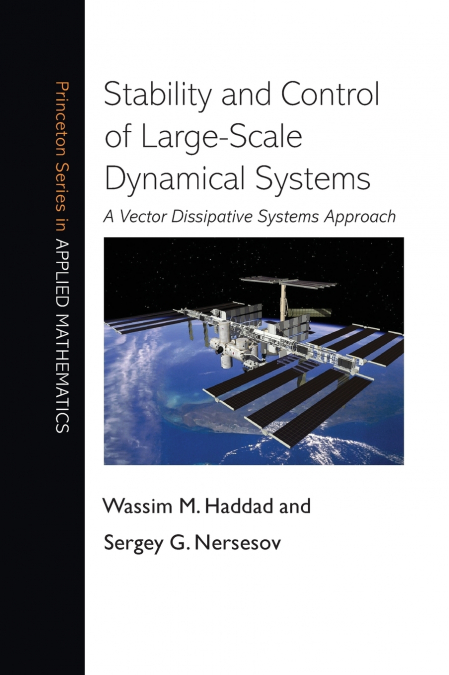
  • Stability and Control of Large-Scale Dynamical Systems
    Sergey G. Nersesov / Wassim M. Haddad
    Modern complex large-scale dynamical systems exist in virtually every aspect of science and engineering, and are associated with a wide variety of physical, technological, environmental, and social phenomena, including aerospace, power, communications, and network systems, to name just a few. This book develops a general stability analysis and control design framework for nonli...