 Librería Samer Atenea
 Kálamo Books
 Librería Elías (Asturias)
 Librería Kolima (Madrid)
 Librería Proteo (Málaga)
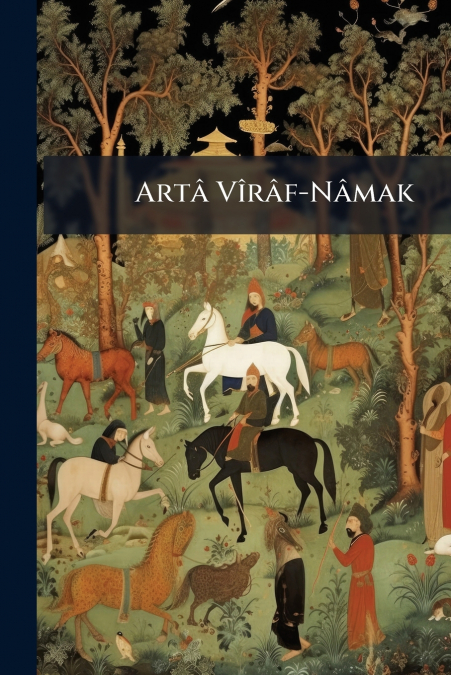
L’'Artâ Vîrâf-Nâmak' est un texte persan du Moyen Âge, relatant le voyage spirituel d’Artâ Vîrâf dans l’au-delà. Ce récit, riche en symbolisme et en détails sur les conceptions zoroastriennes du paradis et de l’enfer, offre un aperçu précieux des croyances religieuses et morales de l’époque sassanide. Le livre dépeint les épreuves et les visions d’Artâ Vîrâf, un homme pieux choisi pour visiter l’autre monde afin de confirmer la vérité de la foi zoroastrienne après une période de doute et d’incertitude. Son voyage le mène à travers divers royaumes célestes et infernaux, où il observe les récompenses des justes et les châtiments des pécheurs. Ce texte est une source importante pour la compréhension de la cosmologie zoroastrienne et de son influence sur la culture persane. Il continue de fasciner les lecteurs par sa description vivante de l’au-delà et sa réflexion sur les thèmes universels de la moralité et du destin.This work has been selected by scholars as being culturally important, and is part of the knowledge base of civilization as we know it. This work was reproduced from the original artifact, and remains as true to the original work as possible. Therefore, you will see the original copyright references, library stamps (as most of these works have been housed in our most important libraries around the world), and other notations in the work.This work is in the public domain in the United States of America, and possibly other nations. Within the United States, you may freely copy and distribute this work, as no entity (individual or corporate) has a copyright on the body of the work.As a reproduction of a historical artifact, this work may contain missing or blurred pages, poor pictures, errant marks, etc. Scholars believe, and we concur, that this work is important enough to be preserved, reproduced, and made generally available to the public. We appreciate your support of the preservation process, and thank you for being an important part of keeping this knowledge alive and relevant.