

 Librería Samer Atenea
 Kálamo Books
 Librería Elías (Asturias)
 Librería Kolima (Madrid)
 Librería Proteo (Málaga)
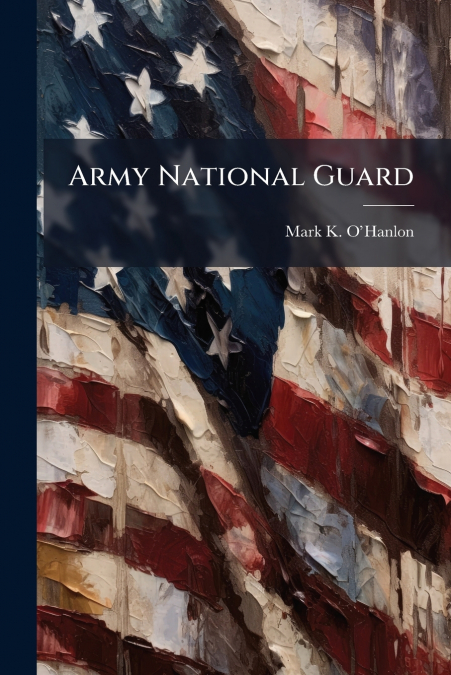
During the Cold War, the National Guard served the nation as an insurance policy designed for mass mobilization in the event of a major war or national emergency. The nation could maintain a small but well-trained standing army and a large pool of less-than-fully-trained personnel in the event of war. From its origins, Americans have joined the National Guard with the understanding that they were volunteering to serve part-time in a force that would prepare them to fight the nation’s next big war or to meet national or state emergencies. This led to the development of a predictable training pattern of one weekend a month and two weeks of active training a year. After 1989, the United States Army has seen a paradigm shift in the way the nation utilizes the Army National Guard to confront the challenges to our national security interests. The Army National Guard performs global peacetime operational missions and the Army relies on the National Guard more and more to meet its military commitments. The challenge facing the National Guard is that it cannot be all things to all people. With the limited number of training days available, the National Guard cannot be a full spectrum force and support a dual state mission and expect to be fully prepared at all times. The roles and missions for the National Guard must be firmly defined in order to allow Guard units to focus their training efforts to achieve the levels of proficiency necessary to meet the expectations of the nation and foster an atmosphere of trust and confidence with the active component. The fact of the matter is the demands of the strategic environment and current realities demonstrate the need for fundamental change. This means making smarter use of the National Guard and adapting them to new requirements, assigning missions that use their strengths and providing funding consistent with expected missions.This work has been selected by scholars as being culturally important, and is part of the knowledge base of civilization as we know it. This work was reproduced from the original artifact, and remains as true to the original work as possible. Therefore, you will see the original copyright references, library stamps (as most of these works have been housed in our most important libraries around the world), and other notations in the work.This work is in the public domain in the United States of America, and possibly other nations. Within the United States, you may freely copy and distribute this work, as no entity (individual or corporate) has a copyright on the body of the work.As a reproduction of a historical artifact, this work may contain missing or blurred pages, poor pictures, errant marks, etc. Scholars believe, and we concur, that this work is important enough to be preserved, reproduced, and made generally available to the public. We appreciate your support of the preservation process, and thank you for being an important part of keeping this knowledge alive and relevant.





