
Inicio > Humanidades > Filosofía > Ética y filosofía moral > Aristotle on Shame and Learning to Be Good
Aristotle on Shame and Learning to Be Good

Aristotle on Shame and Learning to Be Good

Marta Jimenez

134,82 €
IVA incluido
Consulta disponibilidad
Editorial:
Oxford University Press
Año de edición:
2021
Materia
Ética y filosofía moral
ISBN:
9780198829683

Selecciona una librería:

  • Librería Samer Atenea
  • Librería Aciertas (Toledo)
  • Kálamo Books
  • Librería Perelló (Valencia)
  • Librería Elías (Asturias)
  • Donde los libros
  • Librería Kolima (Madrid)
  • Librería Proteo (Málaga)

Marta Jimenez presents a novel interpretation of Aristotle’s account of the role of shame in moral development. Despite shame’s bad reputation as a potential obstacle to the development of moral autonomy, Jimenez argues that shame is for Aristotle the proto-virtue of those learning to be good, since it is the emotion that equips them with the seeds of virtue. Other emotions such as friendliness, righteous indignation, emulation, hope, and even spiritedness may play important roles on the road to virtue. However, shame is the only one that Aristotle repeatedly associates with moral progress. The reason is that shame can move young agents to perform good actions and avoid bad ones in ways that appropriately resemble not only the external behavior but also the orientation and receptivity to moral value characteristic of virtuous people. Through an analysis of the different cases of pseudo-courage and the passages on shame in Aristotle’s ethical treatises, Jimenez argues that shame places young people on the path to becoming good by turning their attention to considerations about the perceived nobility and praiseworthiness of their own actions and character. Although they are not yet virtuous, learners with a sense of shame can appreciate the value of the noble and guide their actions by a genuine interest in doing the right thing. Shame, thus, enables learners to perform virtuous actions in the right way before they possess practical wisdom or stable dispositions of character. This proposal solves a long-debated problem concerning Aristotle’s notion of habituation by showing that shame provides motivational continuity between the actions of the learners and the virtuous dispositions that they will eventually acquire


Artículos relacionados

  • Ka Ab Ba Building The Lighted Temple
    Dr Terri R. Nelson / Dr Terri RNelson
    The book KaAbBa Building The Lighted Temple/Metaphysical Keys to the Tree of Life draws a circle that is inclusive of the Afrikan origin of the Ancient Kemetic/Egyptian wisdom. It reveals the undeniable root and link of Ancient Africa to all the religious systems that would develop worldwide. This book is explosive in its power to convey the meaning of KaAbBa, the Medu Neter  (...
    Disponible

    37,41 €

  • Technoethics and the Evolving Knowledge Society
    Rocci Luppicini
    Recently, there has been a major push to rediscover the ethical dimension of technology across the sciences, social sciences, and humanities. Technoethics and the Evolving Knowledge Society: Ethical Issues in Technological Design, Research, Development, and Innovation examines human processes and practices connected to technology embedded within social, political, and moral sph...
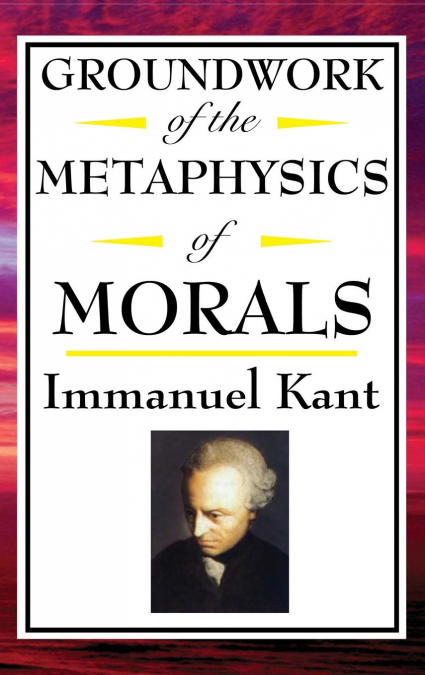
  • Kant
    Immanuel Kant
    Kant’s Groundwork of the Metaphysics of Morals is one of the most important works in modern moral philosophy. It belongs beside Plato, Aristotle, Machiavelli, and Hobbes. Here Kant sets out to articulate and defend the Categorical Imperative - the fundamental principle that underlies moral reasoning - and to lay the foundation for a comprehensive account of justice and human vi...
  • On the Duty of Civil Disobedience
    HENRY DAVID THOREAU
    Civil Disobedience argues that citizens should not permit their governments to overrule their consciences, and that they have a duty to avoid allowing their acquiescence to enable the government to make them the agents of injustice. Thoreau was motivated in part by his disgust with slavery and the Mexican-American War, but the sentiments he expresses here are just as pertinent ...
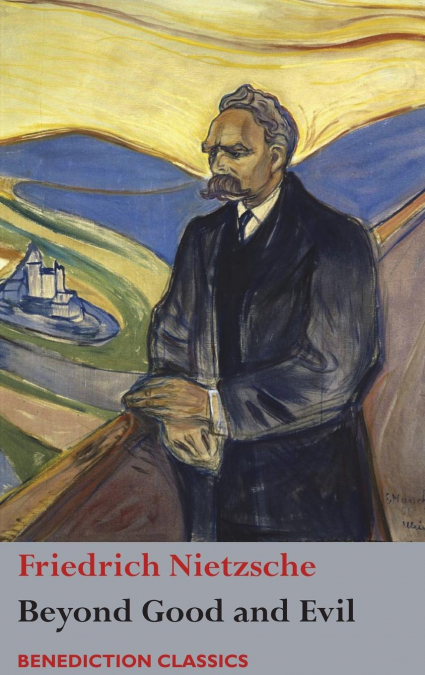
  • Beyond Good and Evil
    Friedrich Nietzsche
    Nietzsche, though primarily a philosopher, wrote widely on art, philology, history, religion, tragedy, culture, and science.  In 1886, at the height of his powers, he published Beyond Good and Evil.  Here he examines much of the best of human thought--dogmatic philosophy, Judeo-Christian morality, science and democracy – and finds it lacking.  Rejecting “slave-morality” he pres...
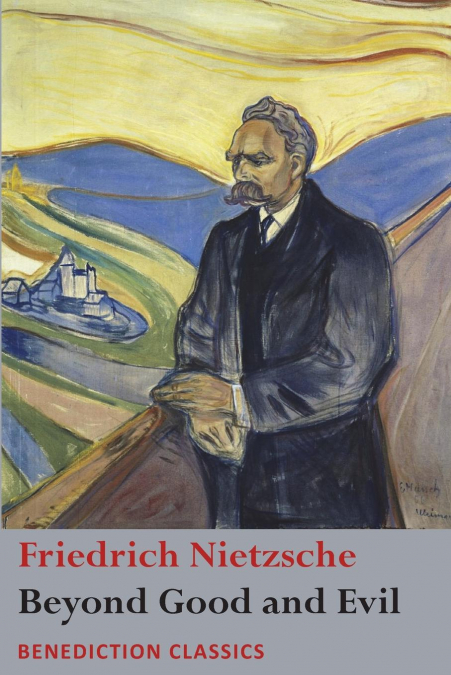
  • Beyond Good and Evil
    Friedrich Nietzsche
    Nietzsche, though primarily a philosopher, wrote widely on art, philology, history, religion, tragedy, culture, and science.  In 1886, at the height of his powers, he published Beyond Good and Evil.  Here he examines much of the best of human thought--dogmatic philosophy, Judeo-Christian morality, science and democracy – and finds it lacking.  Rejecting “slave-morality” he pres...
    Disponible

    9,99 €

Otros libros del autor

  • Esos jodidos duendecillos
    Marta Jiménez
    A Claudio le desaparecen cosas en su nueva casa de campo, en la que esperaba aislarse tras fallecer su esposa. No puede ser cuestión de la edad, son demasiadas cosas rotas o perdidas. ¿Tendrá razón el hijo del vecino? ¿Será cierto que hay duendecillos traviesos en su casa? De ninguna manera tolerará eso. ...
    Disponible

    12,43 €