
Inicio > Humanidades > Filosofía > Ética y filosofía moral > Argument Against Capital Punishment
Argument Against Capital Punishment

Argument Against Capital Punishment

Edward Livingston / Jeff Hood

6,87 €
IVA incluido
Disponible
Editorial:
Complicit Press
Año de edición:
2026
Materia
Ética y filosofía moral
ISBN:
9798235842335
6,87 €
IVA incluido
Disponible

Selecciona una librería:

  • Librería Samer Atenea
  • Kálamo Books
  • Librería Elías (Asturias)
  • Librería Kolima (Madrid)
  • Librería Proteo (Málaga)

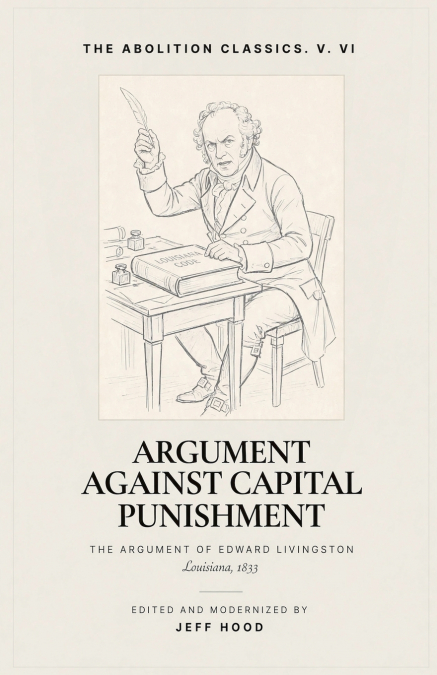
In 1833, Edward Livingston handed the Louisiana legislature a complete criminal code with no death penalty in it. He was a former mayor of New York, a future Secretary of State under Andrew Jackson, and the most respected legal mind in the country. Jeremy Bentham built a correspondence around him. Victor Hugo counted him among the men of the age who had deserved most and best of mankind. The legislature never enacted the code.Buried in its introduction is the argument reprinted here. Livingston starts further back than anyone had: not with whether executions work, but with whether the state ever received the right to kill at all. His answer is that the right exists only where nothing else will preserve life, that in any society able to build a prison that condition is never met, and that a state killing without necessity is not exercising a right but only a power. From there he takes apart deterrence with the historical record, and closes with the argument no defender of the gallows has answered in two centuries: the machinery convicts the wrong people, it does so most often to the poor and friendless, and death is the one sentence that cannot be undone.This edition modernizes the prose of the 1843 New York pamphlet, with Livingston’s argument, examples, and conclusions intact. The pamphlet’s testimonials from clergy and statesmen are appended. The edition does not protect him. A front-matter reckoning states plainly that Livingston owned human beings, that Louisiana hanged the enslaved for revolt, and that he passed over it in silence, and argues for the text anyway.
Artículos relacionados

  • Ka Ab Ba Building The Lighted Temple
    Dr Terri R. Nelson / Dr Terri RNelson
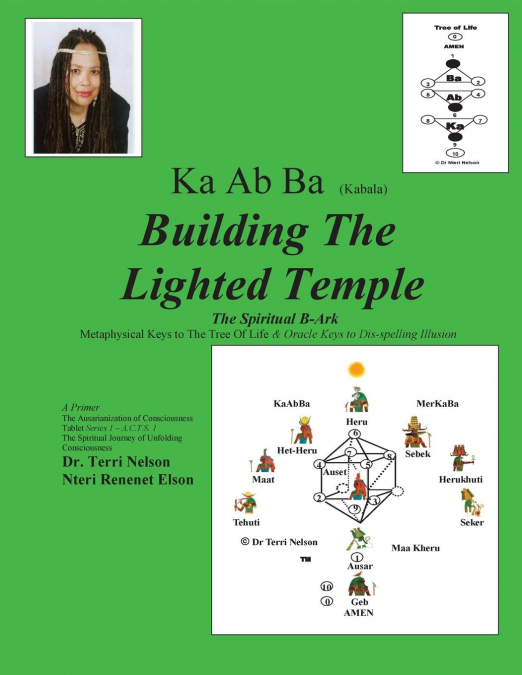
    The book KaAbBa Building The Lighted Temple/Metaphysical Keys to the Tree of Life draws a circle that is inclusive of the Afrikan origin of the Ancient Kemetic/Egyptian wisdom. It reveals the undeniable root and link of Ancient Africa to all the religious systems that would develop worldwide. This book is explosive in its power to convey the meaning of KaAbBa, the Medu Neter  (...
    Disponible

    37,41 €

  • Technoethics and the Evolving Knowledge Society
    Rocci Luppicini
    Recently, there has been a major push to rediscover the ethical dimension of technology across the sciences, social sciences, and humanities. Technoethics and the Evolving Knowledge Society: Ethical Issues in Technological Design, Research, Development, and Innovation examines human processes and practices connected to technology embedded within social, political, and moral sph...
  • Kant
    Immanuel Kant
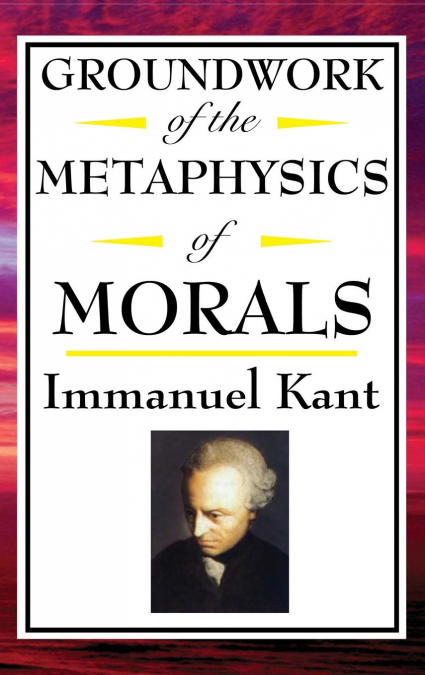
    Kant’s Groundwork of the Metaphysics of Morals is one of the most important works in modern moral philosophy. It belongs beside Plato, Aristotle, Machiavelli, and Hobbes. Here Kant sets out to articulate and defend the Categorical Imperative - the fundamental principle that underlies moral reasoning - and to lay the foundation for a comprehensive account of justice and human vi...
  • On the Duty of Civil Disobedience
    HENRY DAVID THOREAU
    Civil Disobedience argues that citizens should not permit their governments to overrule their consciences, and that they have a duty to avoid allowing their acquiescence to enable the government to make them the agents of injustice. Thoreau was motivated in part by his disgust with slavery and the Mexican-American War, but the sentiments he expresses here are just as pertinent ...
  • Beyond Good and Evil
    Friedrich Nietzsche
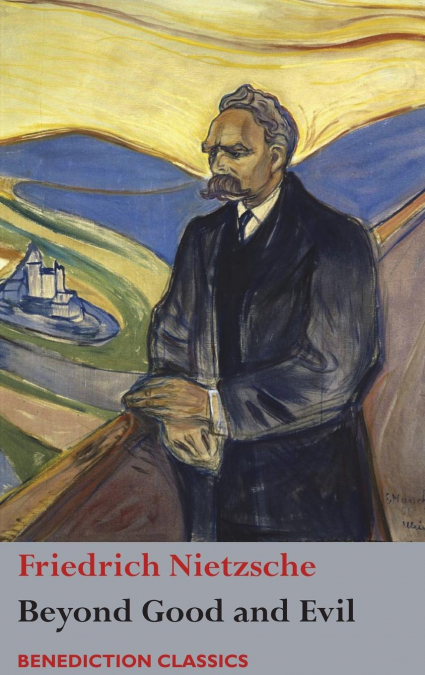
    Nietzsche, though primarily a philosopher, wrote widely on art, philology, history, religion, tragedy, culture, and science.  In 1886, at the height of his powers, he published Beyond Good and Evil.  Here he examines much of the best of human thought--dogmatic philosophy, Judeo-Christian morality, science and democracy – and finds it lacking.  Rejecting “slave-morality” he pres...
  • Beyond Good and Evil
    Friedrich Nietzsche
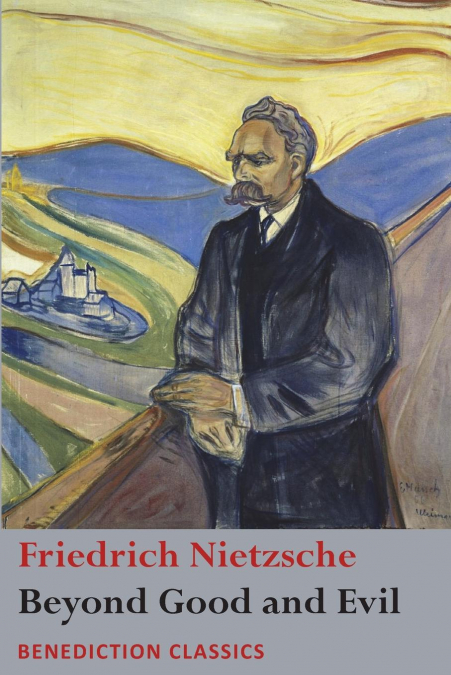
    Nietzsche, though primarily a philosopher, wrote widely on art, philology, history, religion, tragedy, culture, and science.  In 1886, at the height of his powers, he published Beyond Good and Evil.  Here he examines much of the best of human thought--dogmatic philosophy, Judeo-Christian morality, science and democracy – and finds it lacking.  Rejecting “slave-morality” he pres...
    Disponible

    9,99 €