

 Librería Samer Atenea
 Kálamo Books
 Librería Elías (Asturias)
 Librería Kolima (Madrid)
 Librería Proteo (Málaga)
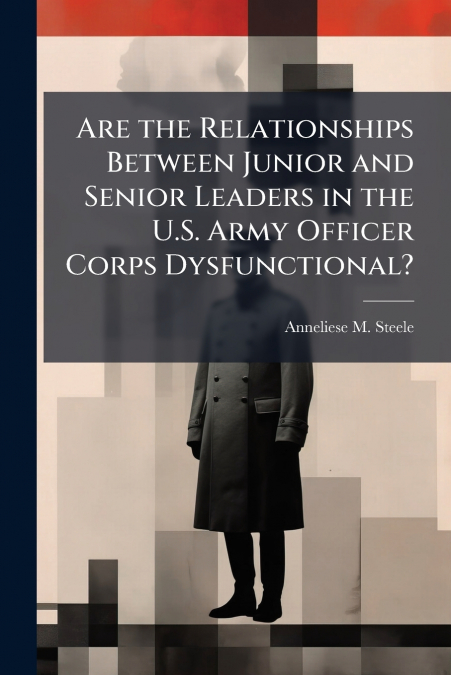
This monograph examined the relationship between junior and senior U.S. Army officers. In 2000, Thomas, E. Ricks, a reporter for the Washington Post, wrote an article contending that there was a rift between the junior and senior leaders in the U.S. Army officer corps. The reporter shared the details of some of the more shocking remarks made by these students attending the Command and General Staff College, about their senior leaders, that did not cast them in a positive light. The overriding theme was that there is no trust in the senior leadership. After this news release, many in the officer corps began to openly ask if there was a tension between junior and senior officers in the military. These events sparked internal reflection by the Army and its leadership in 2000 by senior members of the officer corps. The United States Army War College Strategic Studies Institute even listed 'Improving Junior Officer Confidence in Senior Officer Leadership' as a critical potential research topic for officers. This is a very relational topic that required exploration into the dimensions of fostering trust. Trust directly leads to confidence. Distrust destroys confidence. The key to improving confidence between these different levels of leaders is predicated on the functionality of the relationships between them. Functional relationships have distinctive characteristics, which are critical to the establishment of trust among members of a community. A functional command climate is one, which 1) exhibits an attitude of service, 2) fosters trust through effective communication, 3) exhibits senior leaders who teach and train, 4) exhibits senior leaders who are caring leaders, and 5) junior leaders who honor and obey senior leaders. These are the criteria the author used to answer the research question 'are the relationships between junior and senior leaders in the U.S. Army officer corps dysfunctional?'This work has been selected by scholars as being culturally important, and is part of the knowledge base of civilization as we know it. This work was reproduced from the original artifact, and remains as true to the original work as possible. Therefore, you will see the original copyright references, library stamps (as most of these works have been housed in our most important libraries around the world), and other notations in the work.This work is in the public domain in the United States of America, and possibly other nations. Within the United States, you may freely copy and distribute this work, as no entity (individual or corporate) has a copyright on the body of the work.As a reproduction of a historical artifact, this work may contain missing or blurred pages, poor pictures, errant marks, etc. Scholars believe, and we concur, that this work is important enough to be preserved, reproduced, and made generally available to the public. We appreciate your support of the preservation process, and thank you for being an important part of keeping this knowledge alive and relevant.





