Inicio > Humanidades > Historia > Archaeology and the Capitalist World System
Archaeology and the Capitalist World System

Archaeology and the Capitalist World System

Aron L. Crowell

133,86 €
IVA incluido
Disponible
Editorial:
Springer Nature B.V.
Año de edición:
2013
Materia
Historia
ISBN:
9781475792812
133,86 €
IVA incluido
Disponible

Selecciona una librería:

  • Librería Samer Atenea
  • Librería Aciertas (Toledo)
  • Kálamo Books
  • Librería Perelló (Valencia)
  • Librería Elías (Asturias)
  • Donde los libros
  • Librería Kolima (Madrid)
  • Librería Proteo (Málaga)

History has many voices. In the words of Russian fur merchant Grigorii Shelikhov, who led the conquest of Kodiak Island, Alaska, in 1784 and sought to subjugate its indigenous Qikertarmiut population, 'the arrival of the Russians in their land had brought them innumerable advantages, security, and prosperity' (Shelikhov 1981:121). Arsenti Aminak, a Qiker­ tarmiut elder in 1851, held a different view. He recalled a Russian ship that visited the island several years before Shelikhov as a 'strange monster, never seen before, which we feared and whose stench made us sick. ' In 1784, the dead of his people lay on the beach at a place called A’wauq­ meaning 'to become numb' -where hundreds had been killed by Skeli­ khov’s cannon and muskets (Holmberg 1985:57-59). The Russian hunters who built the Shelikhov-Golikov Company’s first outpost on Kodiak Is­ land, at a small cove they called Gavan Trekh Svetitelei (as commonly translated, 'Three Saints Harbor'), recalled their own miseries and de­ spair: 'We . . . spent the winter in ceaseless labors and . . . suffered great shortages and real famine . . . . Many contracted fever, scurvy, and other ills, and died' (Pierce 1976:75). Eyewitness statements about what happened on Kodiak Island dur­ ing the Russian conquest and early years of colonial rule are important, but rare. They represent the experiences and views of a few individuals who lived through a time of turbulent change and traumatic contact between disparate cultures.

Artículos relacionados

  • Raising Freedom's Banner
    Paul Harris
    World wide history of peaceful street demonstrations from their earliest beginning in eighteenth century England to their use throughout the world in the twenty-first century. Describes why some demonstration movements succeeded and others failed. Contrasts demonstrations within the law with civil disobedience demonstrations. Describes Peterloo, the Chartists, the Suffragettes,...
    Disponible

    23,59 €

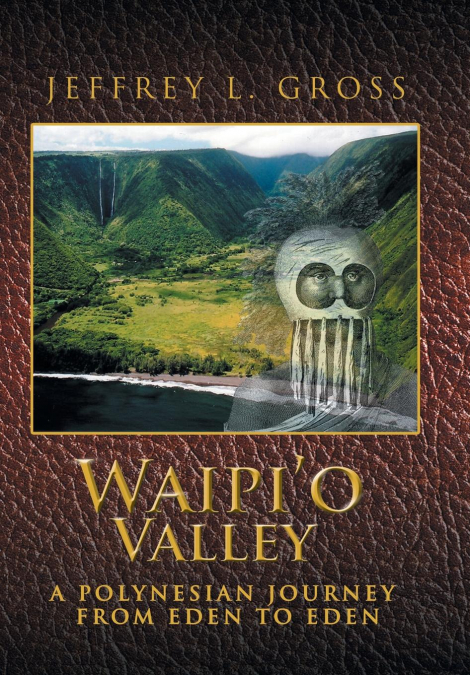
  • Waipi’o Valley
    Jeffrey L. Gross
    Waipi’o Valley: A Polynesian Journey from Eden to Eden recounts the remarkable migrations of the Polynesians across a third of the circumference of the earth. Their amazing journey began from Kalana i Hau’ola, the biblical “Garden of Eden” located along the shore of the Persian Gulf, extended to the Indus River Valley of ancient Vedic India, to Egypt where some ancestors of the...
  • Floralia
    June Rainsford Butler
    A century characterized by a growing interest in science, the opportunity for travel, and leisure for gardening furnishes the setting for Butler’s book. The rise of landscape gardening in England is traced, and the origin and history of its most famous gardens are given. The close relation between England and America in the field of horticulture is also discussed.Originally pub...
    Disponible

    61,20 €

  • President Wilson’s Addresses
    Woodrow Wilson
    'These addresses of President Woodrow Wilson are almost entirely concerned with political affairs, and more specifically with defining Americanism. Yet they also show that even as he moved from academia to the heights of politics, Wilson retained something of the teacher’s interest in showing the relation between specific instances and the general forms of thought or action of ...
  • The Story of my Life
    John Albert Macy
    The Story of My Life, is Helen Keller’s autobiography detailing her early life, especially her experiences with Anne Sullivan. The book is dedicated to inventor Alexander Graham Bell. The dedication reads, 'To ALEXANDER GRAHAM BELL Who has taught the deaf to speak and enabled the listening ear to hear speech from the Atlantic to the Rockies, I dedicate this Story of My Life.' ...
  • The Story of My Life Vol. 6 Spanish Passions
    Giacomo Casanova
    Casanova was an Italian adventurer and author from the Republic of Venice. His autobiography, Histoire de ma vie (Story of My Life), is regarded as one of the most authentic sources of the customs and norms of European social life during the 18th century. He has become so famous for his often complicated and elaborate affairs with women that his name is now synonymous with 'wom...