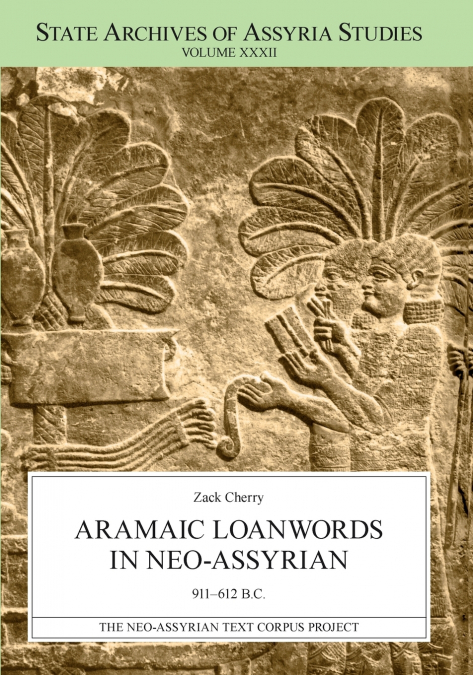

Aramaic Loanwords in Neo-Assyrian 911-612 B.C.

Aramaic Loanwords in Neo-Assyrian 911-612 B.C.

Zack Cherry

115,03 €
IVA incluido
Disponible
Editorial:
Penn State University Press
Año de edición:
2023
Materia
Antropología social y cultural, etnografía
ISBN:
9789521095047
115,03 €
IVA incluido
Disponible

Selecciona una librería:

  • Librería Samer Atenea

  • Kálamo Books
  • Librería Elías (Asturias)
  • Librería Kolima (Madrid)
  • Librería Proteo (Málaga)

This study identifies and analyzes Aramaic loanwords occurring in Neo-Assyrian texts between 911 and 612 B.C. As two Semitic languages, Neo-Assyrian and Aramaic are sibling-descendants of a postulated common ancestor, Proto-Semitic. The work provides information about the contact between the two languages and about the people who spoke them.To achieve this scholarly objective, a total of 9,057 Neo-Assyrian texts of different genres were utilized. The study discusses 166 proposed Aramaic loanwords in Neo-Assyrian, which are evaluated according to phonological, morphological, and semantic criteria. The findings demonstrate that only 69 words are confirmed loanwords, and 50 are possible loanwords. Additionally, 47 words are rejected as possible Aramaic loanwords in Neo-Assyrian. The majority of the confirmed loanwords are attested in letters and legal and administrative documents from the seventh century B.C., stemming from the major Assyrian cities of Nineveh, Assur, and Calah. Most of the confirmed loanwords are nouns.Aramaic was the lingua franca of the Neo-Assyrian Empire from the mid-eighth century B.C. onwards, and the loanwords analyzed provide evidence for the use of Aramaic in Assyria proper as well. The relatively small number of certain and possible loanwords, however, fails to support the impression that Aramaic was widespread as a vernacular language in Assyria proper, especially towards the end of the period studied. The evidence also corroborates the conclusion, based on the extant prosopographical data, that the predominantly Assyrian character was maintained in Assyria proper until the very end of the Assyrian Empire.
Artículos relacionados

  • Investigating Prehistoric Hunter-Gatherer Identities
    Edited by H. L. Cobb, F. Coward, L. Grimshaw and S. Price.This volume stems from sessions at the 2004 Theoretical Archaeology Conference at Glasgow University, entitled "Hunter-Gatherers in Early Prehistory" and "Hunting for Meaning: Interpretive Approaches to the Mesolithic". The sessions came about as a response to a continuing lack of appreciation of new developments in theo...
    Disponible

    67,76 €

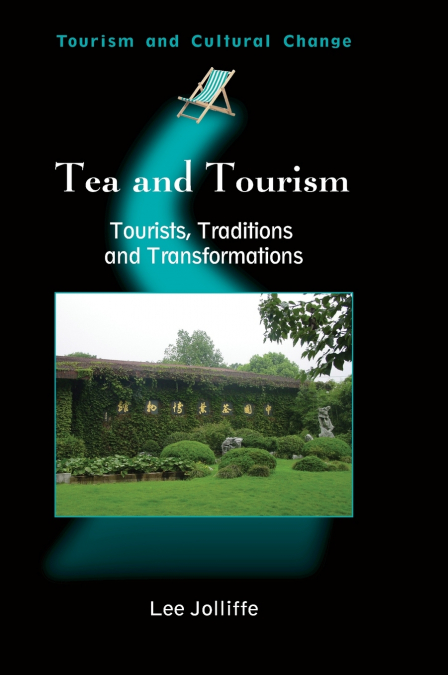
  • Tea and Tourism
    Lee Jolliffe
    The global production, marketing and consumption of tea present a resource for tea-related tourism. Tea and Tourism: Tourists, Traditions and Transformations profiles tea cultures and examines the social, political and developmental contexts of using related traditions for touristic purposes. This volume views tourism related to tea from differing disciplinary perspectives, and...
  • An Archive of Possibilities
    Rachel Marie Niehuus
    In An Archive of Possibilities, anthropologist and surgeon Rachel Marie Niehuus explores possibilities of healing and repair in the eastern Democratic Republic of Congo against a backdrop of 250 years of Black displacement, enslavement, death, and chronic war. Niehuus argues that in a context in which violence characterizes everyday life, Congolese have developed innovative and...
    Disponible

    38,64 €

  • Christmas Island
    Simone Dennis
    Christmas Island is a small territory of Australia located in the Indian Ocean. It is home to three main ethnic groups, the smallest of which are European Australians. Christmas Island is also where those who arrive 'illegally' to seek asylum in Australia are accommodated. Christmas Island has played a key role in Australian security, located as it is at the northern extremity ...
  • The Chinese of Indonesia and Their Search for Identity
    Aimee Dawis
    This book examines how the Indonesian Chinese who were born after 1966 negotiate meanings about their culture and identity through their collective memory of growing up in a restrictive media environment that specifically curtailed Chinese language and culture. The restrictive media environment was the result of a series of policies administered during the Suharto era (1965-199...