
Inicio > Medicina > Medicina preclínica: ciencias básicas > Approaches to Universal Health Coverage and Occupational Health and Safety for the Informal Workforce in Developing Countries
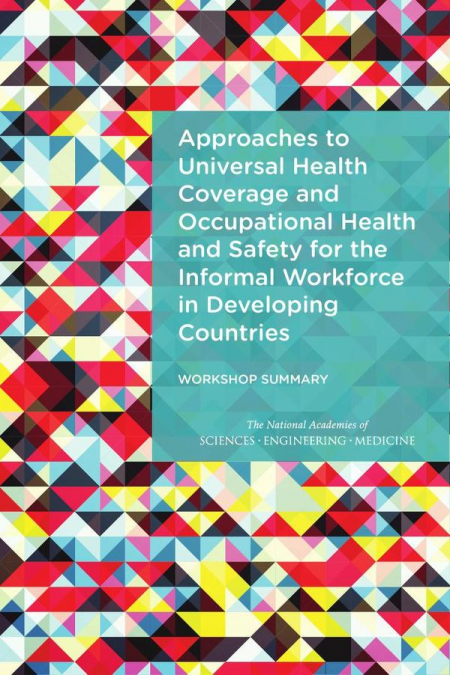
Approaches to Universal Health Coverage and Occupational Health and Safety for the Informal Workforce in Developing Countries

Approaches to Universal Health Coverage and Occupational Health and Safety for the Informal Workforce in Developing Countries

AA.VV

40,04 €
IVA incluido
Disponible
Editorial:
National Academies Press
Año de edición:
2016
Materia
Medicina preclínica: ciencias básicas
ISBN:
9780309374064
40,04 €
IVA incluido
Disponible

Selecciona una librería:

  • Librería Samer Atenea
  • Librería Aciertas (Toledo)
  • Kálamo Books
  • Librería Perelló (Valencia)
  • Librería Elías (Asturias)
  • Donde los libros
  • Librería Kolima (Madrid)
  • Librería Proteo (Málaga)

Universal health coverage (UHC) has been recognized by the World Health Organization as a key element in reducing social inequality and a critical component of sustainable development and poverty reduction. In most of the world UHC is sought through a combination of public and private-sector health care systems. In most low- and middle-income countries health systems are evolving to increasingly rely on the private sector because the public sector lacks the infrastructure and staff to meet all health care needs. With growing individual assets available for private-sector expenditure, patients often seek better access to technology, staff, and medicines. However, in low-income countries nearly 50 percent of health care financing is out-of-pocket. With the expected increase in the overall fraction of care provided through the private sector, these expenditures can be financially catastrophic for individuals in the informal workforce. In the global workforce of approximately 3 billion people, only 10 to 15 percent are estimated to have some type of access to occupational health services. The informal workforce is growing worldwide, and the degree to which its occupational health needs are satisfied depends on the capabilities of the general health care system. In July 2014, the Institute of Medicine held a workshop on approaches to universal health coverage and occupational health and safety for informal sector workers in developing countries. This report summarizes the presentations and discussions from this workshop. Approaches to Universal Health Coverage and Occupational Health and Safety for the Informal Workforce in Developing Countries identifies best practices and lessons learned for the informal workforce in developing countries in the financing of health care with respect to health care delivery models that are especially suitable to meeting a population’s needs for a variety of occupational health issues, including the prevention of or mitigation of hazardous risks and the costs of providing medical and rehabilitation services and other benefits to various types of workers within this population. These experiences and lessons learned may be useful for stakeholders in moving the discussions, policies, and mechanisms forward to increase equitable access to quality health services without financial hardship for the informal workforce.


Artículos relacionados

  • Biologically Inspired Networking and Sensing
    Despite their widespread impact, computer networks that provide the foundation for the World Wide Web and Internet have many limitations. These networks are vulnerable to security threats, break easily, and have a limited ability to respond to changing conditions. Recent research on overcoming these limitations has used biological systems for inspiration, resulting in the devel...
  • Systemic Approaches in Bioinformatics and Computational Systems Biology
    The convergence of biology and computer science was initially motivated by the need to organize and process a growing number of biological observations resulting from rapid advances in experimental techniques. Today, however, close collaboration between biologists, biochemists, medical researchers, and computer scientists has also generated remarkable benefits for the field of ...
  • Analytical Chemistry Essentials
    SREEKUMAR V T / V T SREEKUMAR
    Embark on a transformative journey into the captivating world of analytical chemistry with Sreekumar V T’s comprehensive guide, 'Analytical Chemistry Essentials: A Gateway to High School Mastery.' This meticulously crafted book serves as a roadmap for high school students seeking a profound understanding of analytical chemistry, bridging fundamental concepts to advanced applica...
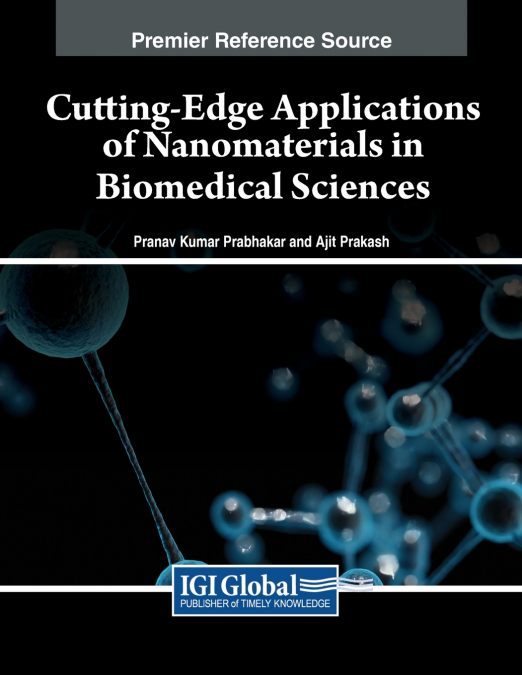
  • Cutting-Edge Applications of Nanomaterials in Biomedical Sciences
    Cutting-Edge Applications of Nanomaterials in Biomedical Sciences is a comprehensive exploration of the revolutionary impact of nanotechnology on the field of medicine. This book delves into the remarkable potential of nanomaterials in advancing medical diagnostics and therapeutics, particularly in drug delivery. It serves as an indispensable guide, presenting the latest develo...
    Disponible

    304,49 €

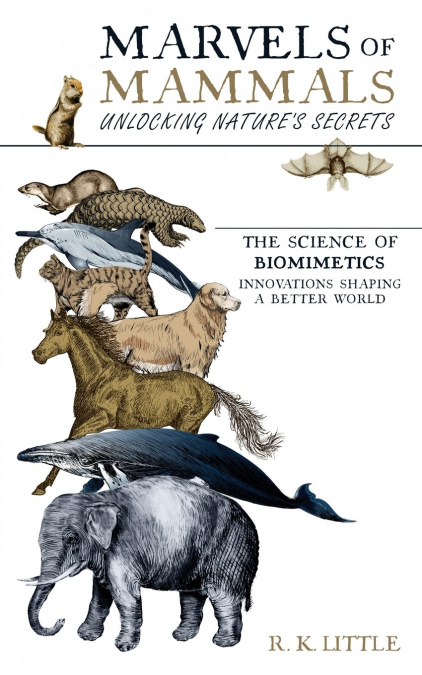
  • Marvels of Mammals
    R K Little
    Animals possess many remarkable and unique characteristics and abilities. Their agility and capabilities both educate and inspire us.This fascination has given rise to a whole field of study known as biomimetics.Inside Marvels of Mammals, you will discover how humans have been inspired to mimic the animal kingdom in the fields of robotics, aviation, nanotechnology, engineering,...
    Disponible

    16,66 €

  • The Chemistry of Human Life
    George W. Carey
    2024 Reprint of the 1919 Edition.  Full facsimile of the original edition and not reproduced with Optical Recognition software.  Carey (1845 - 1924) was an American homeopath and occultist known for a number of 1910s Chemistry of Life publications, a subject which he referred to as biochemistry, and particularly for his 1919 publication, The Chemistry of Human Life. His work wa...
    Disponible

    6,95 €