

 Librería Samer Atenea
 Kálamo Books
 Librería Elías (Asturias)
 Librería Kolima (Madrid)
 Librería Proteo (Málaga)
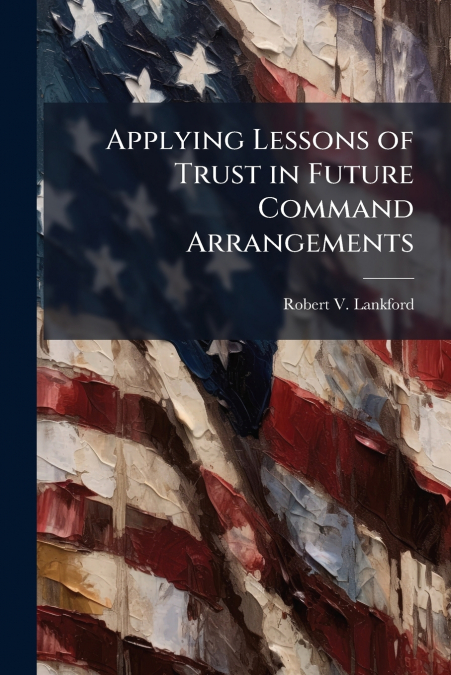
This monograph elucidates lessons of trust learned through the study of historical command relationships between soldier and airman. The purpose of this monograph is to highlight the need to apply the lessons learned from these case studies in today’s operating environment. To accomplish this purpose, the work examines three historical case studies: Generals Bradley and Quesada in WWII, Generals Schwarzkopf and Horner in Operation Desert Storm, and Generals Clark and Short in Operation Allied Force. By illustrating differing airpower conceptualizations in these case studies, this monograph examines efforts to establish solid relationships built on trust and competence needed to overcome these conceptual differences to accomplish the mission. Beginning with a review of early airpower theory and concepts, the first case study examines both sides of competing airpower concepts as well as the individual officers’ thoughts on the employment of airpower. The chapter then highlights the existing command structure these officers operated within, specifically noting the command arrangements in place and where each officer stood in this chain of command in relation to his counterpart. The second case study begins with a brief glimpse into the importance and evolution of AirLand Battle doctrine, focusing on its impact on airpower conceptualization. The chapter then examines the trust General Schwarzkopf had for General Horner, and how Horner fostered that trust through competence. The last relationship examined is an example of a lack of trust between airman and soldier, and the impact it had on future airpower conceptualization. The final chapter begins by indentifying the contextual differences in today’s operating environment and then highlights command and control nodes where the airman and soldier interact. The monograph then elucidates conclusions drawn from studying the selected command relationships.This work has been selected by scholars as being culturally important, and is part of the knowledge base of civilization as we know it. This work was reproduced from the original artifact, and remains as true to the original work as possible. Therefore, you will see the original copyright references, library stamps (as most of these works have been housed in our most important libraries around the world), and other notations in the work.This work is in the public domain in the United States of America, and possibly other nations. Within the United States, you may freely copy and distribute this work, as no entity (individual or corporate) has a copyright on the body of the work.As a reproduction of a historical artifact, this work may contain missing or blurred pages, poor pictures, errant marks, etc. Scholars believe, and we concur, that this work is important enough to be preserved, reproduced, and made generally available to the public. We appreciate your support of the preservation process, and thank you for being an important part of keeping this knowledge alive and relevant.





