Apology: Large Print

Apology: Large Print

Plato

0,00 €
IVA incluido
Consulta disponibilidad
Editorial:
Muze Publications
Año de edición:
2026
Materia
Ética y filosofía moral
ISBN:
9781811169568

Selecciona una librería:

  • Librería Samer Atenea

  • Kálamo Books
  • Librería Elías (Asturias)
  • Librería Kolima (Madrid)
  • Librería Proteo (Málaga)

What would you refuse to surrender, even to save your life? Facing an Athenian jury, Socrates stakes his defense on the value of questioning, virtue, and truth.In Apology, Plato presents the defense of his teacher at his trial in 399 BCE. Accused of corrupting the young and failing to acknowledge the city’s gods, Socrates answers his accusers by explaining the philosophical mission that has made him both admired and resented. He challenges claims to wisdom, examines his own reputation, and insists that caring for the soul matters more than wealth or public approval.The title means a defense, not an expression of regret. As the proceedings move from accusation to verdict and sentence, Socrates remains unwilling to abandon inquiry for safety. His reflections on death, moral responsibility, and the examined life have made this brief work a lasting point of entry into Western philosophy. Its questions remain immediate: How should we respond to popular opinion? What does it mean to know our own limits? Can a person suffer injustice without becoming unjust?What readers find inside:A historic trial — Socrates confronts the charges against him before the citizens of Athens.The limits of knowledge — His account of the Delphic oracle explores the difference between wisdom and the belief that one is wise.Virtue over status — He argues that moral character deserves greater care than money, reputation, or power.Philosophy under pressure — Questioning and irony become the means of defending a life devoted to inquiry.The prospect of death — Socrates considers mortality without claiming knowledge he does not possess.A rewarding choice for readers beginning Greek philosophy, students of ethics and rhetoric, and anyone drawn to questions of conscience and moral courage.Enter the Athenian courtroom and consider what it means to live an examined life.Large print edition: 16-point type for comfortable reading. 10

Artículos relacionados

  • Ka Ab Ba Building The Lighted Temple
    Dr Terri R. Nelson / Dr Terri RNelson
    The book KaAbBa Building The Lighted Temple/Metaphysical Keys to the Tree of Life draws a circle that is inclusive of the Afrikan origin of the Ancient Kemetic/Egyptian wisdom. It reveals the undeniable root and link of Ancient Africa to all the religious systems that would develop worldwide. This book is explosive in its power to convey the meaning of KaAbBa, the Medu Neter  (...
    Disponible

    45,14 €

  • Technoethics and the Evolving Knowledge Society
    Rocci Luppicini
    Recently, there has been a major push to rediscover the ethical dimension of technology across the sciences, social sciences, and humanities. Technoethics and the Evolving Knowledge Society: Ethical Issues in Technological Design, Research, Development, and Innovation examines human processes and practices connected to technology embedded within social, political, and moral sph...
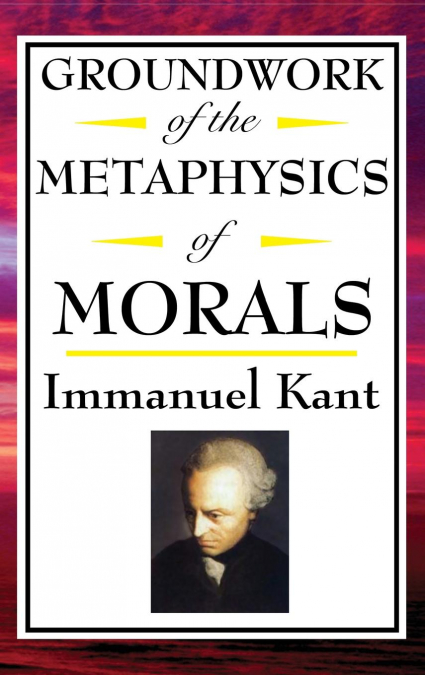
  • Kant
    Immanuel Kant
    Kant’s Groundwork of the Metaphysics of Morals is one of the most important works in modern moral philosophy. It belongs beside Plato, Aristotle, Machiavelli, and Hobbes. Here Kant sets out to articulate and defend the Categorical Imperative - the fundamental principle that underlies moral reasoning - and to lay the foundation for a comprehensive account of justice and human vi...
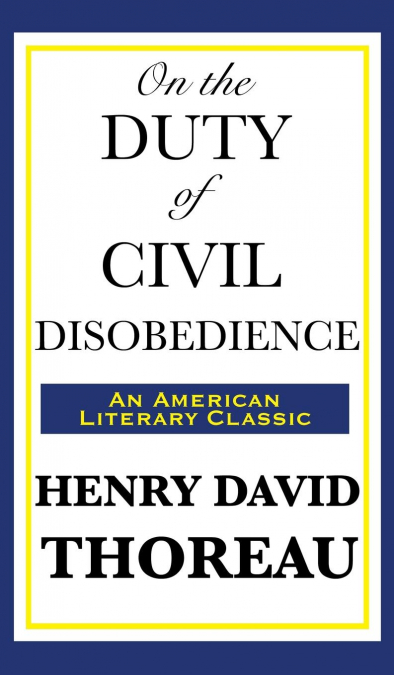
  • On the Duty of Civil Disobedience
    HENRY DAVID THOREAU
    Civil Disobedience argues that citizens should not permit their governments to overrule their consciences, and that they have a duty to avoid allowing their acquiescence to enable the government to make them the agents of injustice. Thoreau was motivated in part by his disgust with slavery and the Mexican-American War, but the sentiments he expresses here are just as pertinent ...
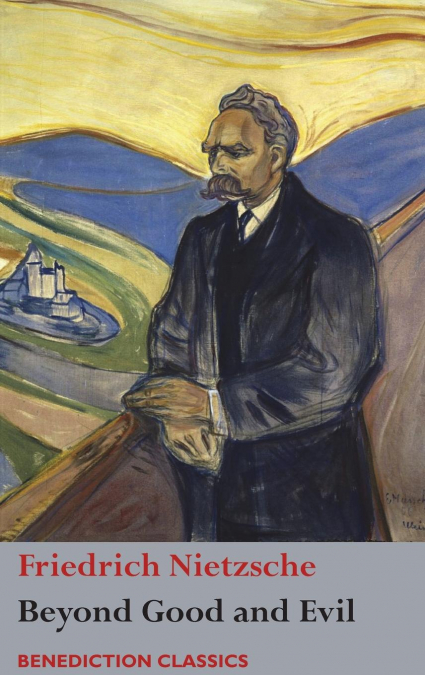
  • Beyond Good and Evil
    Friedrich Nietzsche
    Nietzsche, though primarily a philosopher, wrote widely on art, philology, history, religion, tragedy, culture, and science.  In 1886, at the height of his powers, he published Beyond Good and Evil.  Here he examines much of the best of human thought--dogmatic philosophy, Judeo-Christian morality, science and democracy – and finds it lacking.  Rejecting “slave-morality” he pres...
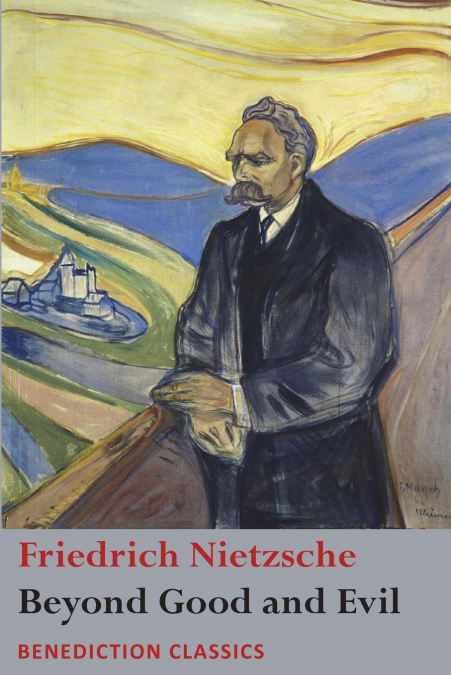
  • Beyond Good and Evil
    Friedrich Nietzsche
    Nietzsche, though primarily a philosopher, wrote widely on art, philology, history, religion, tragedy, culture, and science.  In 1886, at the height of his powers, he published Beyond Good and Evil.  Here he examines much of the best of human thought--dogmatic philosophy, Judeo-Christian morality, science and democracy – and finds it lacking.  Rejecting “slave-morality” he pres...
    Disponible

    10,94 €

Otros libros del autor

  • Cratylus
    Plato
    Does a name reveal what something truly is—or only what people agree to call it? A familiar word becomes a philosophical puzzle in this searching dialogue about language and truth.In Cratylus, Plato brings Socrates into conversation with Hermogenes and Cratylus over the correctness of names. Hermogenes grounds naming in convention and agreement; Cratylus argues that names posse...
  • Philebus: Large Print
    Plato
    Is the happiest life the one with the most pleasure—or the one guided by reason? What if neither, on its own, is enough?In Philebus, Plato turns the question of human happiness into a searching philosophical conversation. Socrates and Protarchus debate the claims of pleasure and intelligence, testing whether either can supply everything a good life requires. Their inquiry moves...
  • The Republic
    Plato
    Why be just when injustice seems to pay? Plato turns that unsettling question into a searching debate about power, truth, and how we should live.In The Republic, Socrates and his companions investigate justice by imagining a city and asking what would make it well governed. Their conversation moves between public life and the inner life: the education of guardians, the responsi...
  • The Republic: Large Print
    Plato
    Why be just when injustice seems to pay? Plato turns that unsettling question into a searching debate about power, truth, and how we should live.In The Republic, Socrates and his companions investigate justice by imagining a city and asking what would make it well governed. Their conversation moves between public life and the inner life: the education of guardians, the responsi...
  • Phaedrus
    Plato
    What makes love a path to wisdom—and persuasion more than a clever use of words? A walk outside Athens becomes a searching conversation about desire, truth, and the human soul.In Plato’s Phaedrus, Socrates joins a young admirer of speeches beside the river Ilissus. A speech by Lysias sparks a debate about lovers and those who do not love, leading Socrates to reconsider love as ...
  • Phaedrus: Large Print
    Plato
    What makes love a path to wisdom—and persuasion more than a clever use of words? A walk outside Athens becomes a searching conversation about desire, truth, and the human soul.In Plato’s Phaedrus, Socrates joins a young admirer of speeches beside the river Ilissus. A speech by Lysias sparks a debate about lovers and those who do not love, leading Socrates to reconsider love as ...