
Inicio > Humanidades > Filosofía > Ética y filosofía moral > Animals in the Sociologies of Westermarck and Durkheim
Animals in the Sociologies of Westermarck and Durkheim

Animals in the Sociologies of Westermarck and Durkheim

Salla Tuomivaara

101,55 €
IVA incluido
Consulta disponibilidad
Editorial:
Springer Nature B.V.
Año de edición:
2019
Materia
Ética y filosofía moral
ISBN:
9783030268626

Selecciona una librería:

  • Librería Samer Atenea
  • Librería Aciertas (Toledo)
  • Kálamo Books
  • Librería Perelló (Valencia)
  • Librería Elías (Asturias)
  • Donde los libros
  • Librería Kolima (Madrid)
  • Librería Proteo (Málaga)

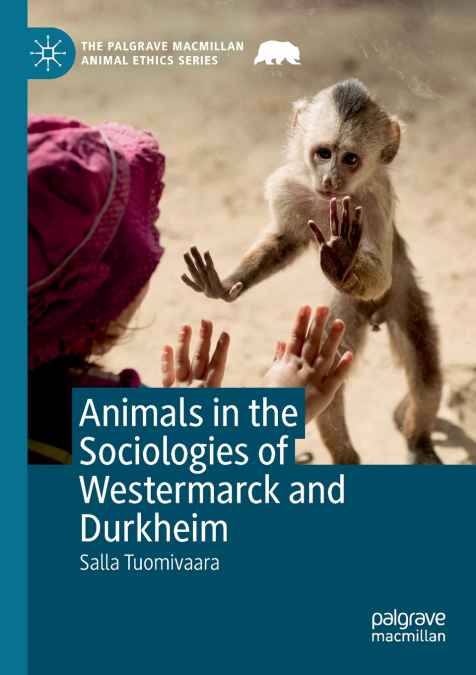
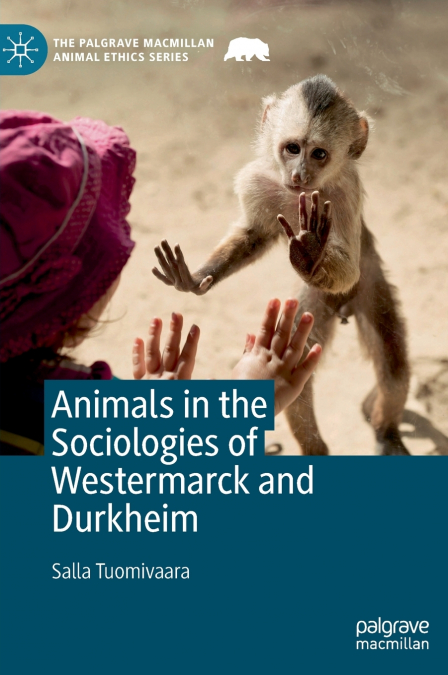
This book explores why animals, at some point, disappeared from the realm and scope of sociology. The role of sociology in the construction of a science of the ’human’ has been substantial, building representations of the human sphere of life as unique. Within the sociological tradition however, animals have often been invisible, even non-existent. Through in-depth comparisons of the texts of prominent early sociologists Emile Durkheim and Edward Westermarck, Tuomivaara shows that despite this exclusion, representations of animals and human-animal relations were far more varied in early works than in the later sociological cannon. Addressing a significant gap in the interdisciplinary field of animal studies, Tuomivaara presents a close reading of the historical treatment of animals in the works of Durkheim and Westermarck to determine how the human-animal boundary was established in sociological theory. The diverse forms in which animals and ’the animal’ appear in the works of early classical sociology are charted and explored, alongside the sociological themes that bring animals into these texts. Situated in contemporary theory, from critical animal studies to posthumanism, this important book lays the groundwork for a disciplinary shift away from this sharp human-animal dualism. 

Artículos relacionados

  • Ka Ab Ba Building The Lighted Temple
    Dr Terri R. Nelson / Dr Terri RNelson
    The book KaAbBa Building The Lighted Temple/Metaphysical Keys to the Tree of Life draws a circle that is inclusive of the Afrikan origin of the Ancient Kemetic/Egyptian wisdom. It reveals the undeniable root and link of Ancient Africa to all the religious systems that would develop worldwide. This book is explosive in its power to convey the meaning of KaAbBa, the Medu Neter  (...
    Disponible

    37,41 €

  • Technoethics and the Evolving Knowledge Society
    Rocci Luppicini
    Recently, there has been a major push to rediscover the ethical dimension of technology across the sciences, social sciences, and humanities. Technoethics and the Evolving Knowledge Society: Ethical Issues in Technological Design, Research, Development, and Innovation examines human processes and practices connected to technology embedded within social, political, and moral sph...
  • Kant
    Immanuel Kant
    Kant’s Groundwork of the Metaphysics of Morals is one of the most important works in modern moral philosophy. It belongs beside Plato, Aristotle, Machiavelli, and Hobbes. Here Kant sets out to articulate and defend the Categorical Imperative - the fundamental principle that underlies moral reasoning - and to lay the foundation for a comprehensive account of justice and human vi...
  • On the Duty of Civil Disobedience
    HENRY DAVID THOREAU
    Civil Disobedience argues that citizens should not permit their governments to overrule their consciences, and that they have a duty to avoid allowing their acquiescence to enable the government to make them the agents of injustice. Thoreau was motivated in part by his disgust with slavery and the Mexican-American War, but the sentiments he expresses here are just as pertinent ...
  • Beyond Good and Evil
    Friedrich Nietzsche
    Nietzsche, though primarily a philosopher, wrote widely on art, philology, history, religion, tragedy, culture, and science.  In 1886, at the height of his powers, he published Beyond Good and Evil.  Here he examines much of the best of human thought--dogmatic philosophy, Judeo-Christian morality, science and democracy – and finds it lacking.  Rejecting “slave-morality” he pres...
  • Beyond Good and Evil
    Friedrich Nietzsche
    Nietzsche, though primarily a philosopher, wrote widely on art, philology, history, religion, tragedy, culture, and science.  In 1886, at the height of his powers, he published Beyond Good and Evil.  Here he examines much of the best of human thought--dogmatic philosophy, Judeo-Christian morality, science and democracy – and finds it lacking.  Rejecting “slave-morality” he pres...
    Disponible

    9,99 €

Otros libros del autor

  • Animals in the Sociologies of Westermarck and Durkheim
    Salla Tuomivaara
    This book explores why animals, at some point, disappeared from the realm and scope of sociology. The role of sociology in the construction of a science of the ’human’ has been substantial, building representations of the human sphere of life as unique. Within the sociological tradition however, animals have often been invisible, even non-existent. Through in-depth comparisons ...
    Disponible

    66,35 €