 Librería Samer Atenea
 Kálamo Books
 Librería Elías (Asturias)
 Librería Kolima (Madrid)
 Librería Proteo (Málaga)
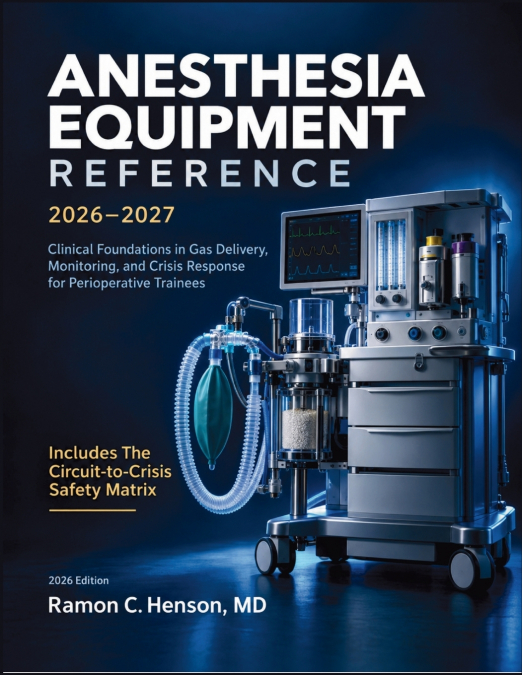
Understand the System Before the Signal Becomes a Crisis Safe perioperative care depends on more than knowing where controls are located. This clinically organized volume connects physical principles, workstation architecture, breathing systems, ventilation, monitoring, infusion technology, airway devices, ultrasound, environmental hazards, and maintenance to the decisions made before and during patient care. It is written for trainees and clinicians who need to distinguish artifact from true deterioration, preserve oxygenation and ventilation during a malfunction, and localize faults without losing situational awareness. Source-to-patient reasoning turns unfamiliar displays and device behavior into a stable method for verification, rescue, fault isolation, and safe return to service. Develop Practical Capability Across the Perioperative Technology Chain Medical gas sources, pipelines, cylinders, and regulators - verify supply integrity and respond decisively to pressure loss or contamination Workstation flow paths, mixers, vaporizers, circuits, absorbents, and ventilators - connect engineering behavior to delivered therapy Pulse oximetry, capnography, gas analysis, spirometry, pressure systems, and advanced monitors - recognize artifact and reconcile conflicting signals Airway, infusion, ultrasound, warming, fluid, blood, and positioning systems - prepare compatible components and preserve independent rescue options Electrical safety, electrosurgery, lasers, fire prevention, scavenging, and occupational exposure - control energy and environmental risk Reprocessing, preventive maintenance, incident preservation, and device quarantine - support traceable lifecycle safety after use or failure Pediatric, transport, remote-site, and magnetic resonance adaptations - match reserves, interfaces, and rescue pathways to constrained environments The Circuit-to-Crisis Safety Matrix - move from signal to system map, immediate protection, definitive correction, and device disposition Build a durable equipment-safety method that remains useful across manufacturers, locations, and changing technology.