
Inicio > Lenguas > Lingüistica > Anaphora and Type Logical Grammar
Anaphora and Type Logical Grammar

Anaphora and Type Logical Grammar

Gerhard Jäger

206,26 €
IVA incluido
Consulta disponibilidad
Editorial:
Springer Nature B.V.
Año de edición:
2005
Materia
Lingüistica
ISBN:
9781402039041

Selecciona una librería:

  • Librería Samer Atenea
  • Librería Aciertas (Toledo)
  • Kálamo Books
  • Librería Perelló (Valencia)
  • Librería Elías (Asturias)
  • Donde los libros
  • Librería Kolima (Madrid)
  • Librería Proteo (Málaga)

ThisbookdiscusseshowTypeLogicalGrammarcanbemodi?edinsuch awaythatasystematictreatmentofanaphoraphenomenabecomesp- sible without giving up the general architecture of this framework. By Type Logical Grammar, I mean the version of Categorial Grammar that arose out of the work of Lambek, 1958 and Lambek, 1961. There Ca- gorial types are analyzed as formulae of a logical calculus. In particular, the Categorial slashes are interpreted as forms of constructive impli- tion in the sense of Intuitionistic Logic. Such a theory of grammar is per se attractive for a formal linguist who is interested in the interplay between formal logic and the structure of language. What makes L- bekstyleCategorialGrammarevenmoreexcitingisthefactthat(asvan Benthem,1983pointsout)theCurry-Howardcorrespondence-acentral part of mathematical proof theory which establishes a deep connection betweenconstructivelogicsandthe?-calculus-suppliesthetypelogical syntax with an extremely elegant and independently motivated interface to model-theoretic semantics. Prima facie, anaphora does not ?t very well into the Categorial picture of the syntax-semantics interface. The Curry-Howard based composition of meaning operates in a local way, and meaning ass- bly is linear, i.e., every piece of lexical meaning is used exactly once. Anaphora, on the other hand, is in principle unbounded, and it involves by de?nition the multiple use of certain semantic resources. The latter problem has been tackled by several Categorial grammarians by ass- ing su?ciently complex lexical meanings for anaphoric expressions, but the locality problem is not easy to solve in a purely lexical way.
Artículos relacionados

  • User-Centered Computer Aided Language Learning
    Giorgos Zacharia / Panayiotis Zaphiris
    ...
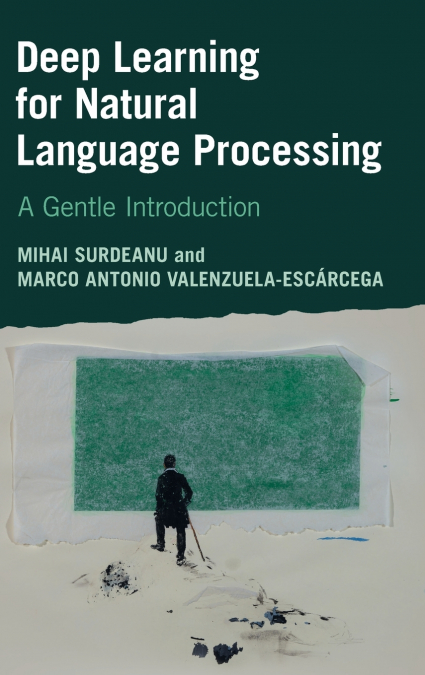
  • Deep Learning for Natural Language Processing
    Marco Antonio Valenzuela-Escárcega / Mihai Surdeanu
    ...
    Disponible

    47,60 €

  • Deep Learning for Natural Language Processing
    Marco Antonio Valenzuela-Escárcega / Mihai Surdeanu
    ...
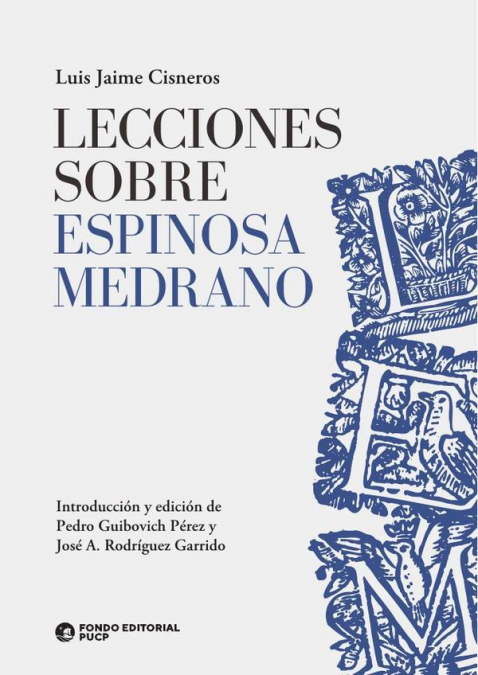
  • Lecciones sobre espinosa medrano
    Luis Jaime Cisneros Vizquerra
    La obra de Juan de Espinosa Medrano, apodado en su tiempo «El Lunarejo» (c. 1629-1688), fue uno de los mayores focos de interés académico de Luis Jaime Cisneros (1921-2011). En 1980 aparecieron sus primeros trabajos dedicados a estudiar los textos capitales de Espinosa Medrano (el Apologético en favor de don Luis de Góngora, la Panegírica declamación por la protección de las ci...
    Disponible

    17,63 €

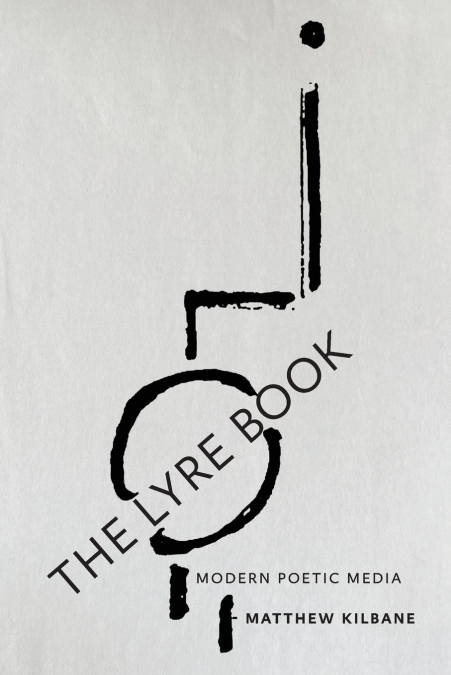
  • Lyre Book
    Matthew Kilbane
    Redefines modern lyric poetry at the intersection of literary and media studies.In The Lyre Book, Matthew Kilbane urges literary scholars to consider lyric not as a genre or a reading practice but as a media condition: the generative tension between writing and sound. In addition to clarifying issues central to the study of modern poetry--including its proximity to popular song...
    Disponible

    50,84 €

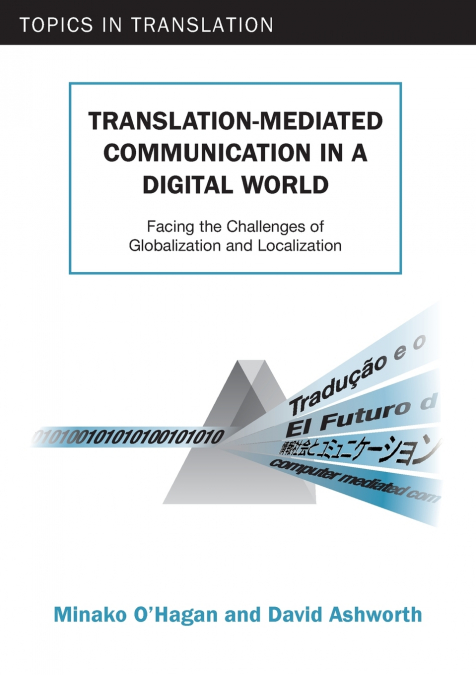
  • Translation-mediated Communication in a Digital World
    David Ashworth / Minako O’Hagan
    The Internet is accelerating globalization by exposing organizations and individuals to global audiences. This in turn is driving teletranslation and teleinterpretation, new types of multilingual support, which are functional in digital communications environments. The book describes teletranslation and teleinterpretation by exploring a number of key emerging contexts for langu...
    Disponible

    45,19 €

Otros libros del autor

  • Anaphora and Type Logical Grammar
    Gerhard Jäger
    List of Tables. Preface. Acknowledgments. 1. TYPE LOGICAL GRAMMAR: THE FRAMEWORK. 1 Basic Categorial Grammar. 2 Combinators and Type Logical Grammar. 3 Historical and bibliographical remarks. 2. THE PROBLEM OF ANAPHORA. 1 Anaphora and semantic resource sensitivity. 2 Variables in TLG. 3 Previous Categorial approaches to anaphora. 4 Summary. 3. LAMBEK CALCULUS WITH LIMITED CONTR...
    Disponible

    269,10 €