Inicio > Matemáticas y ciencia > Matemáticas > Probabilidad y estadística > Analytical Theory of Biological Populations
Analytical Theory of Biological Populations

Analytical Theory of Biological Populations

Alfred J. Lotka

134,08 €
IVA incluido
Disponible
Editorial:
Springer Nature B.V.
Año de edición:
2013
Materia
Probabilidad y estadística
ISBN:
9781475791785
134,08 €
IVA incluido
Disponible

Selecciona una librería:

  • Librería Samer Atenea
  • Librería Aciertas (Toledo)
  • Kálamo Books
  • Librería Perelló (Valencia)
  • Librería Elías (Asturias)
  • Donde los libros
  • Librería Kolima (Madrid)
  • Librería Proteo (Málaga)

In the 50 years that have passed since Alfred Latka’s death in 1949 his position as the father of mathematical demography has been secure. With his first demographic papers in 1907 and 1911 (the latter co­ authored with F. R. Sharpe) he laid the foundations for stable population theory, and over the next decades both largely completed it and found convenient mathematical approximations that gave it practical applica­ tions. Since his time, the field has moved in several directions he did not foresee, but in the main it is still his. Despite Latka’s stature, however, the reader still needs to hunt through the old journals to locate his principal works. As yet no exten­ sive collections of his papers are in print, and for his part he never as­ sembled his contributions into a single volume in English. He did so in French, in the two part Theorie Analytique des Associations Biologiques (1934, 1939). Drawing on his Elements of Physical Biology (1925) and most of his mathematical papers, Latka offered French readers insights into his biological thought and a concise and mathematically accessible summary of what he called recent contributions in demographic analy­ sis. We would be accurate in also calling it Latka’s contributions in demographic analysis.

Artículos relacionados

  • ENGINEERING UNCERTAINTY AND RISK ANALYSIS
    Sergio E. Serrano
    An integrated coverage of probability, statistics, Monte Carlo simulation, inferential statistics, design of experiments, systems reliability, fitting random data to models, analysis of variance, stochastic processes, and stochastic differential equations for engineers and scientists. The author for first time presents an introduction to the broad field of applied engineering u...
    Disponible

    134,56 €

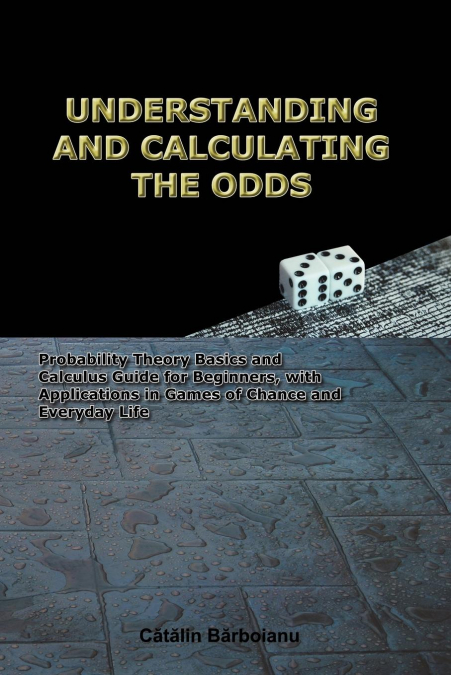
  • UNDERSTANDING AND CALCULATING THE ODDS
    Catalin Barboianu
    Man’s daily life is full of decisional situations. Whether we have math skills or not, we frequently estimate and compare probabilities, sometimes without realizing it, especially when making decisions. But probabilities are not just simple numbers attached objectively or subjectively to events, as they perhaps look, and their calculus and usage is highly predisposed to qualita...
    Disponible

    31,61 €

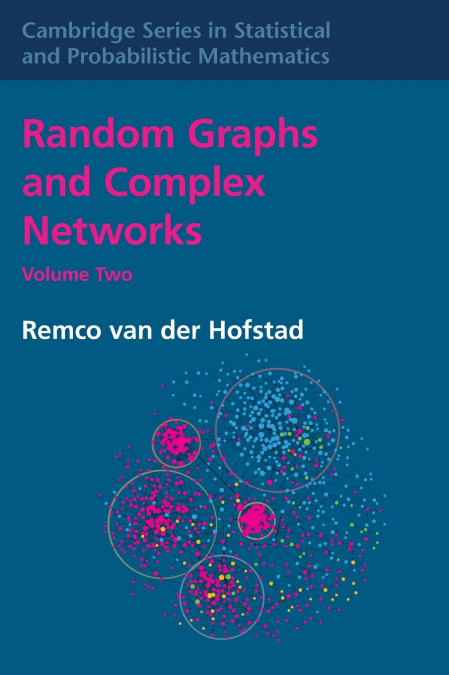
  • Random Graphs and Complex Networks
    Remco van der Hofstad
    ...
  • Introduction to Malliavin Calculus
    David Nualart / Eulalia Nualart
    ...
    Disponible

    60,35 €

  • Probability, Markov Chains, Queues, and Simulation
    William J. Stewart
    Probability, Markov Chains, Queues, and Simulation provides a modern and authoritative treatment of the mathematical processes that underlie performance modeling. The detailed explanations of mathematical derivations and numerous illustrative examples make this textbook readily accessible to graduate and advanced undergraduate students taking courses in which stochastic process...
  • SPSS for you
    A. Rajathi / P. Chandran
    In an era where statistical analysis underpins breakthroughs across all fields, the importance of mastering statistical software cannot be overstated. 'SPSS for you' emerges as a pivotal resource for anyone keen to navigate the complexities of statistical analysis with ease and precision. Drawing from over 25 years of teaching experience, practical guidance in statistical analy...
    Disponible

    29,30 €

Otros libros del autor

  • Analytical Theory of Biological Populations
    Alfred J. Lotka
    In the 50 years that have passed since Alfred Latka’s death in 1949 his position as the father of mathematical demography has been secure. With his first demographic papers in 1907 and 1911 (the latter co­ authored with F. R. Sharpe) he laid the foundations for stable population theory, and over the next decades both largely completed it and found con...