
Inicio > Humanidades > Filosofía > Ética y filosofía moral > An Essay on the Principle of Population
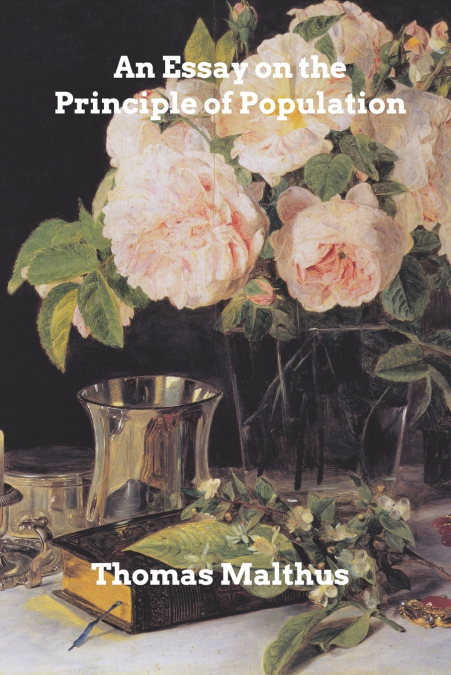
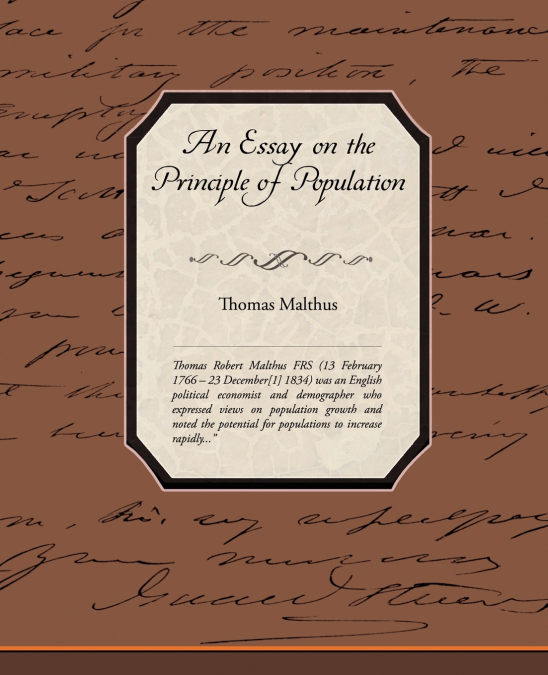
An Essay on the Principle of Population

An Essay on the Principle of Population

An Essay on the Principle of Population

Thomas Malthus

20,45 €
IVA incluido
Consulta disponibilidad
Editorial:
Suzeteo Enterprises
Año de edición:
2018
Materia
Ética y filosofía moral
ISBN:
9781947844544

Selecciona una librería:

  • Librería Samer Atenea
  • Librería Aciertas (Toledo)
  • Kálamo Books
  • Librería Perelló (Valencia)
  • Librería Elías (Asturias)
  • Donde los libros
  • Librería Kolima (Madrid)
  • Librería Proteo (Málaga)

Thomas Malthus was a mild-mannered economist who set the world afire in 1798 with this essay on the 'principle of population.' Prompted to put his thoughts down on paper in response to a work by William Godwin ("Avarice and Profusion") and other writers, such as Marquis de Condorcet and Adam Smith, the book was originally published anonymously... and for good reason.  Malthus understood that the implications of his 'principle' did not align well with Christian charity.Charles Darwin would eventually seize upon the 'population principle,' where strife surrounds humanity's quest for scarce natural resources, as the actual mechanism by which life emerged in the first place, through natural selection.  Now imbued with the certainty of science, Malthus' principle combined with Darwin's insight, was begging for application to human society.  The application most commonly is called 'eugenics.'  However, other applications exist, too, such as 'population control.'This is the original 1798 edition.  In later editions, Malthus would spend a great deal of time clarifying his position and defending himself against critics.  It was one of these later editions that Darwin was influenced by.  Still, it is always interesting to hear the argument as it was first proposed. This edition also includes the essay by Godwin that first moved Malthus to write his book.

Artículos relacionados

  • Ka Ab Ba Building The Lighted Temple
    Dr Terri R. Nelson / Dr Terri RNelson
    The book KaAbBa Building The Lighted Temple/Metaphysical Keys to the Tree of Life draws a circle that is inclusive of the Afrikan origin of the Ancient Kemetic/Egyptian wisdom. It reveals the undeniable root and link of Ancient Africa to all the religious systems that would develop worldwide. This book is explosive in its power to convey the meaning of KaAbBa, the Medu Neter  (...
    Disponible

    37,41 €

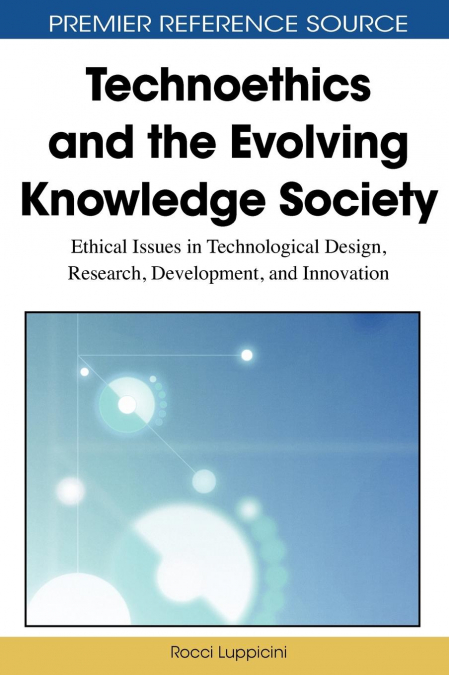
  • Technoethics and the Evolving Knowledge Society
    Rocci Luppicini
    Recently, there has been a major push to rediscover the ethical dimension of technology across the sciences, social sciences, and humanities. Technoethics and the Evolving Knowledge Society: Ethical Issues in Technological Design, Research, Development, and Innovation examines human processes and practices connected to technology embedded within social, political, and moral sph...
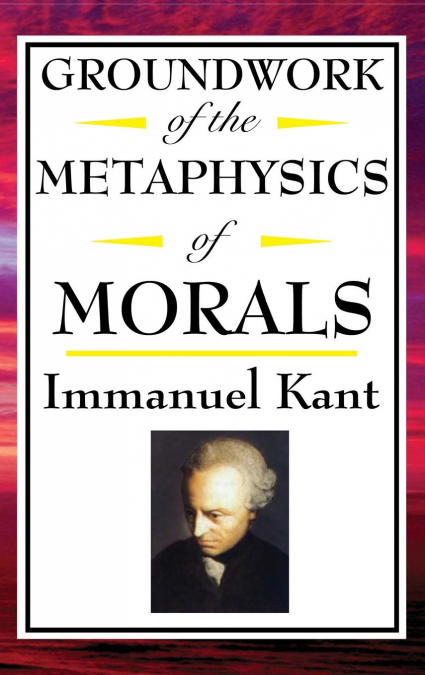
  • Kant
    Immanuel Kant
    Kant’s Groundwork of the Metaphysics of Morals is one of the most important works in modern moral philosophy. It belongs beside Plato, Aristotle, Machiavelli, and Hobbes. Here Kant sets out to articulate and defend the Categorical Imperative - the fundamental principle that underlies moral reasoning - and to lay the foundation for a comprehensive account of justice and human vi...
  • On the Duty of Civil Disobedience
    HENRY DAVID THOREAU
    Civil Disobedience argues that citizens should not permit their governments to overrule their consciences, and that they have a duty to avoid allowing their acquiescence to enable the government to make them the agents of injustice. Thoreau was motivated in part by his disgust with slavery and the Mexican-American War, but the sentiments he expresses here are just as pertinent ...
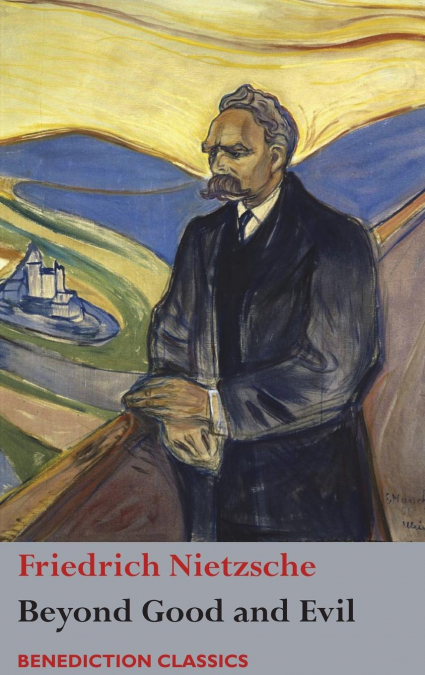
  • Beyond Good and Evil
    Friedrich Nietzsche
    Nietzsche, though primarily a philosopher, wrote widely on art, philology, history, religion, tragedy, culture, and science.  In 1886, at the height of his powers, he published Beyond Good and Evil.  Here he examines much of the best of human thought--dogmatic philosophy, Judeo-Christian morality, science and democracy – and finds it lacking.  Rejecting “slave-morality” he pres...
  • Beyond Good and Evil
    Friedrich Nietzsche
    Nietzsche, though primarily a philosopher, wrote widely on art, philology, history, religion, tragedy, culture, and science.  In 1886, at the height of his powers, he published Beyond Good and Evil.  Here he examines much of the best of human thought--dogmatic philosophy, Judeo-Christian morality, science and democracy – and finds it lacking.  Rejecting “slave-morality” he pres...
    Disponible

    9,99 €

Otros libros del autor

  • An Essay on the Principle of Population
    Thomas Malthus
    NA ...
  • An Essay on the Principle of Population
    Thomas Malthus
    In 1798 the first ed. of this famous Essay on Population appeared. Its leading proposition, supported by much learning, is that while population increases approximately in a geometrical ratio, the means of subsistence do so in an arithmetical ratio only, which, of course, opened up an appalling prospect for the humanity.This premium edition comes with a beautiful Easy-to-Read l...
    Disponible

    14,80 €

  • An Inquiry into the Nature and Progress of Rent, and the Principles by Which It is Regulated
    Thomas Malthus
    This Book 'An Inquiry into the Nature and Progress of Rent, and the Principles by Which It is Regulated' has been considered important throughout the human history, and so that this work is never forgotten we have made efforts in its preservation by republishing this book in a modern format for present and future generations. This whole book has been reformatted, retyped and de...
    Disponible

    12,02 €

  • An Essay on the Principle of Population
    Thomas Malthus
    The book An Essay on the Principle of Population was first published anonymously in 1798,[1] but the author was soon identified as Thomas Robert Malthus. The book predicted a grim future, as population would increase geometrically, doubling every 25 years,[2] but food production would only grow arithmetically, which would result in famine and starvation, unless births were cont...
  • An Essay on the Principle of Population
    Thomas Malthus
    Thomas Robert Malthus FRS (13 February 1766 – 23 December[1] 1834) was an English political economist and demographer who expressed views on population growth and noted the potential for populations to increase rapidly, and often faster than the food supply available to them. Commentators may refer to such a runaway scenario, as outlined in Malthus’s treatise An Essay on the Pr...
    Disponible

    22,39 €

  • Nature And Progress Of Rent
    Thomas Malthus
    This scarce antiquarian book is a facsimile reprint of the original. Due to its age, it may contain imperfections such as marks, notations, marginalia and flawed pages. Because we believe this work is culturally important, we have made it available as part of our commitment for protecting, preserving, and promoting the world’s literature in affordable, high quality, modern edit...
    Disponible

    12,77 €