Inicio > Humanidades > Historia > An Analysis of Michel Foucault’s Discipline and Punish
An Analysis of Michel Foucault’s Discipline and Punish

An Analysis of Michel Foucault’s Discipline and Punish

Meghan Kallman / Rachele Dini

11,64 €
IVA incluido
Disponible
Editorial:
Taylor & Francis Ltd
Año de edición:
2017
Materia
Historia
ISBN:
9781912127511
11,64 €
IVA incluido
Disponible

Selecciona una librería:

  • Librería Samer Atenea
  • Librería Aciertas (Toledo)
  • Kálamo Books
  • Librería Perelló (Valencia)
  • Librería Elías (Asturias)
  • Donde los libros
  • Librería Kolima (Madrid)
  • Librería Proteo (Málaga)

Michel Foucault is famous as one of the 20th-century’s most innovative thinkers - and his work on Discipline and Punish was so original and offered models so useful to other scholars that the book now ranks among the most influential academic works ever published.Foucault’s aim is to trace the way in which incarceration was transformed between the seventeenth and twentieth centuries. What started as a spectacle, in which ritual punishments were focused on the prisoner’s body, eventually became a matter of the private disciplining of a delinquent soul.Foucault’s work is renowned for its original insights, and Discipline and Punish contains several of his most compelling observations. Much of the focus of the book is on making new connections between knowledge and power, leading Foucault to sketch out a new interpretation of the relationship between voir, savoir and pouvoir - or, ’to see is to know is to have power.’ Foucault also dwells in fascinating detail on the true implications of a uniquely creative solution to the problems generated by incarcerating large numbers of criminals in a confined space - Jeremy Bentham’s ’panopticon,’ a prison constructed around a central tower from which hidden guards might - or might not - be monitoring any given prisoner at any given time. As Foucualt points out, the panopticon creates a prison in which inmates will discipline themselves, for fear of punishment, even when there are no guards present. He goes on to apply this insight to the manner in which all of us behave in the outside world - a world in which CCTV and speed cameras are explicitly designed to modify our behavior.Foucault’s highly original vision of prisons also ties them to broader structures of power, allowing him to argue that all previous conceptions of prison are misleading, even wrong. For Foucault, the ultimate purpose of incarceration is neither to punish inmates, nor to reduce crime. It is to produce delinquency as a way of enabling the state to control and of structure crime.


Artículos relacionados

  • Raising Freedom's Banner
    Paul Harris
    World wide history of peaceful street demonstrations from their earliest beginning in eighteenth century England to their use throughout the world in the twenty-first century. Describes why some demonstration movements succeeded and others failed. Contrasts demonstrations within the law with civil disobedience demonstrations. Describes Peterloo, the Chartists, the Suffragettes,...
    Disponible

    23,59 €

  • Waipi’o Valley
    Jeffrey L. Gross
    Waipi’o Valley: A Polynesian Journey from Eden to Eden recounts the remarkable migrations of the Polynesians across a third of the circumference of the earth. Their amazing journey began from Kalana i Hau’ola, the biblical “Garden of Eden” located along the shore of the Persian Gulf, extended to the Indus River Valley of ancient Vedic India, to Egypt where some ancestors of the...
  • Floralia
    June Rainsford Butler
    A century characterized by a growing interest in science, the opportunity for travel, and leisure for gardening furnishes the setting for Butler’s book. The rise of landscape gardening in England is traced, and the origin and history of its most famous gardens are given. The close relation between England and America in the field of horticulture is also discussed.Originally pub...
    Disponible

    61,20 €

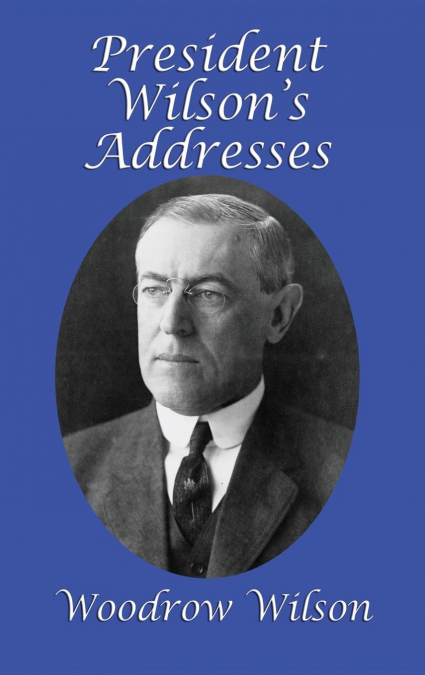
  • President Wilson’s Addresses
    Woodrow Wilson
    'These addresses of President Woodrow Wilson are almost entirely concerned with political affairs, and more specifically with defining Americanism. Yet they also show that even as he moved from academia to the heights of politics, Wilson retained something of the teacher’s interest in showing the relation between specific instances and the general forms of thought or action of ...
  • The Story of my Life
    John Albert Macy
    The Story of My Life, is Helen Keller’s autobiography detailing her early life, especially her experiences with Anne Sullivan. The book is dedicated to inventor Alexander Graham Bell. The dedication reads, 'To ALEXANDER GRAHAM BELL Who has taught the deaf to speak and enabled the listening ear to hear speech from the Atlantic to the Rockies, I dedicate this Story of My Life.' ...
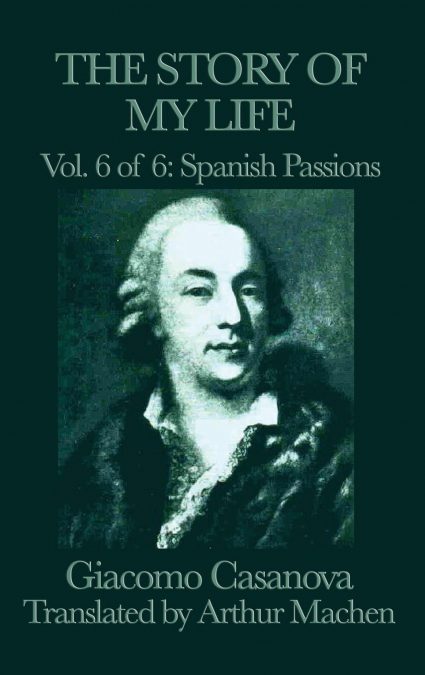
  • The Story of My Life Vol. 6 Spanish Passions
    Giacomo Casanova
    Casanova was an Italian adventurer and author from the Republic of Venice. His autobiography, Histoire de ma vie (Story of My Life), is regarded as one of the most authentic sources of the customs and norms of European social life during the 18th century. He has become so famous for his often complicated and elaborate affairs with women that his name is now synonymous with 'wom...