Inicio > Sociedad y ciencias sociales > Política y gobierno > An Analysis of John Locke’s Two Treatises of Government
An Analysis of John Locke’s Two Treatises of Government

An Analysis of John Locke’s Two Treatises of Government

Ian Jackson / Jeremy Kleidosty

11,58 €
IVA incluido
Disponible
Editorial:
Taylor & Francis Ltd
Año de edición:
2017
Materia
Política y gobierno
ISBN:
9781912127559
11,58 €
IVA incluido
Disponible

Selecciona una librería:

  • Librería Samer Atenea
  • Librería Aciertas (Toledo)
  • Kálamo Books
  • Librería Perelló (Valencia)
  • Librería Elías (Asturias)
  • Donde los libros
  • Librería Kolima (Madrid)
  • Librería Proteo (Málaga)

John Locke’s 1689 Two Treatises of Government is a key text in the history of political theory - one whose influence remains marked on modern politics, the American Constitution and beyond. Two Treatises is more than a seminal work on the nature and legitimacy of government. It is also a masterclass in two key critical thinking skills: evaluation and reasoning. Evaluation is all about judging and assessing arguments - asking how relevant, adequate and convincing they are. And, at its heart, the first of Locke’s two treatises is pure evaluation: a long and incisive dissection of a treatise on the arguments in Sir Robert Filmer’s Patriarcha. Filmer’s book had defended the doctrine that kings were absolute rulers whose legitimacy came directly from God (the so-called 'divine right of kings'), basing his arguments on Biblical explanations and evidence. Locke carefully rebutted Filmer’s arguments, on their own terms, by reference to both the Bible and to recorded history. Finding Filmer’s evidence either to be insufficient or unacceptable, Locke concluded that his argument for patriarchy was weak to the point of invalidity. In the second of Locke’s treatises, the author goes on to construct his own argument concerning the sources of legitimate power, and the nature of that power. Carefully building his own argument from a logical consideration of man in 'the state of nature', Locke creates a convincing argument that civilised society should be based on natural human rights and the social contract.
Artículos relacionados

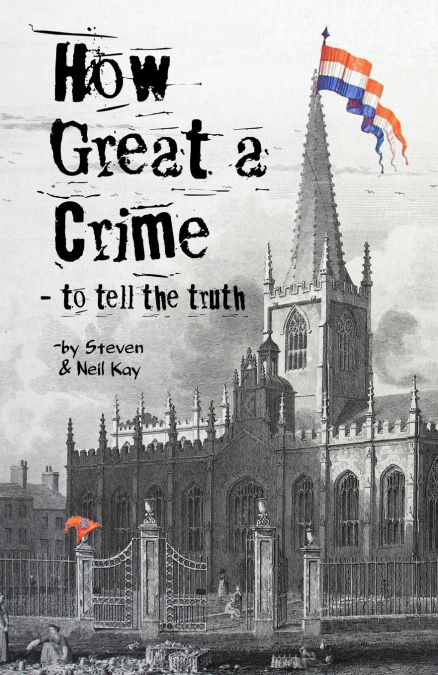
  • How Great a Crime - to tell the truth
    Neil Kay / Steven Kay
    Joseph Gales was one of the all-time great Sheffielders – forget Joe Cocker, Jessica Ennis-Hill, Sean Bean or Michael Palin. These are all minnows compared to Joseph Gales – and their stories are boring besides that of the Galeses. The Galeses story has been forgotten and has not been brought together in one place before – it is not just something dredged up from history – an i...
    Disponible

    10,33 €

  • Fearful Majesty
    Benson Bobrick
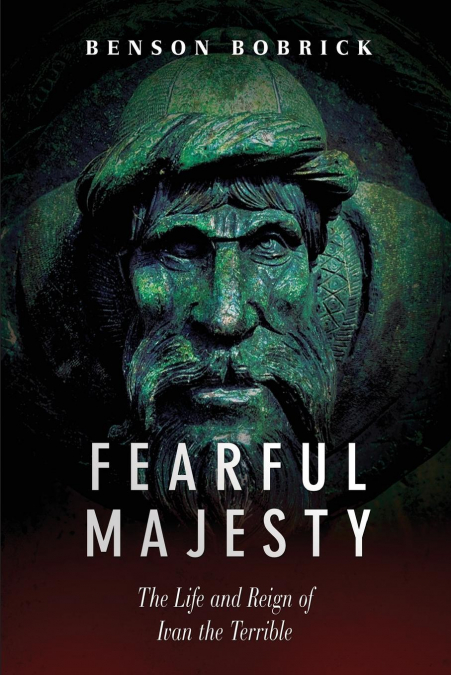
    Ivan the Terrible - the name evokes the legend of a cruel and dangerously insane tyrant. Fearful Majesty explores that legend and exposes the man, his nature, and his time.This acclaimed biography of one of Russia’s most important and tyrannical rulers is not only a rich, readable biography, it is also surprisingly timely, revealing how many of the issues Russia faces today hav...
    Disponible

    19,27 €

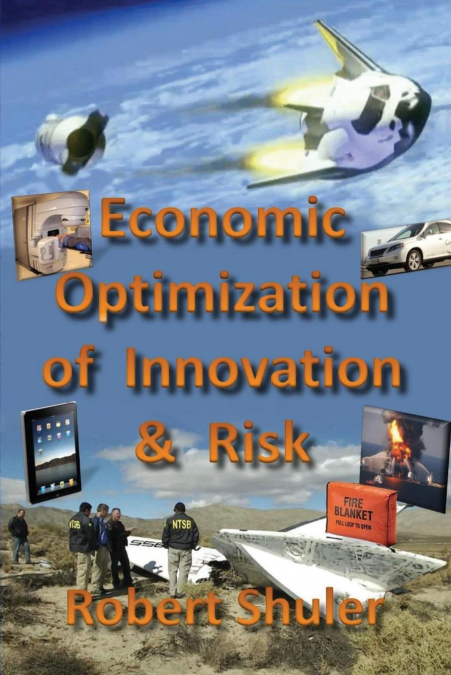
  • Economic Optimization of Innovation & Risk
    Robert Shuler
    A Theory of Crash Rate for Private & Public Projects with Critical or non-Critical systems.Analyzing & managing risk has been a quest for 5000 years, and is essential to everything from water supplies, finance, and agriculture to computers and space travel. At last there is a quantitative theory and a simple equation that allows you to: - choose your failure rate - get there...
    Disponible

    13,02 €

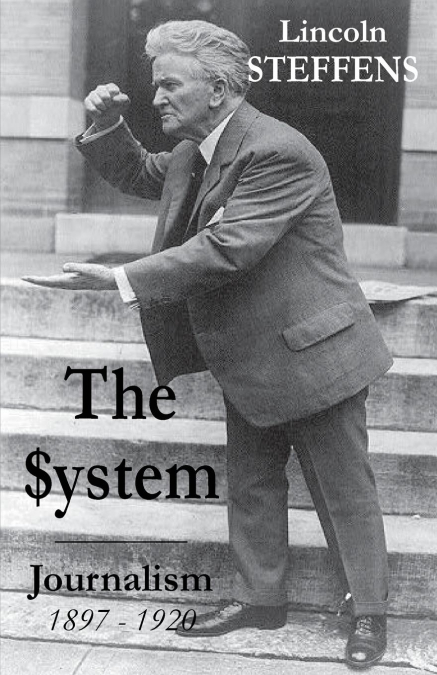
  • The System
    Lincoln Steffens
    The 'muckraker' Lincoln Steffens dug deep into business criminality and political corruption in a powerful series of articles written for McClure's magazine. Establishment newspapers and 'System' politicians dismissed his work as just another example of the decrepit modern journalism that could never pass for genuine writing. But Steffens' dogged quest for truth and justice set...
    Disponible

    23,66 €

  • Digital Activism in Asia Reader
    The digital turn might as well be marked as an Asian turn. From flash-mobs in Taiwan to feminist mobilisations in India, from hybrid media strategies of Syrian activists to cultural protests in Thailand, we see the emergence of political acts that transform the citizen from being a beneficiary of change to becoming an agent of change. In co-shaping these changes, what the digit...
    Disponible

    22,19 €

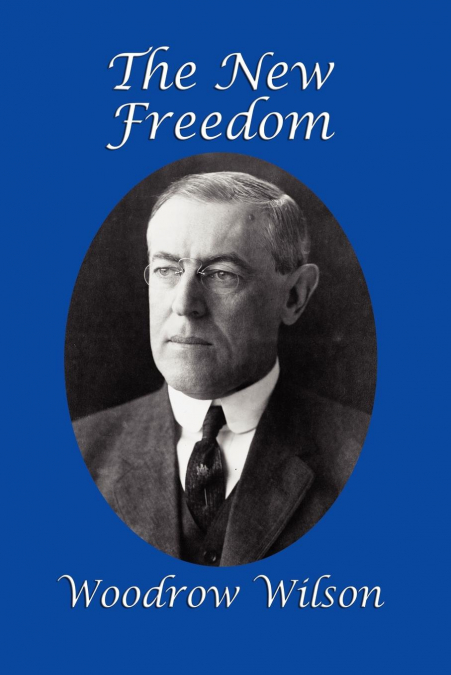
  • The New Freedom
    Woodrow Wilson
    In 1912, Woodrow Wilson was the Democratic nominee for President of the United States. He campaigned against the Republican incumbent, William Howard Taft, and Taft’s predecessor, Theodore Roosevelt, who had split off from the Republican Party to form his own Progressive, or Bull Moose, Party. Much of the campaign focused on the US economy, particularly the candidates’ views of...
    Disponible

    8,67 €