 Librería Samer Atenea
 Kálamo Books
 Librería Elías (Asturias)
 Librería Kolima (Madrid)
 Librería Proteo (Málaga)
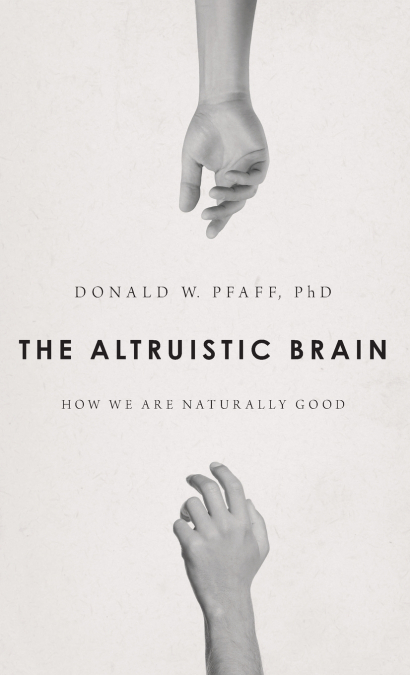
Since the beginning of recorded history, law and religion have provided 'rules' that define good behavior. When we obey such rules, we assign to some external authority the capacity to determine how we should act. Even anarchists recognize the existence of a choice as to whether or not to obey, since no one has seriously doubted that the source of social order resides in our vast ethical systems. Debate has focused only on whose system is best, never for an instant imagining that law, religion, or some philosophical permutation of either was not the basis of prosocial action. The only divergence from this uniform understanding of human society has come from the behavioral sciences, which cite various biological bases for human goodness. Putting aside both ancient and relatively modern ethical systems, neuroscientists, psychologists, and evolutionary biologists have started a revolution more profound than any anarchist ever dreamed of. In essence, these researchers argue that the source of good human behavior - of the benevolence that we associate with the highest religious teachings - emanates from our physical make-up. Our brains, hormones, and genes literally embody our social compasses. In The Altruistic Brain, renowned neuroscientist Donald Pfaff provides the latest, most far-reaching argument in support of this revolution, explaining in exquisite detail how our neuroanatomical structure favors kindness towards others.Unlike any other study in its field, The Altruistic Brain synthesizes all the most important research into how and why - at a purely physical level - humans empathize with one another and respond altruistically. It demonstrates that human beings are 'wired' to behave altruistically in the first instance, such that unprompted, spontaneous kindness is our default behavior; such behavior comes naturally, irrespective of religious or cultural determinants. Based on his own research and that of some of the world’s most eminent scientists, Dr. Pfaff puts together well-established brain mechanisms into a theory that is at once novel but also easily demonstrable. He further explains how, using psycho-social approaches that are now well understood, we can clear away obstacles to the brain’s natural, altruistic inclinations. This is the first book not only to explain why we are naturally good, but to suggest means of making us behave as well as we can.The Altruistic Brain is required reading for anyone who wants to understand the behavioral revolution in science and the promise that it holds for reorienting society towards greater cooperation.