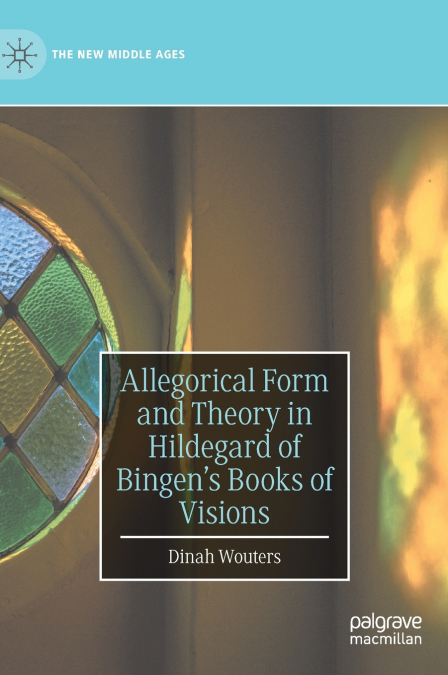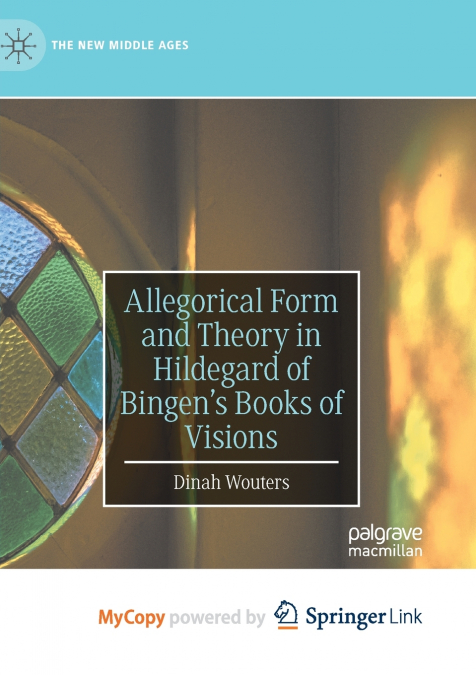

Allegorical Form and Theory in Hildegard of Bingen’s Books of Visions

Allegorical Form and Theory in Hildegard of Bingen’s Books of Visions

Dinah Wouters

47,99 €
IVA incluido
Disponible
Editorial:
Springer Nature B.V.
Año de edición:
2022
Materia
Estudios literarios: clásicos, primitivos y medievales
ISBN:
9783031171932
47,99 €
IVA incluido
Disponible

Selecciona una librería:

  • Librería Samer Atenea
  • Librería Aciertas (Toledo)
  • Kálamo Books
  • Librería Perelló (Valencia)
  • Librería Elías (Asturias)
  • Donde los libros
  • Librería Kolima (Madrid)
  • Librería Proteo (Málaga)

This book analyses how the three books of visions by Hildegard of Bingen use the allegorical vision as a form of knowledge. It describes how the visionary’s use of allegory and allegorical exegesis is linked to theories of cognition, interpretation, and prophecy. It argues that the form of the allegorical vision is not just the product of a medieval symbolic mentality, but specific to Hildegard’s position and the major transformations taking place in the prescholastic intellectual milieu, such as the changing use of Scripture or the shift from traditional hermeneutics to cognitive language philosophy. The book shows that Hildegard uses traditional forms of knowledge - prophecy, the vision, monastic theology, allegorical hermeneutics - in startlingly innovative ways by combining them and by revising them for her own time.

Artículos relacionados

  • Cultura y literatura en los cuentos de Gabriel García Márquez
    Carmiña Navia / Edgar Rey / Gesine Müller / Hernán Toro / Julio Olaciregui
    Cultura y literatura en los cuentos de Gabriel García Márquez reúne seis ensayos sobre diferentes aspectos del género en que se reveló la genial escritura del nobel colombiano. Temas como la representación del afrocolombiano y la mujer, el trasfondo de la cultura magdalenense en las tramas narradas, la influencia de François Rabelais y la relación entre la oniromancia garciamar...
    Disponible

    19,71 €

  • Courtly Love revisited in the Age of Feminism
    Antonia Southern
    Courtly love and feminism are strange bedfellows, the one a controversial literary concept, and the other a continuing crusade. Both can be taken seriously or ridiculed. In this incisive book, Antonia Southern tries to do both with both. Courtly Love focuses a feminist lens on fourteen authors, some well-known and some less so. They aimed variously to entertain, amuse, instruct...
  • Woden
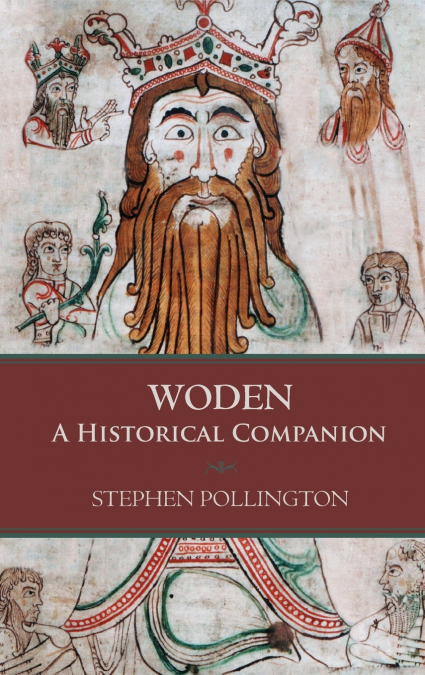
    Stephen Pollington
    All-father, warlord, runemaster, kingmaker, healer-manifold aspects, numerous stories. This book brings together the written and physical evidence for the god called Woden or Óðinn (Odin) in his many guises spanning more than a thousand years. Drawing on the latest interpretations of literary evidence and recent archaeological discoveries, Pollington assembles an impressive arr...
  • The Soul as Virgin Wife
    Amy Hollywood
    The Soul as Virgin Wife presents the first book-length study to give a detailed account of the theological and mystical teachings written by women themselves, especially by those known as beguines, which have been especially neglected. Hollywood explicates the difference between the erotic and imagistic mysticism, arguing that Mechthild, Porete, and Eckhart challenge the sexua...
  • Living Dangerously
    This interesting read explores different marginalized populations in medieval and early modern European society, from prostitutes to writers of satire and reveals how the dominant culture needs its margins. ...
  • Miserere Mei
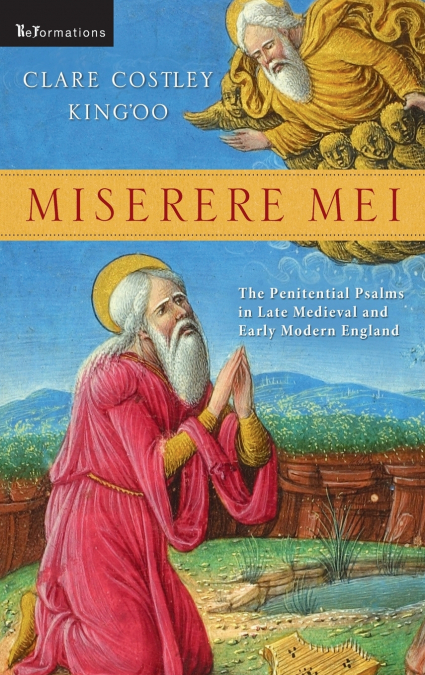
    Clare Costley King’oo
    King’oo examines the critical importance of the Penitential Psalms in England between the end of the fourteenth and the beginning of the seventeenth century. ...

Otros libros del autor

  • Allegorical Form and Theory in Hildegard of Bingen’s Books of Visions
    Dinah Wouters
    This book analyses how the three books of visions by Hildegard of Bingen use the allegorical vision as a form of knowledge. It describes how the visionary’s use of allegory and allegorical exegesis is linked to theories of cognition, interpretation, and prophecy. It argues that the form of the allegorical vision is not just the product of a medieval symbolic mentality, but spec...