
Algebra of Conscience

Algebra of Conscience

V.A. Lefebvre

66,61 €
IVA incluido
Disponible
Editorial:
Springer Nature B.V.
Año de edición:
2011
Materia
Ética y filosofía moral
ISBN:
9789401090537
66,61 €
IVA incluido
Disponible

Selecciona una librería:

  • Librería Samer Atenea
  • Librería Aciertas (Toledo)
  • Kálamo Books
  • Librería Perelló (Valencia)
  • Librería Elías (Asturias)
  • Donde los libros
  • Librería Kolima (Madrid)
  • Librería Proteo (Málaga)

In this book two ethical systems are described in the language of mathematics. Ordinarily mathematics is thought to be a science of quantity. Indeed, manipulation of quantities constitutes much of mathematics. Elementary applied mathematics deals with reckoning and measurement, where concrete quantities are objects of attention, such as counting sheep or weighing corno But the operations on these quantities are performed with the help of symbols, from which concrete referents have been ’abstracted out’: 3 + 5 = 8 regardless of whether the symbols stand for numbers of sheep or tons of corno Thus, the first principle that exhibits the power of mathematics is abstraction. It is one ofthe three pillars on which the edifice of mathematics rests. Another pillar is precision. Ordinarily, man communicates by words. W ords serve communication to the extent that they refer to things, events, states of affairs, feelings of the speaker, and so on. These are the meanings attributed to words. Communication is successful to the extent that the meanings coded upon words by the speaker correspond to the meanings decoded by the hearer. As is weH known, the degree ofthis correspondence varies enormously in different contexts of discourse and with the back­ grounds or attitudes of the speakers and hearers. Mathematics is a language in which the meanings ofthe symbols (the ’words’ ofthis language) are absolutely precise. This precision is achieved by abstraction. Abstract terms are defined by their relations to other terms and by nothing else.

Artículos relacionados

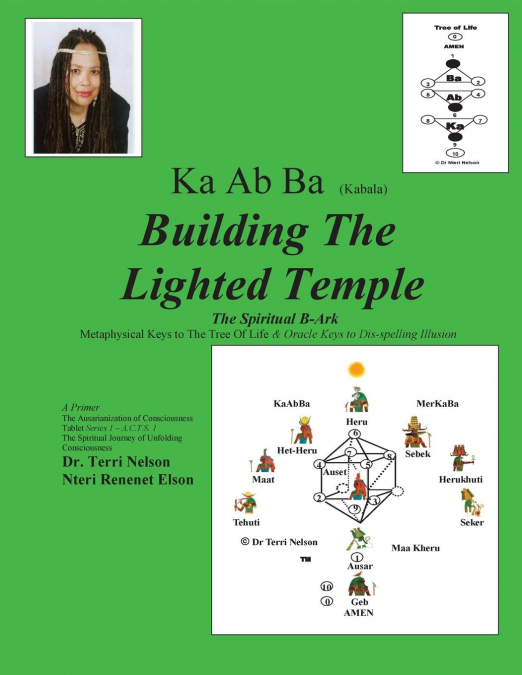
  • Ka Ab Ba Building The Lighted Temple
    Dr Terri R. Nelson / Dr Terri RNelson
    The book KaAbBa Building The Lighted Temple/Metaphysical Keys to the Tree of Life draws a circle that is inclusive of the Afrikan origin of the Ancient Kemetic/Egyptian wisdom. It reveals the undeniable root and link of Ancient Africa to all the religious systems that would develop worldwide. This book is explosive in its power to convey the meaning of KaAbBa, the Medu Neter  (...
    Disponible

    37,41 €

  • Technoethics and the Evolving Knowledge Society
    Rocci Luppicini
    Recently, there has been a major push to rediscover the ethical dimension of technology across the sciences, social sciences, and humanities. Technoethics and the Evolving Knowledge Society: Ethical Issues in Technological Design, Research, Development, and Innovation examines human processes and practices connected to technology embedded within social, political, and moral sph...
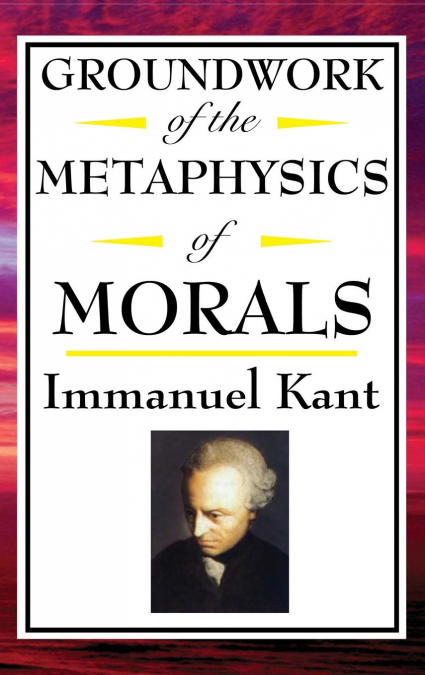
  • Kant
    Immanuel Kant
    Kant’s Groundwork of the Metaphysics of Morals is one of the most important works in modern moral philosophy. It belongs beside Plato, Aristotle, Machiavelli, and Hobbes. Here Kant sets out to articulate and defend the Categorical Imperative - the fundamental principle that underlies moral reasoning - and to lay the foundation for a comprehensive account of justice and human vi...
  • On the Duty of Civil Disobedience
    HENRY DAVID THOREAU
    Civil Disobedience argues that citizens should not permit their governments to overrule their consciences, and that they have a duty to avoid allowing their acquiescence to enable the government to make them the agents of injustice. Thoreau was motivated in part by his disgust with slavery and the Mexican-American War, but the sentiments he expresses here are just as pertinent ...
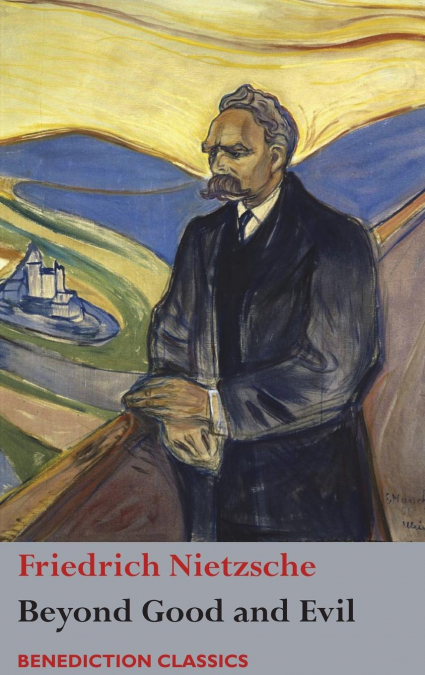
  • Beyond Good and Evil
    Friedrich Nietzsche
    Nietzsche, though primarily a philosopher, wrote widely on art, philology, history, religion, tragedy, culture, and science.  In 1886, at the height of his powers, he published Beyond Good and Evil.  Here he examines much of the best of human thought--dogmatic philosophy, Judeo-Christian morality, science and democracy – and finds it lacking.  Rejecting “slave-morality” he pres...
  • Beyond Good and Evil
    Friedrich Nietzsche
    Nietzsche, though primarily a philosopher, wrote widely on art, philology, history, religion, tragedy, culture, and science.  In 1886, at the height of his powers, he published Beyond Good and Evil.  Here he examines much of the best of human thought--dogmatic philosophy, Judeo-Christian morality, science and democracy – and finds it lacking.  Rejecting “slave-morality” he pres...
    Disponible

    9,99 €

Otros libros del autor

  • Algebra of Conscience
    V.A. Lefebvre
    Conscience is an essential human attribute. Nevertheless, in the construction of formal models of the subject it is customarily left outside the framework of theoretical analysis. The Algebra of Conscience, whose first edition appeared in 1982, was the first specialized work modeling the phenomenon of conscience. The method used in this book made ...
    Disponible

    268,78 €

  • Algebra of Conscience
    V.A. Lefebvre
    Conscience is an essential human attribute. Nevertheless, in the construction of formal models of the subject it is customarily left outside the framework of theoretical analysis. The Algebra of Conscience, whose first edition appeared in 1982, was the first specialized work modeling the phenomenon of conscience. The method used in this book made ...